

How Belly Fat Damages Your Esophagus
Belly Fat Doesn't Just Push on Your Stomach. It Sends Inflammatory Signals That Damage Your Esophagus, Even Without Reflux.
New research suggests visceral fat behaves like its own inflammatory organ, releasing compounds that wear down the esophageal lining independent of acid exposure, a mechanism most weight-loss advice never mentions.

The number that doesn't show up on a bathroom scale.
The Advice Everyone Gets, and Why It's Incomplete
If you carry extra weight around your midsection and deal with chronic reflux, you've probably heard some version of the same advice: lose weight, and the reflux improves. The reasoning usually stops at pressure. More weight in the abdomen pushes upward on the stomach, and that pressure forces acid where it shouldn't go.
That mechanism is real. But it's only part of the picture, and treating it as the whole story misses something researchers have been documenting for the better part of a decade: visceral fat, the fat that surrounds your organs rather than sitting just under the skin, doesn't just take up space. It behaves like an active, signal-producing tissue, closer to an organ than to inert padding.
What Visceral Fat Actually Does
A 2015 case-control study published in the Journal of Neurogastroenterology and Motility compared 66 adults with reflux esophagitis to 66 matched controls without it. Researchers measured visceral fat directly and tracked a set of inflammatory markers in the blood, IL-6, IL-8, and IL-1β, compounds the immune system releases during ongoing, low-grade inflammation.
Visceral fat correlated strongly with all three markers. After adjusting for other factors, both visceral fat and a related hormone called leptin independently raised the odds of reflux esophagitis, meaning the relationship held even once researchers accounted for other explanations. This is the part standard "lose weight" advice tends to skip: visceral fat isn't just adding pressure, it's actively releasing compounds that promote inflammation throughout the body, including in tissue nowhere near the abdomen itself.
In that study, every 100 cm² increase in visceral fat area was linked to more than four times higher odds of reflux esophagitis, and leptin levels showed their own independent link, separate from fat mass alone.
The Part That Surprises Even Researchers
A separate 2018 study in Neurogastroenterology & Motility pushed the question further. Researchers took 100 men off their reflux medications and measured esophageal mucosal impedance, a lab marker of how intact the esophageal lining actually is, using 24-hour pH monitoring. They split participants into four groups: obese and non-obese, each with either normal or elevated acid exposure.
The obese men without any elevated acid exposure, meaning no measurable reflux by standard testing, still had significantly weaker esophageal barrier readings than non-obese participants with normal acid exposure. The effect wasn't localized to one spot either; it showed up across the entire esophagus, which researchers noted points to a systemic mechanism rather than direct, local acid contact.

A chemical mechanism, not just physical pressure.
Obese patients with no measurable reflux still had barrier readings lower than normal controls. Something was already wearing down the tissue before acid ever entered the picture.
Why This Isn't Just a Pressure Problem
The mechanical explanation, extra weight pressing on the stomach, is still real and still worth addressing. But it can't explain barrier damage in people who aren't experiencing reflux episodes at all. That gap is where the inflammatory pathway comes in. Visceral fat's signaling compounds appear to weaken and inflame the esophageal lining on their own, independent of whether acid is actively splashing upward that day.
This maps directly onto two of the four things that actually determine how reflux feels and behaves: chronic inflammation, which makes tissue hypersensitive to everything, and damaged protective barriers, which let ordinary exposure cause outsized irritation. Neither of those factors is primarily about how much pressure is in the abdomen. They're about the condition of the tissue itself, before pressure or acid ever becomes relevant.
What Real Recovery Actually Requires
Addressing this side of the picture, not instead of weight management, but alongside it, generally comes down to three things:
1. Calming the inflammation that's already circulating, rather than only reacting after a flare-up starts.
2. Supporting the esophageal barrier itself, so it can hold up under ongoing inflammatory signaling instead of eroding further.
3. Working the mechanical and chemical sides together, since any reduction in visceral fat over time may lessen the inflammatory signal at its source, alongside barrier and inflammation support in the meantime.
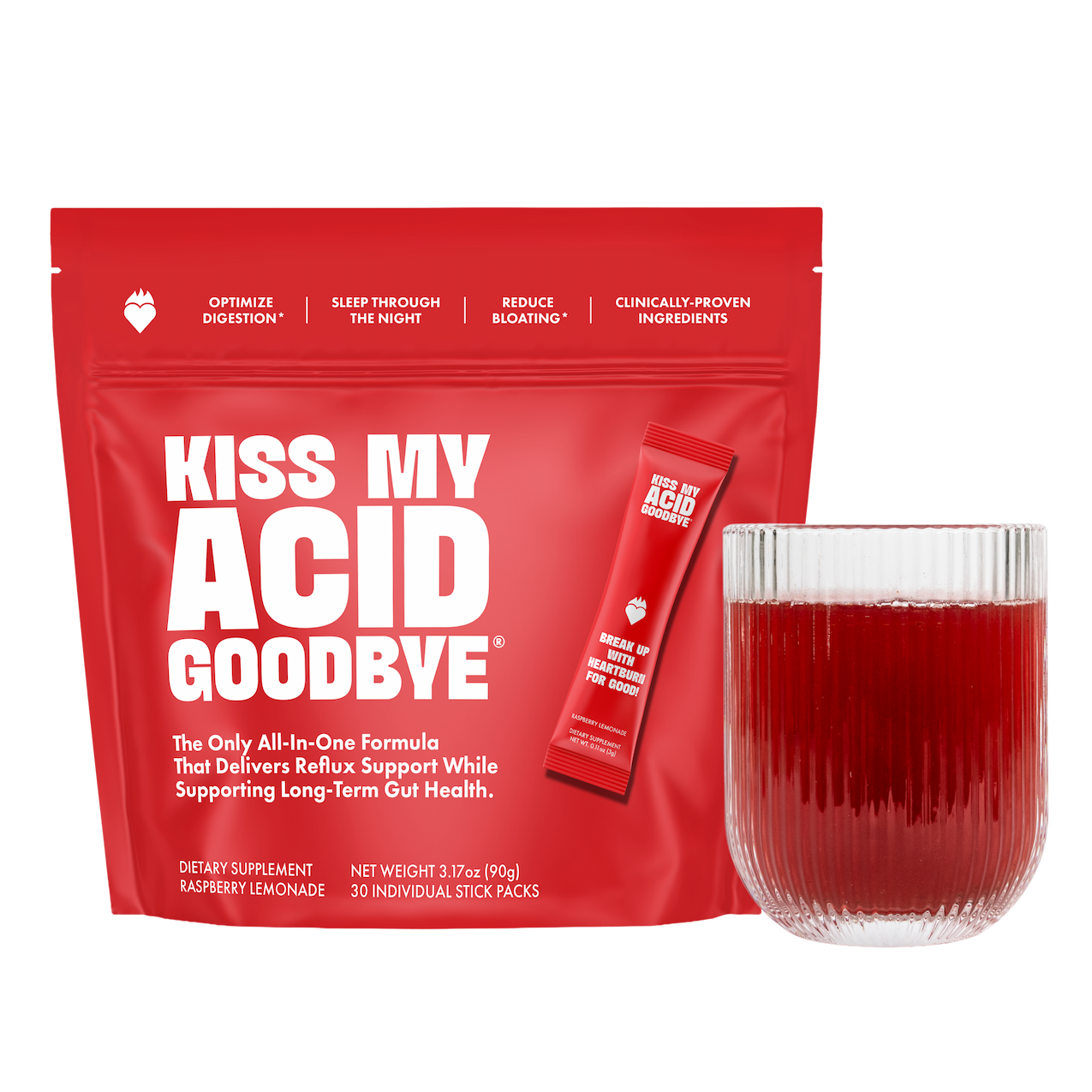
If your reflux hasn't fully responded to weight-focused advice alone, there may be a reason: pressure is only one part of what visceral fat does to your esophagus. KMAG addresses the inflammation and barrier side directly.
When you try KMAG today, you get:
- ✓ 100-Day Satisfaction Guarantee*
- ✓ Lifetime access to the KMAG Symptom Tracker and Recipe Converter App
- ✓ Our 7-Day Reflux Reset Program
- ✓ Priority Support from our Human Support Team
*Valid on 90-day protocol bundle
Always consult your doctor or pharmacist before adding any supplement to your routine.
The Research Behind KMAG
KMAG combines four clinically studied ingredients. Two of them target exactly the mechanisms described above: the inflammatory signaling and the barrier damage that visceral fat drives independent of pressure.
German Chamomile Extract 10:1 (200mg): Anti-Inflammatory Support
Provides concentrated anti-inflammatory support throughout the digestive tract, addressing the chronic, low-grade inflammation that keeps already-irritated tissue reactive, the same category of inflammation visceral fat's signaling compounds contribute to.
MUCOSAVE (400mg): Barrier Support
Forms a protective gel coating that bonds to the digestive lining. In a 2-month, double-blind, placebo-controlled study of 118 adults, MUCOSAVE showed a 74.3% improvement on the GERD-Health Related Quality of Life Assessment. Olive leaf biophenols in MUCOSAVE also contribute anti-inflammatory activity.
ACTIValoe (150mg): Esophageal Barrier Support
A purified aloe vera extract that may help form a soothing barrier along the esophageal lining, the tissue actually studied, which may in turn help reduce how much acid and pepsin travel further up the digestive tract when reflux does occur.
GUTGARD (150mg): Digestive Comfort and Tissue Support
Our blood-pressure-friendly form of DGL. In a 30-day double-blind study on adults with functional dyspepsia symptoms, including upper abdominal fullness, heartburn, and bloating, 56% of the GUTGARD group showed marked improvement vs. 0% in placebo. A separate study also found GUTGARD supports bacterial balance, showing measurable effectiveness against H. pylori.
By The Numbers
- MUCOSAVE (400mg): 74.3% improvement in GERD-related quality of life. 118 adults, 2-month double-blind RCT (Evidence-Based CAM, 2016)
- GUTGARD (150mg): 56% marked improvement vs. 0% placebo. 50 adults, 30-day double-blind RCT (Evidence-Based CAM, 2012)
Studies referenced apply to individual ingredients in Kiss My Acid Goodbye. Individual results may vary.
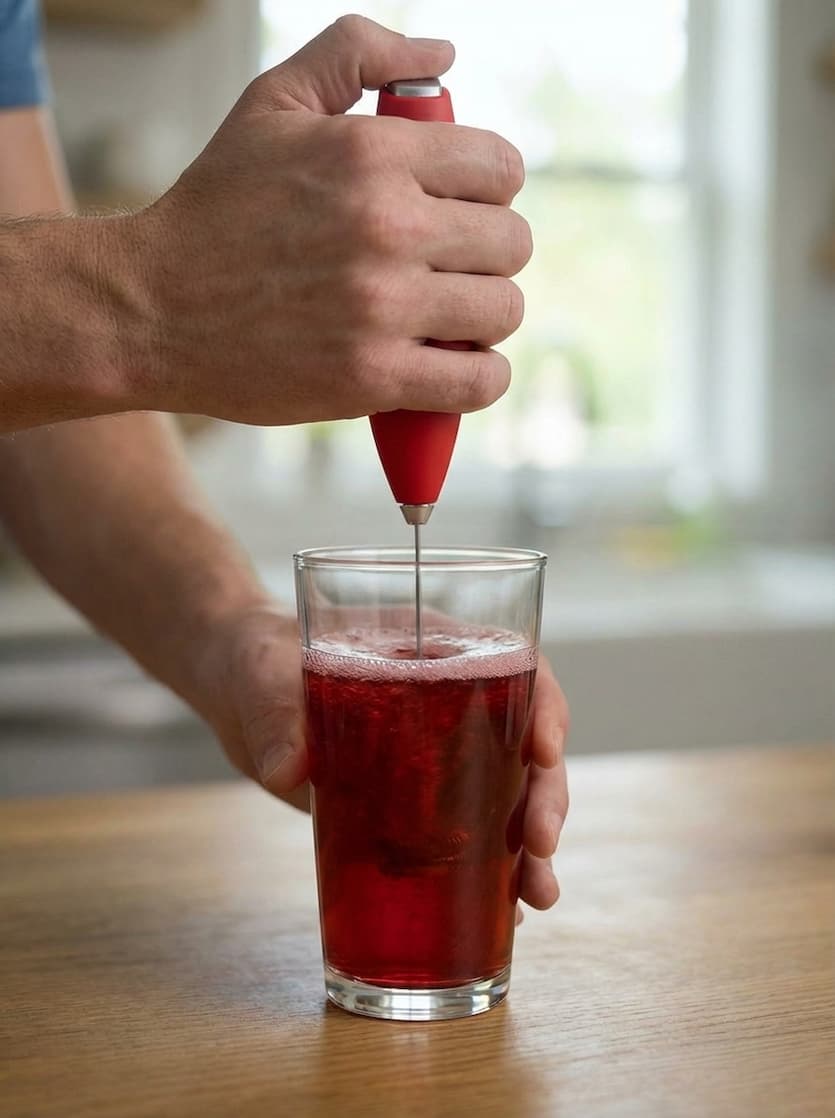
KMAG is taken once daily, mixed into about 8oz of water.
What to Actually Expect
You might notice:
- Less bloating
- Better sleep
- Fewer "emergency" antacids
Why it's happening:
- MUCOSAVE and ACTIValoe start supporting your mucosal lining
- Chamomile begins to ease irritation
You might notice:
- Less burning after meals
- More confidence around food
- Fewer middle-of-the-night flare-ups
Why it's happening:
- GUTGARD and ACTIValoe continue supporting tissue repair
- Bacterial balance support ramps up, and motility support may begin to help too
You might notice:
- Testing foods you used to avoid
- Feeling less scared of food and bedtime
- Talking to your doctor about slowly reducing meds
Why it's happening:
- KMAG's ingredients have been supporting your gut barriers and helping calm inflammation
- Your gut is better maintained for long-term comfort and relief
If you have LPR or have been on PPIs for 1+ years, 4 to 6 months is a very normal timeline. Always work with your doctor before changing medications.
What People Are Saying
"Kiss My Acid Goodbye has been a lifesaver! It not only cools my 'burn' in minutes, but it also has gotten rid of that post-meal bloating and discomfort that I unfortunately had gotten far too used to."Ann R., Verified Customer
"I've been taking KMAG for five days. I was using 10-12 antacids per day; now it's down to one or two per day. I've had no reflux while sleeping. Having tried many different methods to get rid of my heartburn and I like your approach to the problem."Joe R., Verified Customer
"I have had GERD with a hiatal hernia for years. No matter what I did (taking PPIs, even watching what I eat and drink, stop eating by 4pm, etc.) around 2:30am I would wake up with horrible reflux (even with the head of the bed raised). I have only been using KMAG three weeks and it is miraculous! I can sleep through the night with no reflux! I also don't have any reflux during the day and pain from acid sitting where my hernia is is gone. I am starting to feel like my old self again!"Deborah L., Verified Customer
"It not only cools my 'burn' in minutes, but it also has gotten rid of that post-meal bloating and discomfort that I unfortunately had gotten far too used to."Ann R., Verified Customer
The Question Worth Asking Yourself
Not just "how much weight do I need to lose," but "is the inflammation and barrier damage from visceral fat part of what's keeping my reflux going, separate from pressure alone?" If weight-focused changes haven't fully resolved your symptoms, this may be a meaningful piece of why.
Try KMAG Risk-Free
Every order includes:
- ✓ 100-Day Satisfaction Guarantee*
- ✓ Lifetime access to the KMAG Symptom Tracker and Recipe Converter App
- ✓ Our 7-Day Reflux Reset Program
- ✓ Priority Support from our Human Support Team
* Valid on 90-day protocol bundle. Commit to AT LEAST 90 days of daily use for best results.
Frequently Asked Questions
Can I take KMAG while still on my PPI?
Yes. Many customers start KMAG while continuing their current PPI and work with their doctor over time on whether and how to adjust their prescription. Never stop a prescribed medication abruptly.
Does losing weight still matter if I'm addressing the inflammation side?
Yes, they're not competing explanations. Mechanical pressure and inflammatory signaling both appear to contribute to reflux in people carrying visceral fat. Medically supervised weight management and supporting the barrier/inflammation side can both matter at the same time.
Will KMAG interact with my medications?
KMAG is formulated from food-based botanical ingredients. If you're on prescription medication, take KMAG about 2 hours apart and check with your doctor or pharmacist, especially regarding ACTIValoe's potential effect on absorption timing.
How do I take it?
Mix one serving in about 8oz of water, once daily.
What if I don't feel anything in the first week?
That's normal. Initial improvements typically show up over the first 1 to 2 months. The ingredients are working on tissue support and inflammation, not masking symptoms the way an antacid does.
How long before KMAG starts working?
Initial improvements typically appear within the first 1 to 2 months: less bloating, fewer antacids, better sleep. The most significant improvements come with 3 to 6 months of consistent daily use.
This is not medical advice. Always consult with your physician before adding new supplements to your routine, especially if you have any diagnosed medical conditions or are currently taking prescription medications. These statements have not been evaluated by the Food and Drug Administration. This product is not intended to diagnose, treat, cure, or prevent any disease. Clinical study data referenced applies to individual ingredients in Kiss My Acid Goodbye and not to the formula as a whole. Individual results may vary.

