

Leaky Gut and Acid Reflux Explained
Run Your Tongue Along the Inside of Your Cheek. That's What Your Gut Lining Is Supposed to Feel Like.
A registered nurse and gut health educator uses this exact comparison with her patients. It's a simple way to understand a mechanism researchers call intestinal permeability, and it may explain why your reflux feels worse than it should.

Smooth and slippery, or red and irritated. Your gut lining is one continuous piece of tissue, and it only comes in those two states.
A Comparison You Can Do Right Now
Run your tongue along the inside of your cheek.
Smooth. Slippery. You don't feel it, because it's healthy. That's the point. Healthy tissue is tissue you don't notice.
Ninu Lammens, RN, a Calgary-based registered nurse with nearly 20 years of clinical experience who now works as an integrative health practitioner and gut health educator, uses that exact comparison with her patients. In a recent interview she explained it this way:
"If you feel the inside of your cheek, how slippery and smooth it is, that's the same tissue all the way through your digestive system. Now imagine if the inside of your cheeks were red, dry, and irritated. How much would it hurt to bite into an orange? It would sting."
That's the entire concept behind what's popularly called "leaky gut." Not a diagnosis you'll find in a gastroenterology textbook, but a real, well-studied physiological process underneath the term: the tissue lining your gut can lose its integrity, and when it does, the same irritation you'd feel from a scraped cheek shows up everywhere that tissue continues, all the way down through your esophagus and stomach.
What's Actually Happening at the Cellular Level
Your gut lining isn't a single sheet. It's made of individual cells packed edge to edge, and the seal between each one is called a tight junction, essentially a gate.
Those gates are held shut by structural proteins, mainly occludin and ZO-1, working like a latch. A separate protein called claudin-2 does the opposite job. When claudin-2 increases, it acts like a wedge, propping the gate open and letting more through than should pass.
There's also a signaling molecule, zonulin, that tells the gates to loosen in the first place. Zonulin doesn't hold anything shut. It's the "open the gate" signal, and elevated zonulin release is consistently associated with increased gut permeability in the research.
When those gates stay open more than they should, undigested particles and bacterial byproducts get through into places they don't belong. The immune system reacts. That reaction is inflammation. And inflamed, already-compromised tissue is exactly the kind of tissue that turns a normal amount of stomach acid into something that burns.
Healthy Tissue Doesn't Announce Itself
A healthy gut lining is smooth, supple, and quiet, the same as the inside of your cheek. When the barrier is damaged and the tight junctions stay loose, the tissue becomes reactive. Acid exposure that a healthy lining would barely register becomes genuinely painful on compromised tissue. This is why two people can eat the exact same meal and have completely different reflux experiences.
Why This Turns Into a Cycle
Barrier damage and inflammation feed each other.
A compromised lining lets more irritants through, which triggers more inflammation, which keeps the tight junctions loosened, which lets even more through. Each pass through the loop leaves the tissue a little more reactive than before. That's part of why reflux often feels like it's getting worse over time even when nothing about your diet has meaningfully changed, the tissue underneath is becoming progressively more sensitized.
"Imagine if the inside of your cheeks right now were red and dry and irritated and painful. How much would it hurt to bite into an orange? It would sting."Ninu Lammens, RN, Integrative Health Practitioner

The gate analogy in diagram form: latch proteins hold it shut, zonulin signals it to open.
What Real Recovery Actually Requires
Rebuilding a damaged barrier isn't a single-step fix. It generally comes down to three things working together:
1. Removing what's actively damaging the tissue. Alcohol, certain medications, and heavily processed or fried foods all interfere with the mucus layer and the tight junctions themselves.
2. Calming the inflammation that keeps the tissue reactive. Even after the initial irritant is removed, inflamed tissue stays sensitized until that inflammation is directly addressed.
3. Giving the barrier targeted support to reseal. This is the part most reflux advice skips entirely, jumping straight to "avoid your trigger foods" without ever addressing the tissue itself.
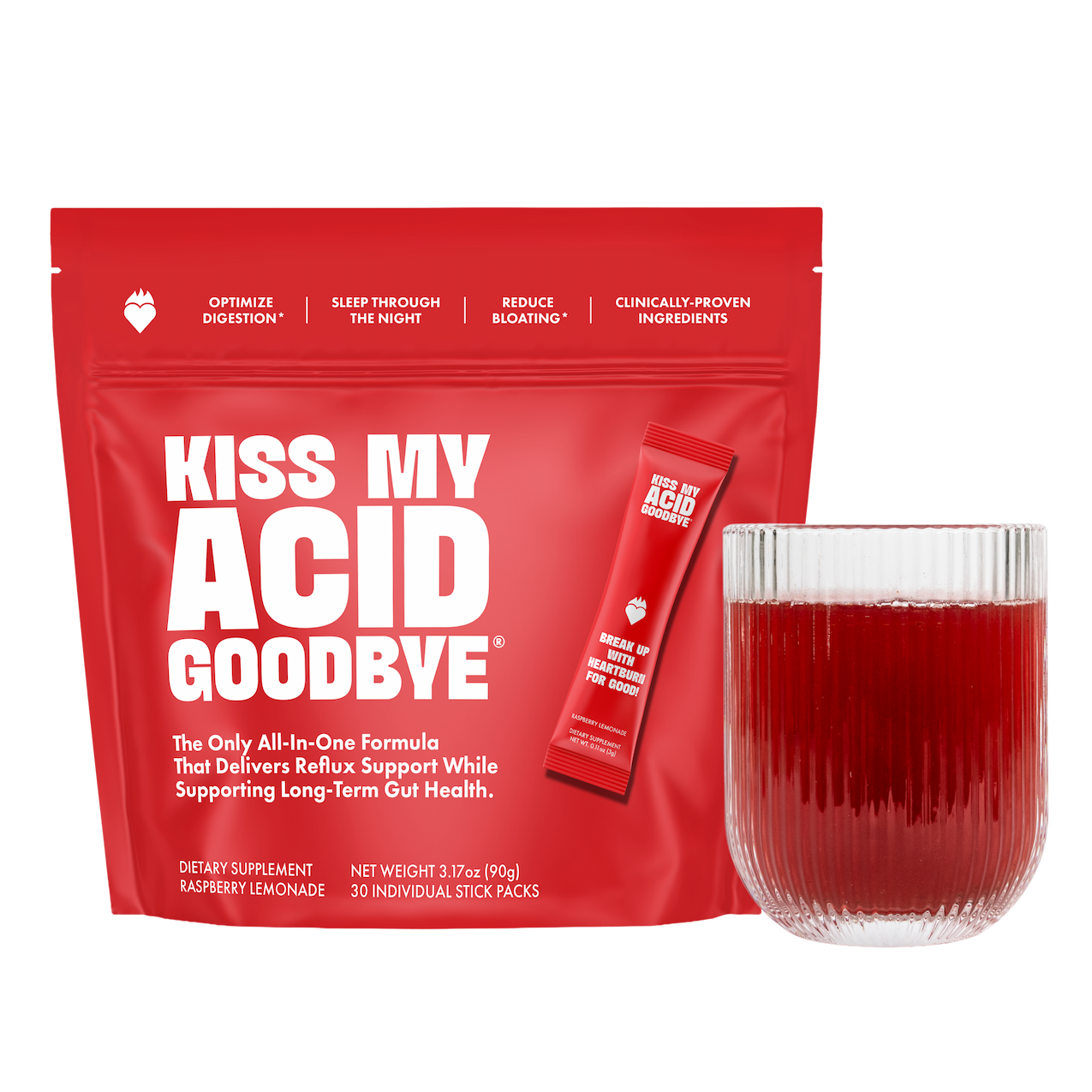
If a compromised gut barrier (aka "leaky gut") is part of what's driving your reflux, Kiss My Acid Goodbye (KMAG) is built around the same tight-junction mechanism described above, using two ingredients with real, targeted research behind them.
When you try KMAG today, you get:
- ✓ 100-Day Satisfaction Guarantee*
- ✓ Lifetime access to the KMAG Symptom Tracker and Recipe Converter App
- ✓ Our 7-Day Reflux Reset Program
- ✓ Priority Support from our Human Support Team
*Valid on 90-day protocol bundle
This is not medical advice. Leaky gut is not a formal clinical diagnosis; if you have a diagnosed digestive condition, work with your doctor.
The Research Behind KMAG's Barrier Support
Two of KMAG's four ingredients have research specifically on this tight-junction mechanism, not just general "gut support" language.
GUTGARD (150mg): Tight Junction Protection
A 2022 study published in BMC Complementary Medicine and Therapies tested GutGard (our blood-pressure-friendly form of DGL, deglycyrrhizinated licorice root) directly on this mechanism, in both a lab cell model and an animal model. Intestinal permeability was 46% lower in the GutGard-treated group compared to untreated tissue. GutGard increased occludin and ZO-1, the latch proteins that hold the gate shut, and decreased claudin-2, the protein that props it open.
MUCOSAVE (400mg): Barrier Integrity Support
A December 2024 study in Antioxidants challenged gut cells with a drug known to damage the intestinal barrier, then tested MUCOSAVE (our prickly pear and olive leaf blend) against that damage. MUCOSAVE protected the barrier's electrical resistance, a standard lab measurement of how intact the barrier is, protected the same latch proteins GutGard supports, and reduced a key inflammatory signal that fires when the barrier comes under attack.
ACTIValoe (150mg) and Chamomile (200mg): Rounding Out the Support
ACTIValoe may help form a soothing barrier along the esophageal lining, the tissue actually studied, which may in turn help reduce how much acid and pepsin travel further up. Concentrated German Chamomile extract provides anti-inflammatory support throughout the digestive tract, addressing the chronic inflammation that keeps already-compromised tissue reactive.
By The Numbers
- GUTGARD (150mg): 46% lower intestinal permeability vs. untreated, in cell and animal models (BMC Complementary Medicine and Therapies, 2022)
- MUCOSAVE (400mg): Protected barrier integrity and tight-junction proteins in cell models challenged with barrier-damaging compounds (Antioxidants, December 2024)
Both studies are preclinical (cell/animal), not human clinical trials. Studies referenced apply to individual ingredients in Kiss My Acid Goodbye. Individual results may vary.
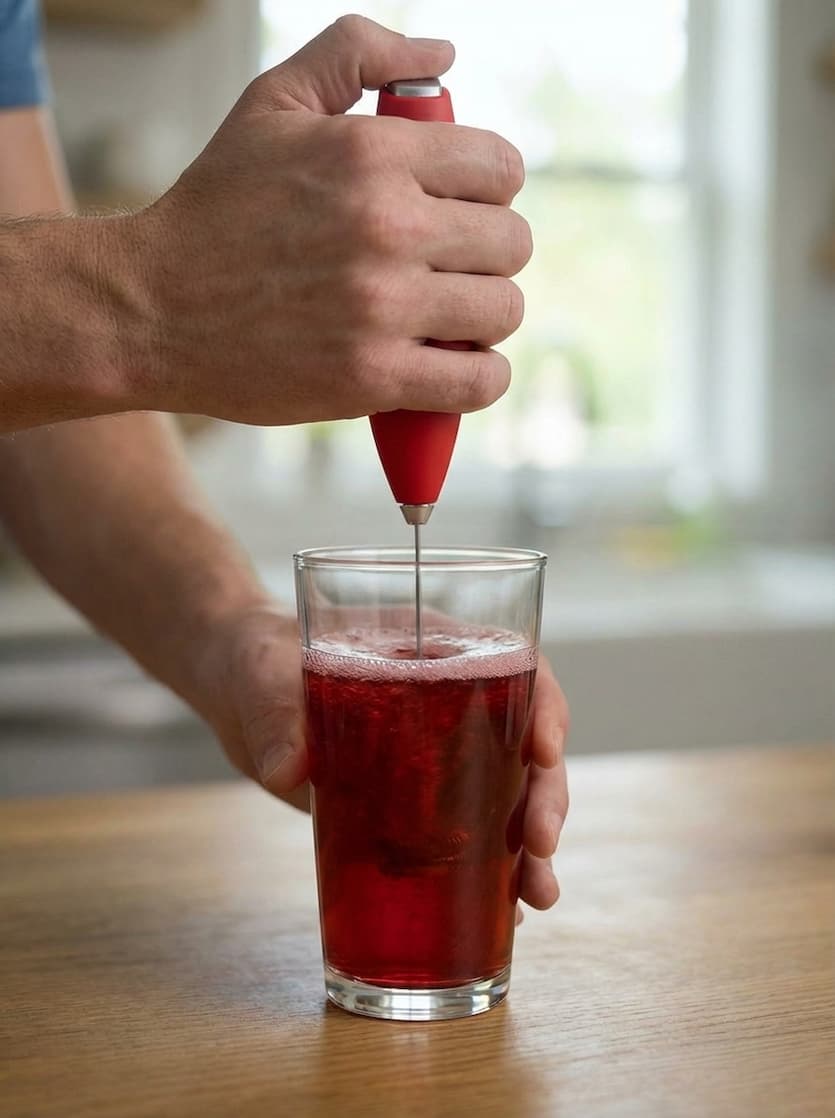
KMAG is taken once daily, mixed into about 8oz of water.
What to Actually Expect
You might notice:
- Less bloating
- Better sleep
- Fewer "emergency" antacids
Why it's happening:
- MUCOSAVE and GutGard begin supporting your tight junctions
- Chamomile begins to ease irritation
You might notice:
- Less burning after meals
- More confidence around food
- Fewer middle-of-the-night flare-ups
Why it's happening:
- GUTGARD and ACTIValoe continue supporting tissue repair
- Barrier integrity support continues building
You might notice:
- Testing foods you used to avoid
- Feeling less scared of food and bedtime
- Talking to your doctor about slowly reducing meds
Why it's happening:
- KMAG's ingredients have been supporting your gut barrier and calming inflammation
- Your gut is better maintained for long-term comfort and relief
If you have LPR or have been on PPIs for 1+ years, 4 to 6 months is a very normal timeline. Always work with your doctor before changing medications.
What People Are Saying
"I have GERD and Gastritis. I just wanted to say that I've been taking this for almost a month and it has been the only thing that has helped calm down my acid reflux and help my bowel movements. I've already bought two more canisters!"Moria F., Verified Customer
"I've been using KMAG for almost 3 months for silent reflux (LPR), and it's vastly decreased the constant swallowing and that awful feeling of something stuck in my throat. I'm finally sleeping through the night again! Bonus benefits I didn't expect: KMAG settles my stomach after heavier meals, and I've never been this regular in my life, easy, frequent bowel movements have been a game-changer! If you've tried everything for silent reflux and nothing's worked, give KMAG a shot."Candice V., Verified Customer
"I've taken KMAG for about 18 months and rarely cough now, usually only when I've cheated on the diet too much or am very tired. KMAG has been a significant part of improving my LPR issues. I want to heal the damage done to my system, not just suppress my acid, and the ingredients in KMAG are designed to do just that."Polly M., Verified Customer
"I want to heal the damage done to my system, not just suppress my acid, and the ingredients in KMAG are designed to do just that."Polly M., Verified Customer
An Honest Note on "Leaky Gut"
"Leaky gut" is not a formal diagnosis you'll receive from a gastroenterologist, and it's not a term most conventional medical training uses. The underlying process it describes, intestinal permeability, changes in the tight junctions between gut lining cells, is real and has been studied for decades under that more clinical name. The popular term is a simplification, not a fabrication.
What matters is the mechanism underneath the label, not what you call it. A compromised gut lining is a real, physical thing, the same tissue as the inside of your cheek, just further along in the digestive tract, and it responds to the same basic logic: remove what's damaging it, calm the inflammation, and give it what it needs to reseal.
Support the Barrier. Not Just the Burn.
Every order includes:
- ✓ 100-Day Satisfaction Guarantee*
- ✓ Lifetime access to the KMAG Symptom Tracker and Recipe Converter App
- ✓ Our 7-Day Reflux Reset Program
- ✓ Priority Support from our Human Support Team
* Valid on 90-day protocol bundle. Commit to AT LEAST 90 days of daily use for best results.
Frequently Asked Questions
Is "leaky gut" a real medical condition?
It's not a formal clinical diagnosis, but the underlying process, intestinal permeability and changes at the tight junctions between gut cells, is real and studied under that more clinical name. Think of "leaky gut" as the plain-language version of a legitimate physiological mechanism.
Does KMAG treat leaky gut?
KMAG is not a treatment for any diagnosed digestive disease. Two of its ingredients, GutGard and MUCOSAVE, have preclinical (cell and animal) research specifically on tight-junction protection and barrier integrity, which is the mechanism "leaky gut" describes. That's targeted, ingredient-specific evidence, not a claim that KMAG cures or treats a condition.
Can I take KMAG while still on my PPI?
Yes. Many customers start KMAG while continuing their current PPI and work with their doctor over time on whether and how to adjust their prescription. Never stop a prescribed medication abruptly.
How do I take it?
Mix one serving in about 8oz of water, once daily, closest to your largest meal or when reflux tends to be worst. A hand frother helps with mixing.
What if I don't feel anything in the first week?
That's normal. Initial improvements typically show up over the first 1 to 2 months. The ingredients are working on tissue and barrier support, not masking symptoms the way an antacid does.
How long before KMAG starts working?
Initial improvements typically appear within the first 1 to 2 months: less bloating, fewer antacids, better sleep. The most significant improvements come with 3 to 6 months of consistent daily use.
This is not medical advice. Always consult with your physician before adding new supplements to your routine, especially if you have any diagnosed medical conditions or are currently taking prescription medications. These statements have not been evaluated by the Food and Drug Administration. This product is not intended to diagnose, treat, cure, or prevent any disease. "Leaky gut" is not a formal clinical diagnosis. Clinical and preclinical study data referenced applies to individual ingredients in Kiss My Acid Goodbye and not to the formula as a whole. Individual results may vary. Ninu Lammens, RN, is quoted for her explanation of a general physiological mechanism; her inclusion in this article does not imply her endorsement of Kiss My Acid Goodbye or any product.

