

The Silent Side Effect of Long-Term Acid Reflux Medication That Most Doctors Never Mention
Millions of Americans on PPIs are deficient in a vitamin critical to brain health, nerve function, and energy — without knowing their medication is the reason.

Two bottles. One prescribed for acid. The other for the deficiency the first one caused. Millions of PPI users have both — but not all of them know why.
A Vitamin Your Body Cannot Make
Your body cannot produce Vitamin B12 on its own.
Every single microgram has to come from food — from meat, fish, eggs, dairy. And once you eat it, it has to go through a precise multi-step process inside your digestive system before your body can actually use it.
That process depends on something most people never think about: stomach acid.
Not the presence of it — most people assume stomach acid is something to be managed and minimized. What the science actually shows is that stomach acid is the mechanism that frees B12 from the protein in food, unlocking it so it can be absorbed.
Remove the acid, and the B12 stays locked up. It passes through your digestive system and exits without ever entering your bloodstream.
For someone taking a proton pump inhibitor — the category of acid-suppressing medications that includes Prilosec, Nexium, Prevacid, and their generic equivalents — this is not a theoretical concern. It's a documented, clinically recognized consequence of long-term use.
And most patients taking PPIs have never been told.
What B12 Actually Does
Before getting into the mechanism, it helps to understand what's at stake.
Neurological function. B12 is required to maintain the myelin sheath — the protective coating around nerve fibers that allows nerve signals to transmit correctly. Without adequate B12, that coating begins to deteriorate. The result: tingling or numbness in the hands and feet, difficulty walking, balance problems, and in severe cases, irreversible nerve damage.
Red blood cell production. B12 is required for the production of healthy red blood cells. Deficiency leads to megaloblastic anemia — large, dysfunctional cells that reduce the blood's ability to carry oxygen. Symptoms: fatigue, weakness, shortness of breath.
Cognitive and mental health. B12 is involved in the synthesis of serotonin and dopamine. Deficiency has been linked to depression, anxiety, brain fog, and cognitive decline. Some research suggests it accelerates age-related cognitive deterioration when the deficiency is sustained.
These are serious consequences. And they share a feature that makes them particularly dangerous: they develop slowly. B12 stores in the liver can last two to five years. By the time symptoms are noticeable, the deficiency is often severe — and some of the neurological damage, at that point, may be permanent.
How PPIs Block B12 Absorption
The connection between PPIs and B12 deficiency is not a fringe concern — it has been studied and documented extensively, and the mechanism is well understood.
B12 in food exists bound to protein. To be absorbed, it first has to be freed from that protein — a process that requires the acidic environment of the stomach. Specifically, an enzyme called pepsin, which is activated by stomach acid, breaks the bonds holding B12 to the food protein, releasing it.
Once freed, B12 binds to a protein called Intrinsic Factor, which is secreted by cells in the stomach lining. The B12-Intrinsic Factor complex then travels to the small intestine, where it is absorbed into the bloodstream.
PPIs suppress acid production by 80 to 90 percent. Without adequate acid, pepsin cannot be properly activated. The B12 stays bound to its food protein. Intrinsic Factor has nothing to bind to. The B12 passes through unused.
The pill that was prescribed to reduce burning is quietly blocking a vitamin your brain and nervous system require to function.
Patients taking PPIs for two or more years had a 65% increased risk of Vitamin B12 deficiency compared to patients not taking PPIs. The risk increased with higher doses and longer duration of use.
Source: Lam JR et al., JAMA. 2013;310(22):2435–2442
The Symptoms That Look Like Something Else
This is where the story becomes genuinely troubling.
The symptoms of B12 deficiency — fatigue, brain fog, depression, tingling in the extremities, difficulty concentrating, weakness — are not specific to B12 deficiency. They overlap with dozens of other conditions. They also overlap with the normal experience of aging in a culture that treats exhaustion as a lifestyle issue rather than a medical signal.
A 55-year-old who has been on a PPI for seven years, is newly fatigued, notices their memory feels slower, and experiences occasional numbness in their fingertips — that person is very likely to hear "it's just stress" or "it's just getting older" before anyone thinks to check their B12 levels.
And if they do get tested, there's an additional complication: standard serum B12 tests are notoriously unreliable for detecting functional deficiency. They measure the total amount of B12 in the blood, including forms the body cannot actually use. A patient can test "normal" on a standard panel while experiencing significant functional deficiency.
The more sensitive markers — methylmalonic acid (MMA) and homocysteine, both of which rise when B12 is functionally deficient — are not typically included in standard bloodwork.
The result: a patient on a long-term PPI develops B12 deficiency, experiences symptoms attributed to aging or stress, tests "normal," and continues taking the medication that is quietly depleting them.
"B12 deficiency doesn't announce itself. It masquerades as aging. By the time symptoms are obvious, years of depletion have already happened."

How it works: stomach acid activates the enzyme that frees B12 from food. PPIs suppress that acid by up to 90% — leaving B12 locked in protein that passes through without being absorbed.
The Nutrient Depletion Cascade
B12 is not the only nutrient PPIs deplete. Long-term acid suppression has been documented to reduce absorption of:
Magnesium — required for over 300 enzymatic reactions, including those governing sleep, muscle function, and cardiovascular health. The FDA issued a warning about PPI-induced magnesium depletion in 2011.
Calcium — reduced absorption contributes to decreased bone density. The FDA updated PPI labels to include fracture warnings in 2010.
Iron — stomach acid is required to convert dietary iron into its absorbable form. Zinc and Vitamin C absorption is also significantly compromised.
Each of these deficiencies carries its own set of downstream health consequences. Each one is occurring silently, in a patient who was simply told to take a pill for heartburn.
The Absorption Problem Runs Deeper
Many PPI users who learn about B12 depletion try taking a standard supplement — and find it doesn't resolve the problem. Most B12 supplements come in cyanocobalamin form, which still requires some acid-dependent processing. Additionally, oral B12 absorption is partially dependent on Intrinsic Factor — produced by the same stomach lining cells suppressed by PPIs. This is why addressing the gut lining itself matters as much as supplementing directly.
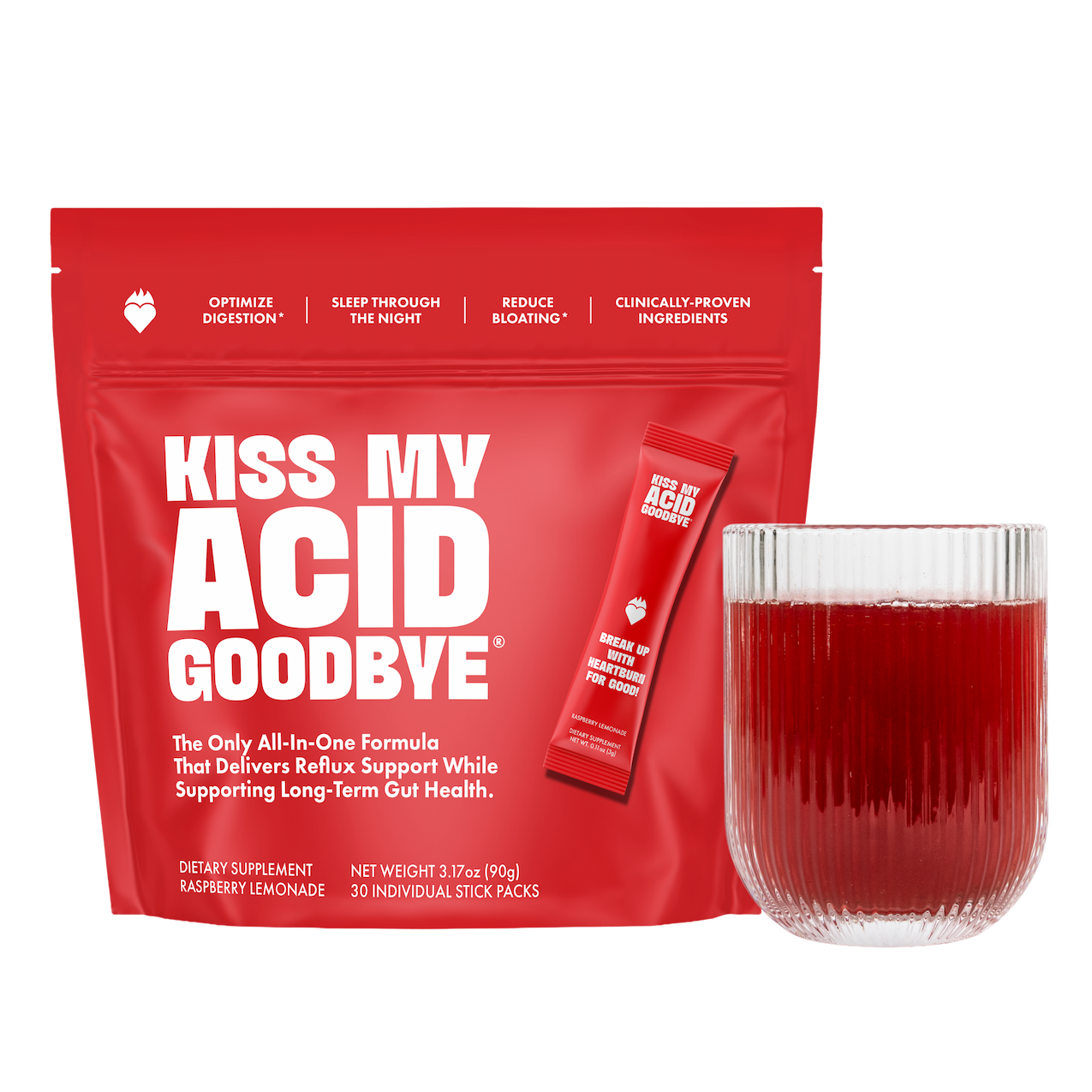
If you've been on a PPI for two or more years, Kiss My Acid Goodbye (KMAG) addresses the gut lining health that B12 absorption actually depends on, not just the acid level your prescription is managing.
When you try KMAG today, you get:
- ✓ 100-Day Satisfaction Guarantee*
- ✓ Lifetime access to the KMAG Symptom Tracker and Recipe Converter App
- ✓ Our 7-Day Reflux Reset Program
- ✓ Priority Support from our Human Support Team
*Valid on 90-day protocol bundle
Always consult your doctor before changing any medication or starting a new supplement.
What the Research Points Toward
Addressing B12 depletion in the context of long-term PPI use requires more than taking a supplement. It requires addressing the underlying reason B12 absorption is compromised in the first place — the health of the stomach lining, the bacterial environment of the gut, and the conditions that allow proper absorption to occur.
This is the framework behind Kiss My Acid Goodbye (KMAG).
ACTIValoe® — a certified aloe vera extract standardized for bioactive content — was specifically studied for its effects on vitamin absorption. Research demonstrates significant enhancement of bioavailability of Vitamins B12, C, and E. This is a standardized extract with the aloin compound removed, leaving the bioactive polysaccharides that support absorption and gut lining integrity.
MUCOSAVE™ — the clinically-studied blend of prickly pear cactus and olive leaf extract sourced from Sicily — supports the mucosal lining of the stomach and esophagus. A healthy mucosal lining is the foundation for proper Intrinsic Factor production — the protein required for B12 to be absorbed at all. In a two-month double-blind, placebo-controlled trial, MUCOSAVE showed a 74.3% improvement in GERD Quality of Life scores, a 56.5% reduction in heartburn frequency, and a 59.1% reduction in acid regurgitation.
GUTGARD™ — a clinically studied DGL licorice extract — supports tissue repair throughout the GI tract and showed a 56% improvement in overall GI symptom scores in clinical research. A healthier gut lining absorbs nutrients more effectively across the board.
What the Research Shows
- ACTIValoe®: Clinically shown to enhance absorption of Vitamins B12, C, and E*
- MUCOSAVE™: 74.3% improvement in GERD quality of life in 2 months*
- MUCOSAVE™: 56.5% reduction in heartburn frequency*
- GUTGARD™: 56% improvement in GI symptom scores*
- GUTGARD™: Used by over 1 million people worldwide
*Clinical studies on individual ingredients. Individual results may vary. These statements have not been evaluated by the FDA.

Kiss My Acid Goodbye — formulated to support mucosal repair, microbiome balance, and nutrient absorption rather than acid suppression.
What to Actually Expect
KMAG is not a B12 supplement. It is not a replacement for getting your B12 levels checked by a doctor — which, if you've been on a PPI for more than two years, is a conversation worth having.
What KMAG does is address the underlying conditions that make the gut less capable of absorbing nutrients in the first place. That kind of foundational repair takes time — but the clinical data and real customer experience point to a consistent progression:
- Less bloating after meals
- Better, deeper sleep
- Fewer "emergency" antacids
- MUCOSAVE and ACTIValoe begin supporting the mucosal lining
- Chamomile starts easing irritation
- Less burning after meals
- More confidence around food
- Fewer middle-of-the-night flare-ups
- GUTGARD and ACTIValoe continue supporting tissue repair
- Absorption improves as the gut lining heals
- Testing foods you used to avoid
- Feeling less anxious about meals and bedtime
- Discussing reducing meds with your doctor**
- Rebuilt gut barriers and reduced inflammation
- Better absorption of nutrients your body has been missing
*If you have LPR or have been on PPIs for 1+ years, 4–6 months is a normal timeline. **Always work with your doctor before changing medications.
Real Customer Experiences
"I have had GERD with a hiatal hernia for years. No matter what I did — taking PPIs, watching what I eat, stopping eating by 4pm — around 2:30am I would wake up with horrible reflux. I have only been using KMAG three weeks and it is miraculous! I can sleep through the night with no reflux. I am starting to feel like my old self again!"— Deborah L., Verified Customer
"I've been taking KMAG for five days. I was using 10–12 antacids per day; now it's down to one or two. I've had no reflux while sleeping. Having tried many different methods to get rid of my heartburn, I like your approach to the problem."— Joe R., Verified Customer
"I've been on PPIs for 10+ years, and last week I was having major reflux at night with burning in my throat. I've only been using KMAG for 4 days, and these past 4 nights I've been completely symptom free. I even went out for wings and beers — no issues. I don't want to jinx myself, but I am surprised and optimistic!"— Brian G., Verified Customer
"After being on PPIs for 15 months for severe gastritis, I started KMAG 3 months ago and have been able to work with my doctor to gradually reduce my PPI dose — from 40mg daily down to 20mg every two days with no issues at all. I'm almost completely off PPIs now, which I never thought would be possible."— Becky S., Verified Customer
"My esophagus burning is gone entirely, I'm sleeping through the night without waking up with heartburn, and can eat a greater variety of foods, including ones I'd given up on. My gastroenterologist gave up on me because I'm allergic to the meds. So I'm very glad to be on a pathway back to being healthy!"— Theresa, Verified Customer
"I take Kiss My Acid Goodbye after dinner and it's been perfect. I've tested things up to a 7 on the 'danger' food list, but I'm ready to tackle some 8's and 9's that I had completely eliminated. On a reflux pain scale of 1 to 10, I can now say I'm a ZERO — completely cool and calm."— Wayne M., Verified Customer
"I'm almost completely off PPIs now, which I never thought would be possible."— Becky S., Verified Customer
The Conversation Worth Having
If you've been on a PPI for more than two years, there are two conversations worth initiating.
The first is with your doctor: ask to have your B12 levels checked — and ask specifically for methylmalonic acid and homocysteine levels, not just serum B12. These are the markers that catch functional deficiency before standard tests do.
The second is a conversation with yourself about what "treatment" actually means. A medication that reduces burning sensations while quietly depleting a vitamin your nervous system depends on is not addressing your reflux. It's trading one problem for another, slowly, in a way that won't show up for years.
The goal isn't to stop your medication without medical oversight. The goal is to understand what's happening inside your body — and to start building the conditions for a gut that functions properly rather than one that requires permanent pharmaceutical management.
That's what KMAG was built for.
Try KMAG Risk-Free
Every order includes:
- ✓ 100-Day Satisfaction Guarantee*
- ✓ Lifetime access to the KMAG Symptom Tracker and Recipe Converter App
- ✓ Our 7-Day Reflux Reset Program
- ✓ Priority Support from our Human Support Team
* Valid on 90-day protocol bundle. Commit to AT LEAST 90 days of daily use for best results.
Frequently Asked Questions
Can I take KMAG while still on my PPI?
Should I take a B12 supplement in addition to KMAG?
How do I get my B12 properly tested?
How do I take KMAG?
What if I don't feel anything in the first week?
Is this FDA approved?
This is not medical advice. Always consult with your physician before adding new supplements to your routine, especially if you have any diagnosed medical conditions or are currently taking prescription medications. These statements have not been evaluated by the Food and Drug Administration. This product is not intended to diagnose, treat, cure, or prevent any disease. Clinical study data referenced applies to individual ingredients in Kiss My Acid Goodbye and not to the formula as a whole. Individual results may vary.

