

How to Get Off PPIs Safely
A step-by-step guide to stopping omeprazole without triggering the rebound — and what to do differently so the symptoms don't come back.**

Most people who try to quit PPIs fail not because they can't — but because nobody warned them about what happens when they do.
You didn't plan on taking the pill forever.
Maybe your doctor wrote the prescription after a bad stretch of heartburn. Maybe you picked up a box of Prilosec OTC at the drugstore and figured you'd use it short-term. Either way, the morning ritual started: pill before breakfast, wait 30 minutes, go about your day.
That was a year ago. Or three years ago. Or ten.
And now you want out. You've read things about long-term PPI risks that didn't sit right. Or maybe you just don't like being dependent on a drug that — if you're being honest — doesn't actually feel like it's solving anything. It's just holding something at bay.
So you tried to stop once. Maybe twice. And every time, the acid came back worse than before. You figured your reflux must be serious. You went back on the pill.
Here's what nobody told you: that wasn't your reflux coming back. That was the drug letting go.
This guide explains exactly what's happening, how to get off PPIs without unnecessary suffering, and what to do differently so the symptoms actually stay gone — not just suppressed.
Why Getting Off PPIs Is Harder Than It Should Be
The Original Promise Was 14 Days
Read the box of Prilosec OTC sometime. Right there on the label: 14 days. Use once every 4 months if needed. That's what the FDA approved it for.
PPIs — proton pump inhibitors — were designed for short-term relief. Typically 8 to 14 weeks, even for prescription-strength versions. The clinical trials were built around that timeframe.
But here's what happens in the real world: you start the pill, your symptoms calm down, and nobody tells you to stop. The refills keep coming. The months turn into years. The drug stops being a treatment and starts being a lifestyle. That's not your fault — it's a gap in how this medication has been managed. But it matters, because the longer you've been on a PPI, the harder it is to get off one.
What PPIs Actually Do to Your Stomach
Your stomach produces acid through structures called proton pumps — tiny molecular machines in the stomach lining that pump hydrogen ions into the stomach cavity. PPIs bind to those pumps and shut them down. The result: acid production drops by 80 to 90 percent.
That's powerful suppression. And your body doesn't accept it quietly.
It starts producing more gastrin — the hormone that signals the stomach to make acid. It also grows more ECL cells (enterochromaffin-like cells) — the cells that respond to gastrin by pushing for more acid production. While the PPI is suppressing acid from the front door, your body is quietly building a bigger army at the back door. For weeks. Months. Years.
Why Stopping Feels Impossible
The day you stop taking a PPI, those blocked pumps start being replaced with new ones. But gastrin levels are still elevated — they've been elevated for as long as you've been on the drug. The whole acid-production machinery is primed and ready to fire.
And it does. Hard.
The acid that floods back isn't your old acid reflux. It's a rebound effect — a withdrawal phenomenon driven by the compensatory changes your body made to work around the drug. The symptoms feel identical to serious GERD: burning, chest pain, regurgitation, waking up at 2 a.m. with your esophagus on fire. Most people interpret this as their reflux returning worse than ever. They go back on the pill. The cycle locks in.
That's the trap. Not a character flaw. Not a failure of willpower. A predictable physiological mechanism that makes stopping feel impossible.
In healthy volunteers with no prior history of acid reflux, just 8 weeks of PPI therapy caused acid-related symptoms in 40–50% of subjects after stopping — despite having no reflux before starting.
Source: PMC11122117. That's how powerful the rebound mechanism is — it can create reflux symptoms in people who never had them.
What Is PPI Rebound Acid — And How Long Does It Last?
Rebound acid hypersecretion (RAHS) is the clinical term for what happens when you stop a PPI after more than a few weeks of use. It's well-documented, predictable, and the primary reason people fail when they try to get off these drugs.
What the research tells us: RAHS typically begins around 15 days after stopping a PPI following 4 or more weeks of use. The severity correlates directly with how long you've been on the drug. For short-term users (a few months), rebound symptoms typically last 1–4 weeks. For long-term users (1+ years), rebound hypersecretion can persist for 8 weeks or more — and in some cases, elevated acid output continues for up to 3–6 months before normalizing.
The uncomfortable truth: most people who believe their GERD is "getting worse" when they try to stop PPIs are actually experiencing RAHS — a temporary withdrawal effect, not a worsening of their underlying condition.
The rebound is real. It's miserable. And it passes.
"That wasn't your reflux coming back. That was the drug letting go."

During PPI use, your body compensates by ramping up gastrin and acid-producing cells. Stop the drug without a plan, and that built-up system fires all at once — the rebound surge that sends most people back to the pill.
Before You Taper — Set Yourself Up for Success
Wanting off the drug is the right instinct. But going in without a plan is how you end up back on the pill by week two.
Talk to Your Doctor First
This is a brief caveat — an honest one, not a legal disclaimer designed to scare you back to your prescription pad. If you have Barrett's esophagus, severe erosive esophagitis, or a history of GI bleeding, you need medical supervision before stopping a PPI. For the large majority of people on long-term PPIs for run-of-the-mill heartburn and GERD, tell your doctor what you're doing. They may support it more than you expect.
Understand What You're Actually Treating
A PPI treats the symptom, not the problem. Acid reflux is caused by acid reaching places it shouldn't. The PPI reduces acid so that when it escapes, it causes less damage. But why is acid escaping in the first place? That question usually doesn't get asked — and it matters enormously. If you get off the PPI without addressing why acid is getting into your esophagus, the symptoms will come back. Not because you need the drug, but because the underlying problem was never fixed.
Prepare Your Bridge Strategies
Before you start reducing your dose, have support in place. What you need: an H2 blocker (famotidine/Pepcid) to bridge acid coverage on off-days; antacids on standby (calcium carbonate/Tums) for acute breakthrough moments only; dinner timing sorted — stop eating 3 hours before bed; and sleep position adjusted — left-side sleeping and a slight head elevation have immediate, measurable effects on nocturnal reflux that require zero money and work the first night.
The Step-by-Step Taper Protocol
A randomized study in Digestive Diseases and Sciences (PMC8202782) found that the taper group had significantly fewer symptoms at 14, 18, 22, and 30 weeks after discontinuation compared to people who stopped abruptly. Go slow. It's not weakness — it's strategy.
Drop Frequency Before Dose*
If you're on twice-daily PPI, move to once-daily first. Don't cut the tablet — just take it once instead of twice. Stay there for two full weeks before moving on. If you're already on once-daily, skip to Step 2.
Alternate-Day Dosing*
Once stable on once-daily, shift to every other day. Day 1: PPI. Day 2: no PPI. Day 3: PPI. You'll feel some increase in symptoms on off-days — that's expected, and far milder than stopping abruptly.
Bridge with an H2 Blocker*
On your off-days from the PPI, take famotidine (10–20mg OTC as Pepcid). H2 blockers work through a different mechanism and don't cause the same gastrin rebound — making them a safe bridge, not a long-term replacement. If breakthrough symptoms are significant, famotidine can also be taken on PPI days at a different time for added support.
Stop the PPI Entirely*
Once stable on alternate-day dosing with famotidine bridging, stop the PPI. Continue famotidine as needed — typically twice daily for the first couple of weeks, then backing down to once daily, then on-demand as symptoms allow. Keep antacids handy for acute breakthrough moments.
Let the Rebound Pass*
Around weeks 4–8 after fully stopping, many long-term users hit their peak rebound window. Acid production is at its highest. Symptoms can be genuinely uncomfortable — sometimes worse than what you experienced before starting the drug. This is temporary. Your gastrin levels are normalizing. Every day you get through the rebound, you're one day closer to your stomach functioning the way it's supposed to.
*NEVER attempt tapering your PPI usage without direct doctor supervision.
Why the Taper Alone Is Not Enough
Getting off the PPI is only half the answer. The drug reduced acid — it never strengthened your lower esophageal sphincter, repaired your stomach lining, fixed gut bacteria that's out of balance, or reduced the inflammation that makes every meal an event. Stop the PPI without addressing those root causes and the symptoms return.
The four things conventional treatment doesn't address:
- Damaged mucosal lining — when the protective barrier is compromised, even normal acid levels cause intense irritation
- Chronic inflammation — inflamed tissue is hypersensitive to everything; inflammation also weakens the lower esophageal sphincter over time
- Bacterial imbalance — gut dysbiosis creates gas pressure and directly damages the mucosal lining, contributing to the reflux cycle
- Impaired natural healing — the gut can't rebuild what keeps getting damaged faster than it heals
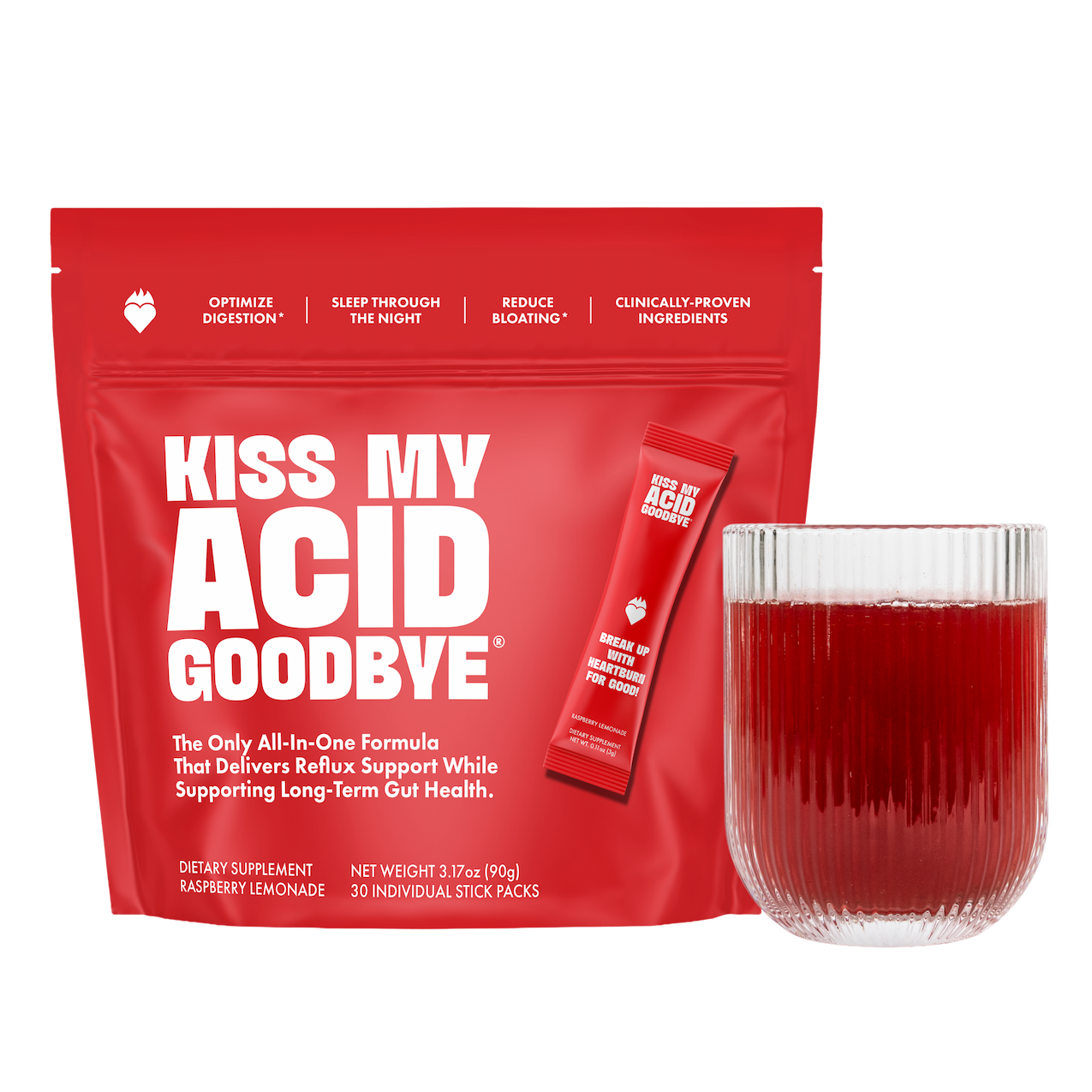
If you're tapering off your PPI, Kiss My Acid Goodbye (KMAG) supports the mucosal repair and gut barrier rebuilding that the taper protocol alone doesn't address.
When you try KMAG today, you get:
- ✓ 100-Day Satisfaction Guarantee*
- ✓ Lifetime access to the KMAG Symptom Tracker and Recipe Converter App
- ✓ Our 7-Day Reflux Reset Program
- ✓ Priority Support from our Human Support Team
*Valid on 90-day protocol bundle
Always consult your doctor before changing any medication or starting a new supplement.
What Actually Supports the Transition
The taper gets you off the drug. What happens next determines whether it sticks. These are the ingredients with legitimate clinical backing that directly address the root causes the taper protocol never touches.
GUTGARD™ — a specialized form of deglycyrrhizinated licorice (DGL) with the compound that raises blood pressure safely removed — stimulates the stomach's own mucus production, helping rebuild the mucosal lining that chronic acid exposure has compromised. In a 30-day double-blind, placebo-controlled trial, 56% of the GUTGARD group showed marked improvement versus 0% in the placebo group. Backed by over 30 years of gastric research — not a fringe ingredient.
ACTIValoe® — a certified aloe vera extract processed to remove the compounds that cause GI irritation — soothes esophageal tissue directly and has been shown to enhance absorption of Vitamins B12, C, and E — nutrients that PPIs actively deplete during long-term use. Research on aloe vera extract for GERD has shown meaningful symptom relief with good tolerability; ACTIValoe is an enhanced, standardized form of that compound.
MUCOSAVE™ — a patented blend of prickly pear cactus and olive leaf extract sourced from Sicily — supports the structural integrity of the mucosal barrier. In a two-month double-blind, placebo-controlled trial with 118 adults, MUCOSAVE showed a 74.3% improvement in GERD Quality of Life scores and a 59.1% reduction in symptom severity. This is a purpose-built compound addressing what PPIs leave behind.
German Chamomile Extract (10:1) — 10 times more concentrated than chamomile tea — provides potent anti-inflammatory support throughout the digestive tract. It addresses the chronic inflammation that makes even normal acid levels feel like an emergency, without suppressing acid production.
Kiss My Acid Goodbye (KMAG) combines all four ingredients in a single daily drink mix, at the therapeutic doses used in the clinical studies. The mechanism isn't suppression — it's rebuilding the conditions that make a resilient gut possible.
What the Research Shows
- MUCOSAVE™: 74.3% improvement in GERD quality of life in 2 months*
- MUCOSAVE™: 59.1% reduction in symptom severity*
- GUTGARD™: 56% marked improvement vs. 0% placebo in 30 days*
- ACTIValoe®: Standardized aloe vera extract; research on standard aloe vera showed comparable effectiveness to omeprazole and ranitidine*
- ACTIValoe®: Clinically shown to enhance B12, C, and E absorption*
*Clinical studies on individual ingredients. Individual results may vary. These statements have not been evaluated by the FDA.
Kiss My Acid Goodbye — formulated to support the mucosal repair, inflammation reduction, and microbiome balance that make long-term acid suppression unnecessary.
What to Actually Expect
The taper window is not comfortable. But knowing what's coming makes it manageable. Here's an honest map of what to expect when addressing root causes at the same time.
You might notice:
- Less bloating after meals
- Better sleep quality
- Fewer "emergency" antacids needed
Why it's happening:
- MUCOSAVE and ACTIValoe begin supporting the mucosal lining
- Concentrated Chamomile starts easing digestive inflammation
You might notice:
- Less burning after meals
- More confidence around food choices
- Fewer middle-of-the-night flare-ups
Why it's happening:
- GUTGARD and ACTIValoe continue supporting tissue repair
- Motility and microbiome support are ramping up
You might notice:
- Testing foods you used to avoid
- Feeling less anxious about meals and bedtime
- Talking to your doctor about reducing meds**
Why it's happening:
- Rebuilt gut barriers and reduced chronic inflammation
- The body's natural repair mechanisms gaining real traction
*If you have LPR or have been on PPIs for 1+ years, 4–6 months is a completely normal timeline. **Always work with your doctor before making any changes to your medications.
Real Customer Experiences
"I take Kiss My Acid Goodbye after dinner nightly, a few hours before bed and have noticed less reflux transpiring during my sleep (resulting in no late night wake ups to get antacids) And in the morning my reflux has improved. I've already been able to lower my PPI prescription down from 20mg to 10mg and with consistency of using KMAG I hope to be off of them completely soon. It's going great so far!"— Codi M., Verified Customer
"My husband had been on PPIs for 40 years and had fundoplication surgery in his early 30s. At 60, he was desperate for relief and open to trying alternate solutions, but most products came in capsule form that caused discomfort with his surgery. KMAG was different - the powder format gave him instant relief and was easy to take. After just one bottle, he was able to get off PPIs completely for the first time in four decades! He felt better than he had in years. We've tried other liquid and powder products, but we're convinced KMAG's formulation is what he needs. Nothing else compares."— Lisa K., Verified Customer
"Because of KMAG, I've been able to reduce my medication from two PPI pills, multiple Rolaids, and an H2 blocker daily to just one H2 blocker at night. I could likely wean off that as well, though a hiatal hernia makes things a bit more complicated. Now, I can eat almost anything that used to be a trigger, and I hardly ever need Rolaids. The fear of eating has reduced severely, and I've gained some weight back. Thank you so much for this product!"— Christian G., Verified Customer
"After being on PPIs for 15 months for severe gastritis - starting with 40mg omeprazole and then switching to pantoprazole - I was determined to find a way off them. I started KMAG 3 months ago and now I've been able to work with my doctor to gradually reduce my PPI dose - from 40mg daily down to 20mg every two days with no issues at all. I'm almost completely off PPIs now, which I never thought would be possible. KMAG seems to be working for my gastritis as well. I do have a mild hiatal hernia, so I know that's something KMAG can't fix, but the overall improvement has been significant. I'm so glad I stuck with it."— Becky S., Verified Customer
"I just wanted to take a moment to share how impactful KMAG has been in my clinical practice. Several of my clients have seen really meaningful results. One client shared and I quote “I don’t ever want to stop taking it.” She has dealt with GERD since childhood, and this is the only intervention she has ever found truly helpful. I also have another client currently using KMAG as he titrates off PPIs, and I’m looking forward to reviewing his progress at our next appointment."— Rachel Kronemann, MS, RDN, LD
"KMAG is the only product I’ve found to help with my acid reflux when I came off PPI’s. Thank you so much!"— Mary B., Verified Customer
The Long-Term PPI Risks Worth Knowing
This isn't here to scare you. It's here because you have a right to make informed decisions about a medication you may have been taking for years. These are documented findings from peer-reviewed research — not alternative medicine websites.
- Magnesium deficiency. Long-term PPI use impairs active magnesium absorption in the small intestine. The FDA issued a safety warning about this in 2011. Symptoms: muscle cramps, fatigue, irregular heartbeat, anxiety.
- Vitamin B12 deficiency. Stomach acid is needed to free B12 from food proteins. Suppress it long enough and B12 absorption declines significantly. Studies suggest 10–15% of long-term PPI users develop low B12 levels — with potential nerve damage if left unchecked.
- Increased C. difficile risk. Stomach acid is a natural defense against pathogens. Multiple studies have confirmed elevated C. diff infection risk in long-term PPI users. The FDA issued a specific warning about this in 2012.
- Bone density concerns. Calcium absorption requires an acidic stomach environment. Long-term PPI use disrupts this, increasing fracture risk — particularly hip, wrist, and spine in older adults. FDA fracture warning added in 2010.
- The rebound dependency cycle. The longer you take the drug, the harder it is to stop — which keeps you on it longer. The physiology creates a dependency that is functionally similar to addiction, even without the clinical classification. It's arguably the most common side effect nobody talks about.
The Question Worth Asking
Getting off the PPI is the right goal. This guide gives you the roadmap to do it without unnecessary suffering.
But there's a second question underneath all of this: why does the acid keep escaping in the first place? Because if you don't address that question, the symptoms come back. Maybe not immediately — but eventually. A damaged mucosal lining, chronic inflammation, bacterial imbalance, impaired natural healing. These are the roots that most treatment plans never reach.
The discomfort you feel when you try to stop PPIs is temporary. It's a withdrawal effect — real, miserable, and finite. What matters is what you do next.
That's the question Kiss My Acid Goodbye (KMAG) was built to answer.
Try KMAG Risk-Free
Every order includes:
- ✓ 100-Day Satisfaction Guarantee*
- ✓ Lifetime access to the KMAG Symptom Tracker and Recipe Converter App
- ✓ Our 7-Day Reflux Reset Program
- ✓ Priority Support from our Human Support Team
* Valid on 90-day protocol bundle. Commit to AT LEAST 90 days of daily use for best results.
Frequently Asked Questions
Can you stop taking omeprazole cold turkey?
How long does PPI rebound last?
What is the best way to taper off a PPI?
What can I take instead of a PPI?
Will acid reflux go away after stopping PPIs?
Is it safe to take PPIs long term?
**This is not medical advice. Always consult with your physician before making changes to your medication regimen or adding new supplements to your routine, especially if you have any diagnosed medical conditions or are currently taking prescription medications. These statements have not been evaluated by the Food and Drug Administration. This product is not intended to diagnose, treat, cure, or prevent any disease. Clinical study data referenced applies to individual ingredients in Kiss My Acid Goodbye and not to the formula as a whole. Individual results may vary.

