

Why a Short-Term PPI Prescription Never Ends
No One Ever Decided You’d Be on This Forever. It Just Never Ended.
Most PPI labels describe weeks of use, not years. Here’s how a short prescription quietly becomes a long one, who genuinely needs to stay on one, and what a review can and can’t tell you.

One refill at a time.
A Prescription Written for Weeks
Maybe it started with a bad month. Heartburn that wouldn’t quit, a doctor’s visit, a prescription. The plan sounded simple: a few weeks, then see how things go. Then the refill came, because the heartburn was still there. Then another. Somewhere along the way, a short course became a standing order, and nobody ever sat down and decided it should.
It helps to look at what the labels actually say. Over-the-counter PPIs are meant for a 14-day course, repeated no more often than every 4 months unless a doctor directs otherwise (FDA). One common prescription PPI, omeprazole, is labeled for up to 4 weeks for heartburn and other reflux symptoms, and 4 to 8 weeks for erosive esophagitis, with additional courses considered if symptoms come back. Maintenance of healing is also listed, though the label notes that controlled studies don’t extend beyond 12 months.
Over the counter: 14 days. Prescription omeprazole: up to 4 weeks for reflux symptoms, 4 to 8 weeks for erosive esophagitis. Controlled maintenance studies stop at 12 months.
How Weeks Become Years
Refills are easy. Reviews take a decision. In a 2022 clinical practice update, the American Gastroenterological Association (AGA) said that every patient taking a PPI should have a regular review of why they’re taking it, with the reason documented, and that this review should be the responsibility of the patient’s primary care provider. The same update notes that PPIs are increasingly being used for conditions where their benefit is less certain.
A 2018 review of international studies found estimates of inappropriate PPI use ranging widely, from 11% to 84%, and concluded that PPIs continue to be overused worldwide. Those figures describe whole populations, not any one person. But they suggest that a prescription with no current reason behind it is not rare.
The prescription didn’t change. Nobody ever asked whether it should.

How a short course can quietly become years.
Some People Really Do Need to Stay On One
This isn’t an argument against PPIs. For some people they are exactly the right medication. The AGA says patients with complicated reflux disease, such as a history of severe erosive esophagitis, an esophageal ulcer, or a peptic stricture, should generally not be considered for stopping. The same goes for people with known Barrett’s esophagus, eosinophilic esophagitis, or idiopathic pulmonary fibrosis, and for people at high risk of upper GI bleeding.
If any of that describes you, the answer to “do I still need this?” may well be yes, and that is a perfectly good outcome of a review.
What the Label Says About Long-Term Use
The same prescription label lists several cautions tied to longer use. Long-term and multiple-daily-dose therapy may be associated with an increased risk of osteoporosis-related fractures. Daily long-term use (for example, longer than 3 years) may lead to poor B12 absorption or B12 deficiency. Low magnesium has been reported, rarely, with prolonged treatment. And PPI therapy may be associated with an increased risk of C. difficile-associated diarrhea.
The AGA is careful about how to read these, and so should we. Its guidance is that the decision to stop a PPI should rest on whether there is still an indication for it, not on worry about side effects alone. That’s exactly why the review matters: it’s the one conversation that weighs both sides.
What a Review Can and Can’t Tell You
Is there still a documented reason for acid suppression?
The AGA’s best-practice statements cover whether there is a definite indication, whether the dose can be stepped down, how to assess bleeding risk before any change, and what to expect when a long-term PPI is reduced.
None of the ten best-practice statements in the AGA’s summary address how strong your esophageal lining is, how inflamed the tissue is, or how balanced your gut bacteria are.
That isn’t a gap in anyone’s care. Those questions are simply outside what the guidance is designed to answer. A review can tell you whether acid suppression is still indicated. It generally can’t tell you whether the conditions that make normal acid hurt are improving.
There’s another wrinkle. The AGA notes that people who step down from a long-term PPI may get transient symptoms from rebound acid hypersecretion. When symptoms flare after a change, it can look like proof the medication is still needed, even when part of what you’re feeling may be the rebound.
PPIs and antacids are built to lower acid. They aren’t designed to directly address damaged protective barriers, chronic inflammation, bacterial imbalance, or impaired natural healing. Those four can make ordinary acid hurt, and they’re a separate question from whether you still need the medication.
Questions Worth Asking at Your Next Refill
- What is the specific reason I’m taking this, and is it written in my chart?
- Is this still the right dose? The AGA suggests most people on twice-daily dosing for a chronic condition be considered for stepping down to once daily.
- Do I have a condition, like Barrett’s or severe erosive esophagitis, that means I should stay on it?
- If we try stepping down, what symptoms should I expect, and what’s the plan if they show up?
Never stop or change a prescribed medication on your own. Whether and how to step down is a decision for you and your doctor, and the right approach depends on why you were prescribed the PPI in the first place.
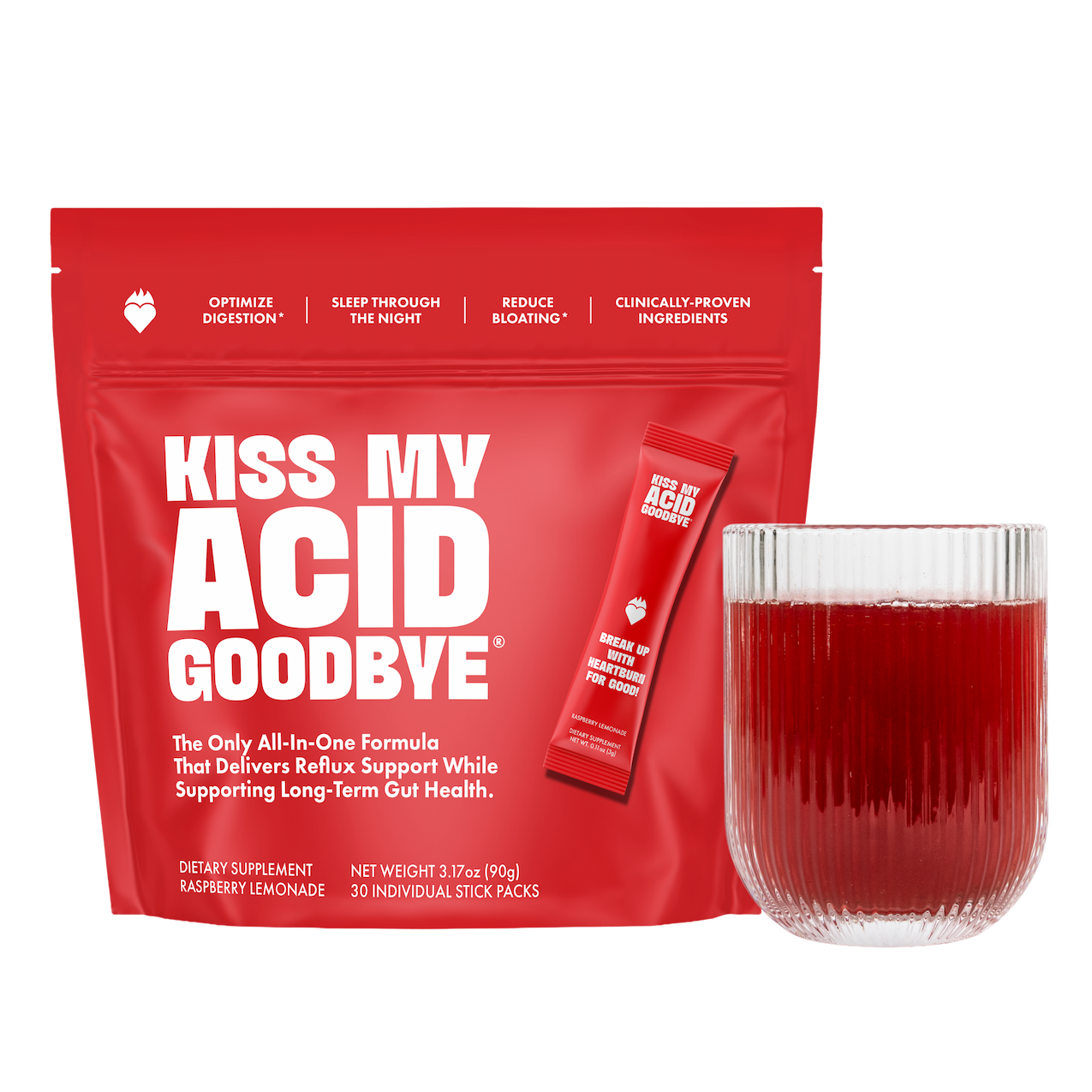
If you want to support the tissue side while you have that conversation with your doctor, KMAG may be worth a closer look.
When you try KMAG today, you get:
- ✓ 100-Day Satisfaction Guarantee*
- ✓ Lifetime access to the KMAG Symptom Tracker and Recipe Converter App
- ✓ Our 7-Day Reflux Reset Program
- ✓ Priority Support from our Human Support Team
*Valid on 90-day protocol bundle. Commit to AT LEAST 90 days of daily use for best results.
Always consult your doctor or pharmacist before adding any supplement to your routine.
Where KMAG Fits: Support Alongside the Review
Kiss My Acid Goodbye (KMAG) isn’t a replacement for your medication or for your doctor’s judgment. It’s built around the four things a PPI isn’t: supporting the barrier, inflammation, bacterial balance, and healing of the tissue that takes the exposure. Many customers start KMAG while staying on their PPI as directed, and work with their doctor over time on whether and how to adjust.
- MUCOSAVE (400mg): barrier support. May help support a protective gel layer along the digestive lining. In a 2-month, double-blind, placebo-controlled trial of 118 adults, a formulation containing MUCOSAVE reduced reflux symptom scores by 59.1% compared with placebo.
- ACTIValoe (150mg): esophageal barrier support. A purified aloe vera extract that may help form a soothing barrier along the esophageal lining.
- GUTGARD (150mg): digestive comfort and tissue support. Our blood-pressure-friendly form of DGL, studied in double-blind trials for digestive comfort.
- German Chamomile Extract 10:1 (200mg): anti-inflammatory support for the low-grade irritation that makes a sensitive gut more reactive.
By The Numbers
- MUCOSAVE (400mg), in a formulation: 59.1% reduction in reflux symptom scores vs. placebo. 118 adults, 2-month double-blind RCT (Evidence-Based CAM, 2016). The trial formulation was dosed at 6 g/day and also contained sodium alginate and sodium bicarbonate; it is not the same product or dose as KMAG.
Studies referenced apply to individual ingredients in Kiss My Acid Goodbye. Individual results may vary.
What to Actually Expect
You might notice:
- Less bloating
- Better sleep
- Fewer "emergency" antacids
Why it's happening:
- MUCOSAVE and ACTIValoe start supporting your mucosal lining
- Chamomile begins to ease irritation
You might notice:
- Less burning after meals
- More confidence around food
- Fewer middle-of-the-night flare-ups
Why it's happening:
- GUTGARD and ACTIValoe continue supporting tissue repair
- Bacterial balance support ramps up, and motility support may begin to help too
You might notice:
- Testing foods you used to avoid
- Feeling less scared of food and bedtime
- Talking to your doctor about slowly reducing meds
Why it's happening:
- KMAG's ingredients have been supporting your gut barriers and helping calm inflammation
- Your gut is better maintained for long-term comfort and relief
If you have LPR or have been on PPIs for 1+ years, 4 to 6 months is a very normal timeline. Always work with your doctor before changing medications.
What People Are Saying
"I started KMAG 3 months ago and now I've been able to work with my doctor to gradually reduce my PPI dose - from 40mg daily down to 20mg every two days with no issues at all. I'm almost completely off PPIs now, which I never thought would be possible. KMAG seems to be working for my gastritis as well... the overall improvement has been significant. I'm so glad I stuck with it."Becky S., Verified Customer
"I've already been able to lower my PPI prescription down from 20mg to 10mg and with consistency of using KMAG I hope to be off of them completely soon. It's going great so far!"Codi M., Verified Customer
Individual results vary. Dose changes were made with a doctor.
"I'm so glad I stuck with it."Becky S., Verified Customer
Try KMAG Risk-Free
Every order includes:
- ✓ 100-Day Satisfaction Guarantee*
- ✓ Lifetime access to the KMAG Symptom Tracker and Recipe Converter App
- ✓ Our 7-Day Reflux Reset Program
- ✓ Priority Support from our Human Support Team
* Valid on 90-day protocol bundle. Commit to AT LEAST 90 days of daily use for best results.
Frequently Asked Questions
Can I take KMAG while still on my PPI?
Yes. Many customers start KMAG while continuing their current PPI as directed and work with their doctor over time on whether and how to adjust their prescription. Never stop a prescribed medication on your own.
Is it safe to stop a PPI on my own?
Please don’t change a prescribed medication without your doctor. Some conditions call for long-term PPI use, and some people get temporary rebound symptoms after stepping down. A doctor can help you decide whether and how to adjust.
Is KMAG a replacement for my PPI?
No. KMAG is a daily dietary supplement built to support the tissue side of reflux. It is not a drug and does not replace medical care or a prescribed medication. That said, many customers talk with their doctor about whether and how to taper off a PPI after months of supporting their esophageal and stomach lining, calming inflammation, and supporting bacterial balance with KMAG. Any change should be made with your doctor, who knows why the PPI was prescribed.
How do I take it?
Mix one stick pack in about 8oz of water, 30 minutes before or after a meal (or when reflux is worst).
This is not medical advice. Always consult with your physician before adding new supplements to your routine, especially if you have any diagnosed medical conditions or are currently taking prescription medications. These statements have not been evaluated by the Food and Drug Administration. This product is not intended to diagnose, treat, cure, or prevent any disease. Clinical study data referenced applies to individual ingredients in Kiss My Acid Goodbye and not to the formula as a whole. Individual results may vary.

