

Hiatal Hernia and Acid Reflux Explained
A Structural Problem Is Quietly Behind Millions of Reflux Cases. Most People Whose Reflux Won't Respond to Treatment Have Never Been Told to Ask About It.
Nearly half of people who undergo endoscopy for reflux symptoms have a hiatal hernia, a structural condition that does not just weaken the valve that keeps acid down. It turns into a reservoir that sends the same acid back up twice.

A structural condition, not a dietary one, and one that a standard reflux workup often never surfaces.
The Treatment That Should Have Worked, But Didn't
You did the taper. You cut the trigger foods. You elevated the head of the bed. And your reflux still shows up, night after night, resistant to every standard intervention.
For a meaningful share of people in this exact position, the answer isn't a stronger medication or a stricter diet. It's a structural condition sitting quietly behind the whole picture, one that a standard reflux workup often never surfaces: a hiatal hernia.
It sounds like a separate diagnosis. Mechanically, it's the reason standard treatment keeps falling short.
What a Hiatal Hernia Actually Is
The diaphragm has a natural opening called the hiatus, where the esophagus passes through on its way to the stomach. In a hiatal hernia, part of the stomach slides upward through that opening into the chest cavity.
The overwhelming majority, over 95%, are what's called a sliding hiatal hernia: the junction between the esophagus and stomach migrates upward along with a portion of the stomach itself. It's the far more common of the two general types, and it's the type responsible for the reflux connection described here.
Among patients who undergo an upper endoscopy specifically for reflux symptoms, studies have found a hiatal hernia present in close to half. Among the broader population getting any endoscopy, the prevalence is still nearly 3 in 10. Larger hernias, those over 2 centimeters, are associated with measurably worse reflux severity.
Why This Turns Into a Double Hit
Here is the part almost nobody explains clearly: a hiatal hernia doesn't just get in the way. It actively disrupts two separate parts of the same protective system, and the combination compounds.
The first hit: it weakens the valve itself. The lower esophageal sphincter, the ring of muscle that's supposed to stay closed, relies partly on the diaphragm's crura, the muscular fibers that wrap around the esophagus, to add extra squeeze from the outside. When the stomach pushes up through the hiatus, that support gets pulled apart. The valve's effective length and pressure both drop, and it starts relaxing at the wrong moments, particularly at night.
The second hit: the hernia becomes a reservoir. Above the diaphragm, in the small pocket the hernia creates, refluxed stomach contents can sit and collect instead of draining back down. On the next swallow, that trapped acid gets pushed back up into the esophagus again. The same reflux event effectively happens twice, once from the stomach, and again from the pocket sitting just above the weakened valve.
"A hiatal hernia doesn't just weaken the valve that's supposed to keep acid down. It creates a small holding pocket that sends the same acid back up a second time."

Two mechanisms in one structural change: a weakened valve, and a pocket that re-refluxes trapped acid on the next swallow.
Why This Explains Treatment-Resistant Reflux
This mechanism explains a pattern that frustrates a lot of long-term sufferers: reflux that doesn't fully respond even to consistent PPI use, or that responds initially and then plateaus.
PPIs reduce how much acid the stomach produces. They do nothing to the structural relationship between the diaphragm and the valve, and they do nothing to the reservoir effect created by the hernia itself. If the anatomy is compromised, the medication is working against a mechanical disadvantage it was never designed to correct.
This is also why standard advice, like avoiding trigger foods or not eating late, sometimes underperforms for this group. Diet can reduce how much acid is available to reflux. It can't correct a structural gap in the valve or empty a reservoir that refills every time you swallow.
What Real Relief Actually Requires
For reflux driven by a hiatal hernia, three things matter, regardless of hernia size or severity:
1. Get it identified. An upper endoscopy or barium swallow study can confirm a hiatal hernia and its size. Many people have lived with undiagnosed reflux for years without ever being told to check for this.
2. Understand what's actually adjustable. Small to moderate hiatal hernias are often managed without surgery. Larger or symptomatic ones may warrant a conversation with a gastroenterologist or surgeon about repair. This is a decision for you and your doctor, not a do-it-yourself call.
3. Support the tissue that's absorbing repeated exposure. Whether or not the hernia itself is surgically addressed, the esophageal and stomach lining is still taking on repeated acid contact in the meantime, and still needs a protective barrier, reduced inflammation, and support for its own repair process.
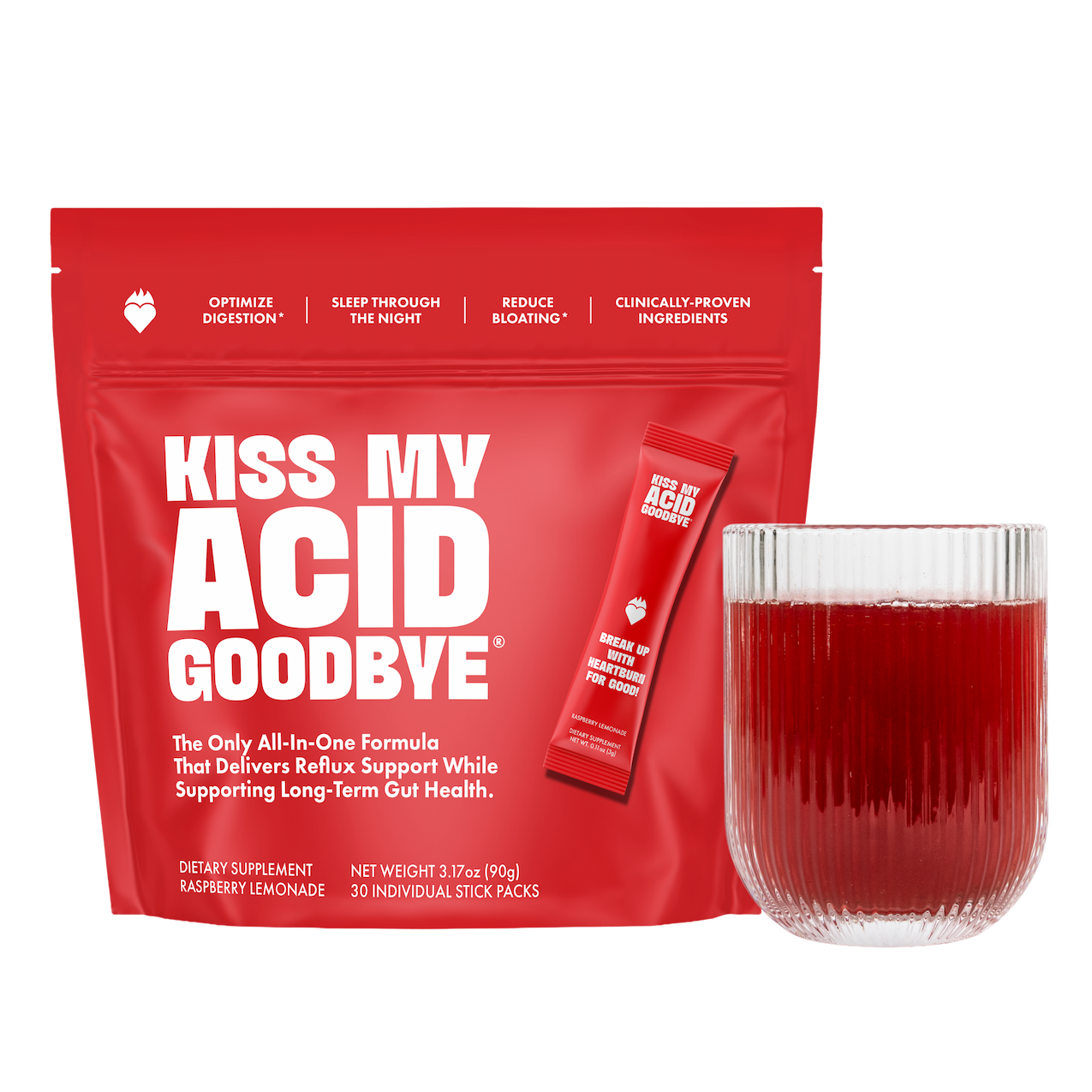
If your reflux hasn't fully responded to standard treatment and you've never been evaluated for a hiatal hernia, Kiss My Acid Goodbye (KMAG) supports the same protective barrier that repeated reflux exposure wears down, regardless of the underlying structural cause.
When you try KMAG today, you get:
- ✓ 100-Day Satisfaction Guarantee*
- ✓ Lifetime access to the KMAG Symptom Tracker and Recipe Converter App
- ✓ Our 7-Day Reflux Reset Program
- ✓ Priority Support from our Human Support Team
*Valid on 90-day protocol bundle
Always consult your doctor before changing any medication or starting a new supplement.
The Research Behind Kiss My Acid Goodbye
KMAG doesn't attempt to repair a hiatal hernia or correct diaphragm anatomy, no supplement can. What it's built to do is support the four root causes that make the tissue caught in the middle of this mechanism more vulnerable than it needs to be: damaged protective barriers, chronic inflammation, bacterial imbalance, and impaired natural healing.
MUCOSAVE (400mg): Barrier Support
Forms a protective gel barrier that may help shield the esophageal and stomach lining from repeated acid exposure, whatever the structural cause behind it. In a 2-month double-blind, placebo-controlled study published in Evidence-Based Complementary and Alternative Medicine (2016), MUCOSAVE showed a 74.3% total improvement on the GERD-Health Related Quality of Life Assessment.
GUTGARD (150mg): Motility Support
A deglycyrrhizinated licorice extract that stimulates the stomach's natural protective mechanisms and may support gastric motility, helping reduce the pressure that compounds reflux from below. In a 30-day double-blind, placebo-controlled trial, 56% of the GUTGARD group showed marked improvement, compared to 0% in the placebo group.
ACTIValoe (150mg): Esophageal Tissue Support
May help form a soothing barrier along the esophageal lining, the tissue with no natural protective lining of its own and the tissue taking the most direct hit from a reservoir effect. It also supports absorption of B12, C, and E.
German Chamomile Extract 10:1 (200mg): Anti-Inflammatory Support
Provides concentrated anti-inflammatory support throughout the digestive tract, addressing the chronic inflammation that builds when tissue is exposed to acid more frequently than it should be.
By The Numbers
- MUCOSAVE (400mg): 74.3% total improvement on GERD Quality of Life Assessment. 118 adults, 2-month double-blind RCT (Evidence-Based CAM, 2016)
- GUTGARD (150mg): 56% showed marked improvement vs. 0% in placebo. 50 adults, 30-day double-blind RCT (Evidence-Based CAM, 2012)
Studies referenced apply to individual ingredients in Kiss My Acid Goodbye. Individual results may vary.
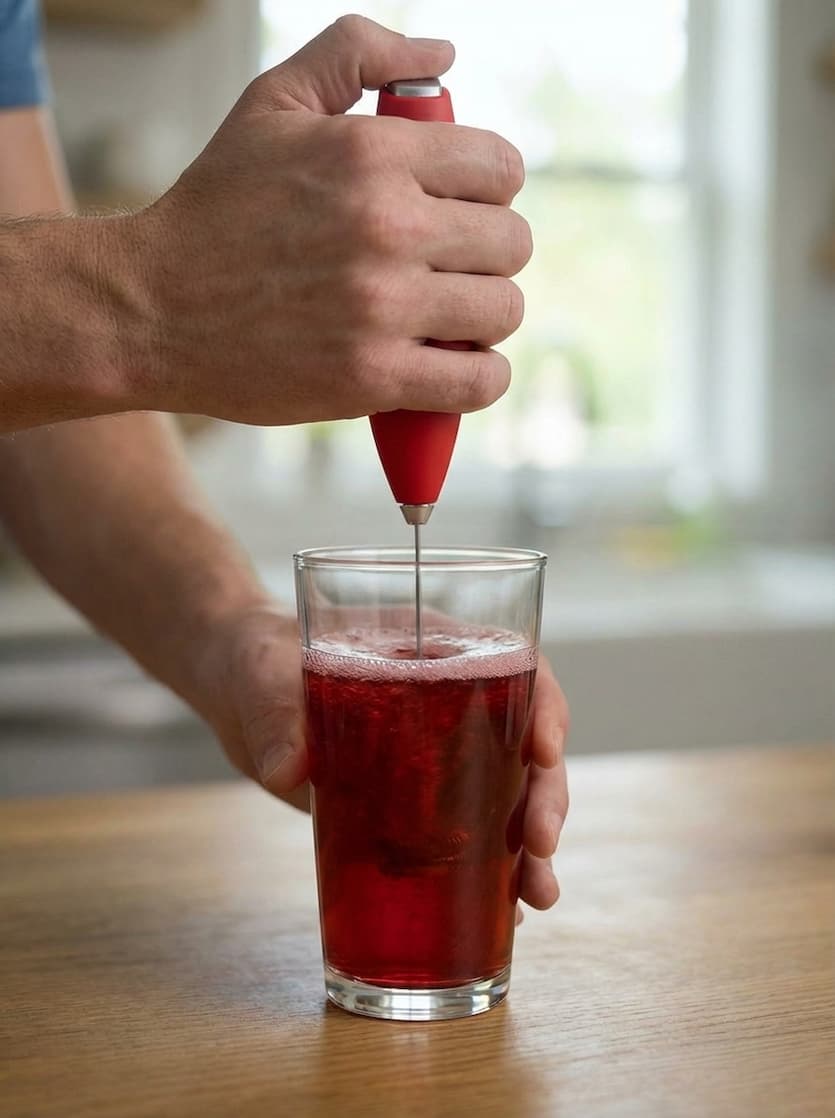
KMAG is taken once daily, mixed into about 8oz of water, ideally close to your largest meal or at the time of day when reflux tends to be worst.
What to Actually Expect
Supporting the tissue affected by a hiatal hernia is not a quick fix, and if surgical repair is part of your path, that's a separate and longer conversation with your doctor. What KMAG can do is support the lining that's absorbing exposure in the meantime, with consistent daily use.
You might notice:
- Less bloating
- Better sleep
- Fewer "emergency" antacids
Why it's happening:
- MUCOSAVE and ACTIValoe begin supporting your mucosal lining
- Concentrated Chamomile starts easing irritation
You might notice:
- Less burning after meals
- More confidence around food
- Fewer middle-of-the-night flare-ups
Why it's happening:
- GUTGARD and ACTIValoe continue supporting tissue repair
- Motility support ramps up
You might notice:
- Testing foods you used to avoid
- Feeling less anxious about meals and bedtime
- A follow-up conversation with your doctor about your hernia
Why it's happening:
- KMAG's ingredients have supported your gut barriers and reduced inflammation
- Your gut is better supported for long-term comfort and relief
If you have a diagnosed hiatal hernia, especially a larger one, or you're also managing a PPI or H2 blocker, 4 to 6 months is a completely normal timeline. Always work with your doctor before changing any medication or considering surgical evaluation.
Real Customer Experiences
"I have had GERD with a hiatal hernia for years. No matter what I did (taking PPIs, even watching what I eat and drink, stop eating by 4pm, etc.) around 2:30am I would wake up with horrible reflux (even with the head of the bed raised). I have only been using KMAG three weeks and it is miraculous! I can sleep through the night with no reflux! I also don't have any reflux during the day and pain from acid sitting where my hernia is is gone."Deborah L., Verified Customer
"I was diagnosed with a hiatal hernia at 19 and have suffered with acid reflux my entire life. After trying every remedy imaginable, prescriptions, OTC products, natural solutions, KMAG seemed too good to be true. But in just two weeks, I went from taking 5-10 antacid tablets daily to half a tablet or less."Cynthia A., Verified Customer
"I started KMAG 3 months ago and now I've been able to work with my doctor to gradually reduce my PPI dose, from 40mg daily down to 20mg every two days with no issues at all. I'm almost completely off PPIs now, which I never thought would be possible. KMAG seems to be working for my gastritis as well... the overall improvement has been significant. I'm so glad I stuck with it."Becky S., Verified Customer
"I've been able to reduce my medication from two PPI pills, multiple Rolaids, and an H2 blocker daily to just one H2 blocker at night. I could likely wean off that as well, though a hiatal hernia makes things a bit more complicated. Now, I can eat almost anything that used to be a trigger."Christian G., Verified Customer
"In just two weeks, I went from taking 5-10 antacid tablets daily to half a tablet or less."Cynthia A., Verified Customer
The Question Worth Asking Your Doctor
Not "do I need surgery." The more useful starting question is simpler: has anyone actually looked for a hiatal hernia, or evaluated the size of one I already have? If your reflux hasn't responded the way you'd expect to standard treatment, that question alone can surface a structural piece of the puzzle a typical appointment never gets to.
Try KMAG Risk-Free
Every order includes:
- ✓ 100-Day Satisfaction Guarantee*
- ✓ Lifetime access to the KMAG Symptom Tracker and Recipe Converter App
- ✓ Our 7-Day Reflux Reset Program
- ✓ Priority Support from our Human Support Team
* Valid on 90-day protocol bundle. Commit to AT LEAST 90 days of daily use for best results.
Frequently Asked Questions
How do I know if I have a hiatal hernia?
A hiatal hernia is typically confirmed through an upper endoscopy or a barium swallow study. If your reflux hasn't responded well to standard treatment, ask your doctor whether either of these has been done.
Do all hiatal hernias need surgery?
No. Many small to moderate hiatal hernias are managed without surgery. Larger or more symptomatic hernias may be discussed with a gastroenterologist or surgeon. This decision depends on your specific case and should always be made with your doctor.
Can KMAG fix or shrink a hiatal hernia?
No. KMAG does not repair diaphragm anatomy or address the structural hernia itself, no supplement can. KMAG supports the esophageal and stomach tissue that's repeatedly exposed to acid as a result of the hernia's effect on reflux.
Can I take KMAG while still on my PPI?
Yes. KMAG is designed to be taken alongside your current medications. If you're a long-term PPI user, the recommended approach is to continue your PPI for the first 2 to 3 months while taking KMAG, then talk to your doctor about tapering if appropriate.
Will KMAG interact with my medications?
KMAG is formulated from food-based ingredients without known major drug interactions, but we recommend taking it about 2 hours apart from prescription medications, and always mention any new supplement to your doctor or pharmacist.
How long before KMAG starts working?
Initial improvements typically appear within the first one to two months: less bloating, fewer antacids, better sleep. The most significant improvements come with three to six months of consistent daily use. The 30-day money-back guarantee gives you a risk-free window to get started.
This is not medical advice. Always consult with your physician before adding new supplements to your routine, especially if you have any diagnosed medical conditions or are currently taking prescription medications. Never stop or change a prescribed medication without consulting your doctor. These statements have not been evaluated by the Food and Drug Administration. This product is not intended to diagnose, treat, cure, or prevent any disease. Clinical study data referenced applies to individual ingredients in Kiss My Acid Goodbye and not to the formula as a whole. Individual results may vary.

