

Nighttime Acid Reflux Explained
Nighttime Reflux Isn't Daytime Reflux That Happens to Occur at Night. It's a Different, More Damaging Problem, and Sleep Position Alone Won't Fix It.
While you're awake, your body has two automatic systems working to clear stomach acid the moment it shows up. Both of them shut down almost completely while you sleep.

The middle-of-the-night wake-up daytime habits alone can't explain.
The 2 A.M. Wake-Up Daytime Reflux Never Explains
Some people manage their reflux carefully during the day. They know their trigger foods. They stop eating a few hours before bed. They've done the elimination diet, cut the coffee, skipped the wine. And they still wake up at 2 or 3 in the morning with a burning throat, a sour taste, or a cough that comes out of nowhere.
If daytime habits are dialed in, why does the worst symptom of the day happen while unconscious?
The answer isn't a mystery food eaten at dinner three hours earlier. It's something more basic: what your body can do about reflux changes completely the moment you fall asleep, regardless of what triggered it.
What Actually Changes the Moment You Lie Down
During the day, the body has two automatic, mostly invisible systems constantly working to clear acid out of the esophagus before it causes damage.
The first is gravity. Standing or sitting upright, any reflux that escapes the stomach tends to drain back down almost immediately. It doesn't have time to sit against sensitive tissue.
The second is swallowing. A person awake and upright swallows roughly once a minute, often without noticing. Each swallow carries a small wave of saliva down the esophagus. Saliva isn't just moisture, it's mildly alkaline, and it works to neutralize and rinse away whatever acid is sitting there.
Lie down to sleep and both systems go offline at nearly the same time. Gravity no longer pulls reflux back toward the stomach, it just sits, or migrates further up toward the throat. And swallowing frequency drops dramatically during sleep, which means the saliva that would normally buffer and clear that acid barely shows up.
In a controlled sleep-lab study published in Gastroenterology, researchers measured how long acid remained in the esophagus during sleep compared to wakefulness. Acid clearance time slowed significantly as subjects moved deeper into sleep. (Orr WC, Johnson LF, Robinson MG. "Effect of sleep on swallowing, esophageal peristalsis, and acid clearance." Gastroenterology, 1984.)
Why the Same Reflux Episode Becomes More Damaging at Night
This is the part that gets missed in most reflux advice. Nighttime reflux doesn't necessarily happen more often than daytime reflux. For a lot of people, it happens less often. But each individual episode lasts substantially longer, because none of the normal clearance tools are available.
Esophageal tissue damage isn't driven primarily by how many times acid touches it. It's driven by how long acid sits there each time. A daytime reflux episode that clears in under a minute and a nighttime episode that lingers for ten or twenty minutes are not the same event, even if they involve the exact same amount of stomach acid.
Over months and years, that longer contact time compounds. It's a major reason nighttime reflux is associated with more severe forms of esophageal irritation than daytime-only reflux, even in people who technically have fewer total reflux episodes per day.
"It isn't that nighttime reflux happens more often. It's that when it happens, the body has almost no way to clear it quickly."

Same reflux, longer exposure: what changes the moment you fall asleep.
The Part Sleep Position Advice Always Leaves Out
Elevating the head of the bed and sleeping on the left side are both legitimate, evidence-informed adjustments. They can meaningfully reduce how far reflux travels and how long it sits against tissue. They're worth doing.
What they don't do is address the tissue itself. Someone who has spent years with slower nighttime acid clearance has, by definition, spent years giving reflux more contact time with the esophageal lining than the same volume of daytime reflux would ever get. A pillow wedge changes the mechanics going forward. It doesn't do anything for tissue that's already sensitized and under-protected from thousands of previous nights.
What Actually Helps With the Overnight Window
Three things matter for nighttime reflux specifically, beyond position and timing:
1. A protective barrier that's already in place before the vulnerable window starts. The esophagus has no meaningful clearance tools once someone is asleep, so whatever protection exists has to be there in advance, not reactive to symptoms already underway.
2. Support for tissue that's absorbed repeated, prolonged acid exposure. Nighttime reflux's longer contact time makes the esophageal lining a priority, not an afterthought.
3. Reducing the baseline inflammation that makes ordinary, low-level nightly exposure feel worse than it should.
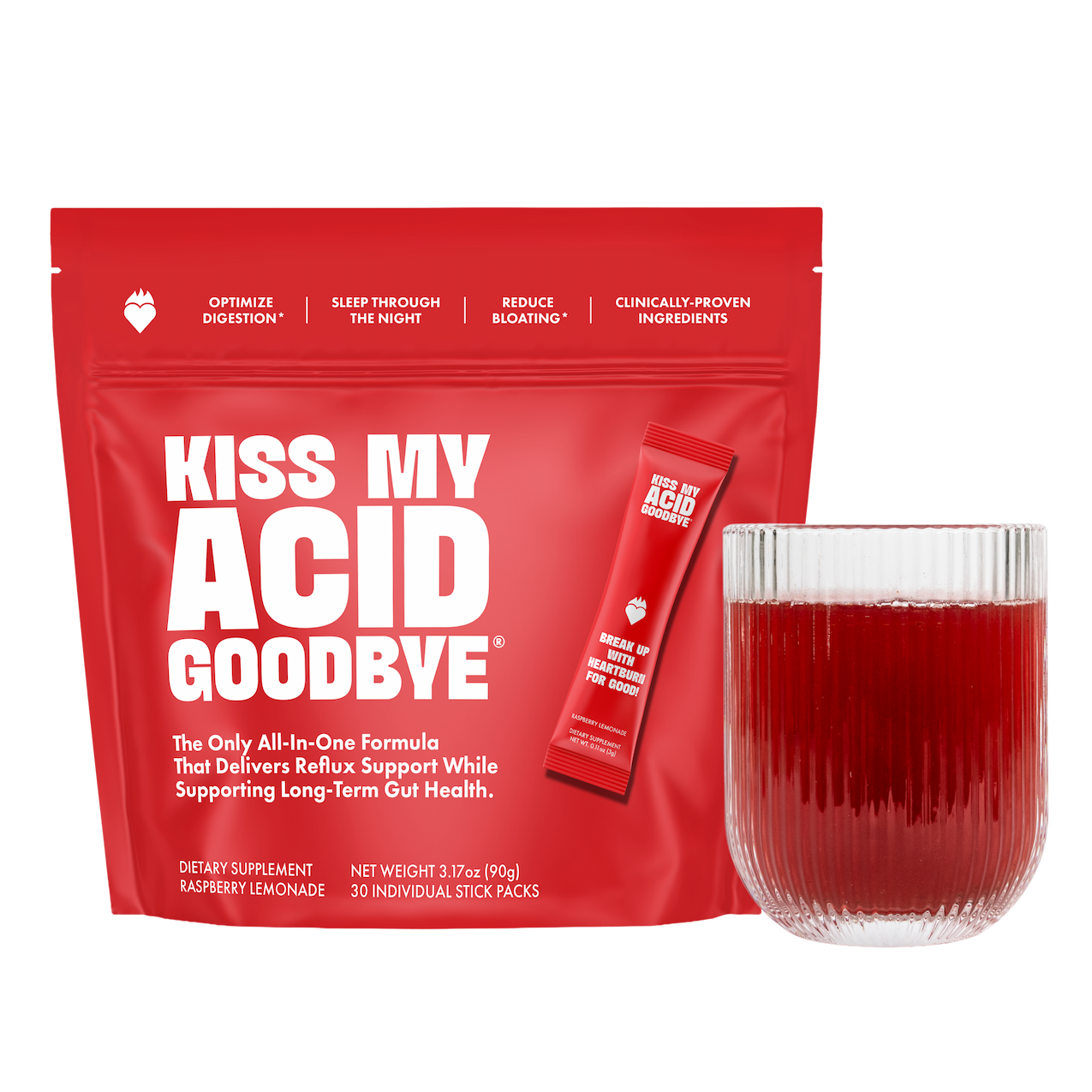
If your worst reflux symptoms consistently show up overnight, even when your daytime habits are already dialed in, KMAG may be worth a closer look.
When you try KMAG today, you get:
- ✓ 100-Day Satisfaction Guarantee*
- ✓ Lifetime access to the KMAG Symptom Tracker and Recipe Converter App
- ✓ Our 7-Day Reflux Reset Program
- ✓ Priority Support from our Human Support Team
*Valid on 90-day protocol bundle
Always consult your doctor or pharmacist before adding any supplement to your routine.
The Research Behind KMAG
KMAG combines four clinically studied ingredients, each targeting a different part of what makes nighttime reflux specifically damaging.
MUCOSAVE (400mg): Barrier Support
Forms a protective gel coating that bonds to the digestive lining, creating a physical barrier between acid and tissue. Because it's taken before bed, that barrier is already in place during the exact hours when the body has no active clearance mechanism of its own. In a 2-month, double-blind, placebo-controlled study of 118 adults, MUCOSAVE showed a 74.3% improvement on the GERD-Health Related Quality of Life Assessment.
GUTGARD (150mg): Motility Support
A deglycyrrhizinated licorice extract that supports the stomach's natural protective mechanisms and may support gastric motility, helping food move through the digestive tract rather than sitting and creating pressure overnight. In a 30-day double-blind study, 56% of the GUTGARD group showed marked improvement, compared to 0% in the placebo group.
ACTIValoe (150mg): Esophageal Tissue Support
A purified aloe vera extract that may help form a soothing barrier along the esophageal lining — the tissue actually studied — which may in turn help reduce how much acid and pepsin travel up toward the throat. This is particularly relevant overnight, when reflux that isn't cleared quickly has more time and more opportunity to reach higher into the throat.
German Chamomile Extract 10:1 (200mg): Anti-Inflammatory Support
Provides concentrated anti-inflammatory support, addressing the chronic, low-grade inflammation that builds from repeated nightly exposure. Research suggests this kind of concentrated botanical support may help reduce digestive irritation over time.
By The Numbers
- MUCOSAVE (400mg): 74.3% improvement in GERD-related quality of life. 118 adults, 2-month double-blind RCT (Evidence-Based CAM, 2016)
- GUTGARD (150mg): 56% marked improvement vs. 0% placebo. 50 adults, 30-day double-blind RCT (Evidence-Based CAM, 2012)
Studies referenced apply to individual ingredients in Kiss My Acid Goodbye. Individual results may vary.
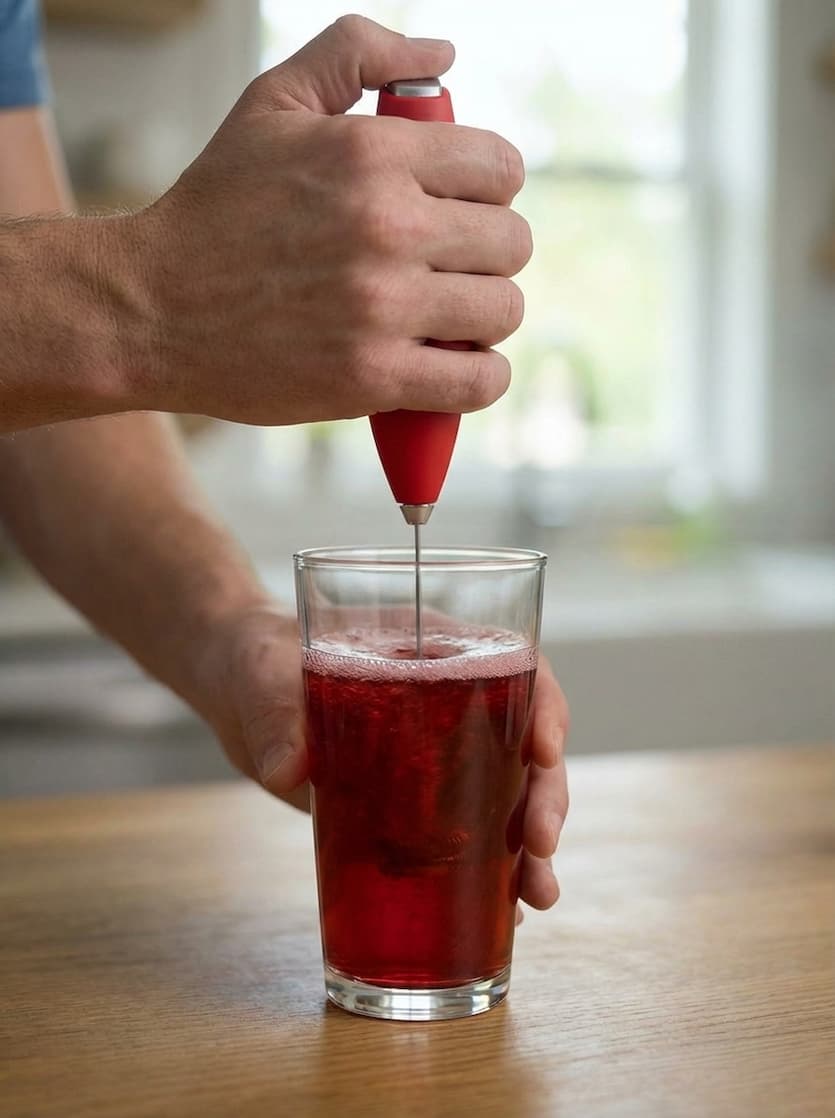
KMAG is taken once daily, mixed into about 8oz of water, ideally before the window when overnight reflux tends to occur.
What to Actually Expect
You might notice:
- Less bloating
- Better sleep
- Fewer "emergency" antacids
Why it's happening:
- MUCOSAVE and ACTIValoe begin supporting your mucosal lining
- Concentrated Chamomile starts easing irritation
You might notice:
- Less burning after meals
- More confidence around food
- Fewer middle-of-the-night flare-ups
Why it's happening:
- GUTGARD continues supporting tissue repair and motility
- ACTIValoe's microbiome support ramps up
You might notice:
- Testing foods you used to avoid
- Feeling less scared of bedtime
- Talking to your doctor about slowly reducing meds
Why it's happening:
- KMAG's ingredients have supported your gut barriers and reduced inflammation
- Your gut is better maintained for long-term comfort and relief
If you have LPR or have been on PPIs for 1+ years, 4 to 6 months is a very normal timeline. Always work with your doctor before changing medications.
What People Dealing With Nighttime Reflux Are Saying
"I've dealt with acid reflux for years, especially at night. Even when I was careful about what I ate, it would still flare up. I tried antacids and other meds but they never really solved the problem. I've been pleasantly surprised by Kiss My Acid Goodbye. I noticed relief pretty quickly and it's been keeping things calm and under control. It feels like a cleaner, healthier option compared to what I was taking before. I would definitely recommend KMAG."Zach S., Verified Customer
"It works! After about a month, I feel much better and stopped having reflux at night. And I'm sleeping better than I have in years!"Heather A., Verified Customer
"I've been on PPIs for 10+ years, and last week I was having major reflux at night with burning in my throat. I've only been using KMAG for 4 days, and these past 4 nights I've been completely symptom free. I even went out for wings and beers last night - no issues."Brian G., Verified Customer
"I've been dealing with reflux for about five years now, and I'm resistant to PPIs. My reflux is mostly nighttime reflux, which means I often wake up in the morning not feeling great. I started using KMAG recently, and after a couple of weeks, I've already seen improvements. I've reached a point where I just forget I even have reflux most of the time. On top of that, the flavor is genuinely great."Isa A., Verified Customer
"I've reached a point where I just forget I even have reflux most of the time."Isa A., Verified Customer
The Question Worth Asking Your Doctor
If nighttime symptoms are the dominant pattern, even when daytime habits are well managed, that's worth naming specifically at the next appointment. Not "my reflux is worse," but "my reflux is specifically worse overnight, even when I control what I eat during the day." That distinction can point toward whether esophageal acid clearance, rather than acid volume alone, is playing a larger role, and can shape which adjustments, from timing to testing to treatment, actually make sense.
Try KMAG Risk-Free
Every order includes:
- ✓ 100-Day Satisfaction Guarantee*
- ✓ Lifetime access to the KMAG Symptom Tracker and Recipe Converter App
- ✓ Our 7-Day Reflux Reset Program
- ✓ Priority Support from our Human Support Team
* Valid on 90-day protocol bundle. Commit to AT LEAST 90 days of daily use for best results.
Frequently Asked Questions
Can I take KMAG while still on my PPI?
Yes. Many customers start KMAG while continuing their current PPI and work with their doctor over time on whether and how to adjust their prescription. Never stop a prescribed medication abruptly.
Will KMAG interact with my medications?
KMAG is formulated from food-based botanical ingredients. If you're on prescription medication, take KMAG about 2 hours apart and check with your doctor or pharmacist, especially regarding ACTIValoe's potential effect on absorption timing.
How do I take it, and does timing matter for nighttime reflux specifically?
Mix one serving in about 8oz of water. For nighttime symptoms, many customers take it in the evening, ideally before the window when reflux tends to occur, rather than waiting until symptoms are already underway.
What if I don't feel anything in the first week?
That's normal. Initial improvements typically show up over the first 1 to 2 months. The ingredients are working on tissue support and inflammation, not masking symptoms the way an antacid does.
Why does KMAG work differently from antacids or PPIs?
Antacids and PPIs reduce or neutralize acid. KMAG's ingredients are aimed at the mucosal barrier, tissue support, and inflammation, addressing what makes existing acid exposure more or less damaging, rather than only the acid itself.
How long before KMAG starts working?
Initial improvements typically appear within the first 1 to 2 months: less bloating, fewer antacids, better sleep. The most significant improvements come with 3 to 6 months of consistent daily use. The 30-day money-back guarantee gives you a risk-free window to get started.
This is not medical advice. Always consult with your physician before adding new supplements to your routine, especially if you have any diagnosed medical conditions or are currently taking prescription medications. These statements have not been evaluated by the Food and Drug Administration. This product is not intended to diagnose, treat, cure, or prevent any disease. Clinical study data referenced applies to individual ingredients in Kiss My Acid Goodbye and not to the formula as a whole. Individual results may vary.

