

It's Not the Acid. It's the Gas.
If Your Worst Reflux Flares Happen After Meals That Weren't Even Acidic, the Problem Might Be Gas. Not Acid.
For a significant portion of reflux sufferers, the real trigger has nothing to do with how much acid is in the food. It has everything to do with what happens when certain foods ferment in your gut.

Tracking which meals trigger the worst episodes often reveals a pattern that has less to do with acidity and more to do with fermentation. Some of the most "healthy" foods are the ones causing the most pressure.
You've done everything by the book. You cut the coffee, avoided the wine, skipped the tomato sauce. And then, after a meal that seemed completely safe (a bowl of pasta with garlic and onion, a piece of fruit, some beans on the side), your reflux went off like an alarm.
Nothing on that plate was acidic. So why did it happen?
For a meaningful portion of people living with chronic acid reflux, the answer lies in a mechanism that conventional reflux advice has almost entirely overlooked. And understanding it might explain why the standard "avoid acidic foods" guidance has only ever gotten you part of the way there.
The Reflux Trigger Nobody Talks About
The standard framework for managing acid reflux focuses on two things: reducing acid production and avoiding acidic foods. The logic seems sound. If acid is the problem, suppress the acid and eliminate the foods that contain it.
But that framework misses an entirely separate pathway to reflux. One that has nothing to do with the acidity of what you eat.
The Lower Esophageal Sphincter (LES) is the valve at the bottom of your esophagus. When it's functioning properly, it opens to let food into your stomach and then closes firmly to keep stomach contents from traveling back up. When that valve opens at the wrong time, or fails to close tightly enough, acid travels upward. That's reflux.
What forces that valve open? Pressure. Specifically, increased pressure from below, from inside the stomach and abdomen pushing upward against the LES. When that pressure exceeds the valve's resting tone, the valve gives way.
And one significant generator of that upward pressure isn't acid at all. It's gas.
How Fermentation Becomes a Pressure Problem
Certain carbohydrates, found in otherwise nutritious, commonly consumed foods, are poorly absorbed in the small intestine. They arrive in the large intestine largely intact, where gut bacteria ferment them. That fermentation process produces gas. Hydrogen, methane, carbon dioxide. It builds.
As gas accumulates, abdominal pressure rises. That pressure pushes upward against the stomach and the LES. In someone whose LES is already compromised, already weakened or inflamed, that additional pressure is often enough to force it open.
The meal didn't need to be acidic. It needed to be fermentable.
"The meal didn't need to be acidic. It needed to be fermentable. For many reflux sufferers, gas pressure is the trigger nobody warned them about."
This is why some people experience their worst reflux episodes after eating garlic, onions, apples, beans, wheat-based foods, or certain dairy products. Foods that most reflux guides never flag, because they aren't acidic. The problem isn't their pH. The problem is what gut bacteria do with them after the fact.
Research suggests that up to 5 to 10% of people worldwide experience symptoms of Irritable Bowel Syndrome: bloating, gas, abdominal pain, and unpredictable digestion. Among people with acid reflux or GERD, the overlap is significantly higher. Many people managing reflux are simultaneously managing gut fermentation issues without realizing the two conditions share a root mechanism.
Source: Alshammari et al., "Overlap Between Gastroesophageal Reflux Disease and Irritable Bowel Syndrome," Cureus, 2023.

The fermentation pathway: how certain everyday foods create gas pressure that forces the LES open, independent of how acidic the food is.
Why Some People Ferment More Aggressively Than Others
Not everyone reacts to fermentable foods the same way. Someone can eat a plate of garlic-heavy food with no consequences, while someone else with seemingly similar habits experiences dramatic bloating and a reflux flare within an hour. The difference often comes down to the state of their gut microbiome.
A gut with a diverse, balanced bacterial population handles fermentable carbohydrates more efficiently. Beneficial bacteria process them in ways that produce less disruptive gas and more useful byproducts, like short-chain fatty acids that actually fuel the cells lining the gut.
A gut with bacterial imbalance (too many harmful bacteria, too few beneficial strains, or the wrong bacteria in the wrong locations) may ferment those same carbohydrates more aggressively. Research suggests people with dysbiosis may experience both more severe bloating and more frequent reflux, and the mechanism points to why: the same meal can produce a dramatically different fermentation response depending on what's living in the gut.
This matters because it means that for some people, managing fermentable foods alone only addresses part of the problem. The other part is the bacterial environment doing the fermenting.
Understanding Which Foods Are the Culprits
The carbohydrates most associated with gut fermentation and gas production have been categorized under the acronym FODMAP: Fermentable Oligosaccharides, Disaccharides, Monosaccharides, and Polyols. These are short-chain carbohydrates that resist absorption in the small intestine and arrive in the large intestine ready to be fermented.
The Fermentable Carbohydrate Categories
- Fermentable Oligosaccharides: Fructans and GOS, found in wheat, garlic, onions, leeks, rye, legumes
- Disaccharides: Lactose, found in milk, soft cheeses, yogurt
- Monosaccharides: Excess fructose, found in honey, apples, pears, mangoes, high-fructose corn syrup
- Polyols: Sorbitol and mannitol, found in stone fruits (peaches, plums, cherries), cauliflower, mushrooms, some artificial sweeteners
None of these foods are acidic. All of them can become significant gas producers in the gut. For people with reflux, that gas pressure can be the real trigger behind their worst flares.
High-FODMAP foods aren't bad foods. Garlic, onions, apples, legumes are genuinely nutritious. The issue isn't their nutritional content. It's how they interact with a compromised or imbalanced gut microbiome. Someone with a well-functioning gut can handle moderate FODMAP exposure without dramatic consequences. Someone with bacterial imbalance, a compromised mucosal barrier, or chronic gut inflammation may not be able to.
A Useful Diagnostic Tool. Not a Life Sentence.
A low-FODMAP approach, used correctly, is a short-term diagnostic tool, not a permanent way of eating. The goal is never to eliminate fermentable foods forever. The goal is to temporarily reduce fermentation load, observe which specific foods are causing the strongest reactions, and then systematically reintroduce foods to build a personalized understanding of your own tolerance.
A structured approach typically works in three phases:
Phase 1: Elimination (4 to 6 weeks). Reduce high-FODMAP foods significantly to give the gut a lower fermentation load. This phase answers the question: does reducing fermentation reduce my symptoms? Most people who see improvement in this phase confirm that gas pressure was a real driver of their reflux.
Phase 2: Assessment (4 to 8 weeks). Reintroduce high-FODMAP foods one category at a time, with several days between each trial. This identifies which specific FODMAP categories cause the strongest response and which ones your gut handles reasonably well. Not everyone reacts to all FODMAPs equally.
Phase 3: Personalization (ongoing). Eat a wide, varied diet with awareness of your specific triggers. The goal of this phase is to eat as broadly as possible, avoiding only the categories that consistently cause problems for you, not eliminating an entire food category because it appears on a list.
Long-term FODMAP restriction without the reintroduction phases creates its own problems. Many high-FODMAP foods function as prebiotics, food for beneficial gut bacteria. Permanently eliminating them can deprive the microbiome of the fuel it needs to maintain diversity and balance. The approach is most useful as a diagnostic starting point, not a permanent identity.
Lower-Fermentation Alternatives Worth Knowing
During the elimination phase, these swaps reduce fermentation load without dramatically altering a normal eating pattern:
| Higher Fermentation | Lower Fermentation Alternative |
|---|---|
| Garlic and onion | Chives, spring onion greens, garlic-infused oil (fructans don't transfer to oil) |
| Apples, pears, mangoes | Strawberries, grapes, kiwi, oranges, blueberries |
| Regular wheat bread | Sourdough (fermentation during baking breaks down fructans) or certified gluten-free options |
| Beans and legumes | Firm tofu, small portions of rinsed canned lentils |
| Milk, soft cheeses, yogurt | Hard aged cheeses (cheddar, parmesan), lactose-free dairy options |
| Honey, high-fructose sweeteners | Maple syrup in small amounts, regular cane sugar (balanced glucose/fructose ratio) |
Portion size also matters. Some foods are low-FODMAP in small amounts and high-FODMAP in larger ones. A small handful of blueberries may be fine; a large bowl may not be. This is one of the reasons reflux can seem random. The same food at a different portion causes a completely different response.
The Missing Piece: Addressing the Bacterial Environment Itself
Reducing fermentable foods temporarily is a useful strategy. But it addresses the input, not the underlying condition driving excessive fermentation in the first place.
The gut that reacts most intensely to fermentable foods is often one associated with bacterial imbalance: too many pathogenic bacteria, too few beneficial strains, and a depleted mucosal barrier that allows bacterial byproducts to trigger inflammation throughout the digestive tract.
This is where Kiss My Acid Goodbye (KMAG) may help address the problem from a different angle. KMAG doesn't modify the diet. It works to support the bacterial environment and the mucosal barrier directly, addressing the underlying conditions that may influence how the gut responds to fermentable foods and how sensitive the tissue around the LES becomes over time.
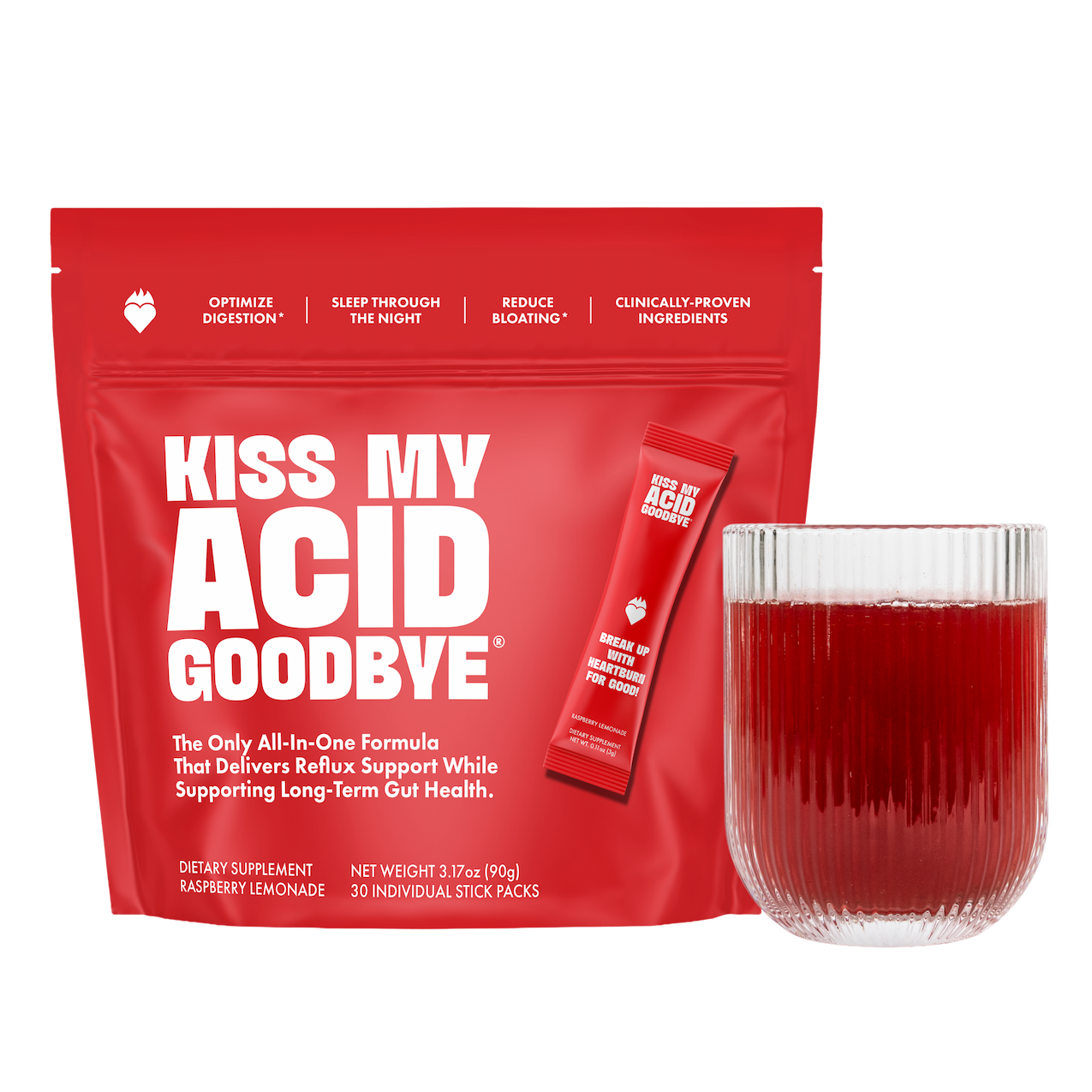
If certain "healthy" foods like garlic, onions, or beans reliably trigger your reflux, Kiss My Acid Goodbye (KMAG) supports the bacterial balance and mucosal barrier that determine how aggressively your gut ferments them.
When you try KMAG today, you get:
- ✓ 100-Day Satisfaction Guarantee*
- ✓ Lifetime access to the KMAG Symptom Tracker and Recipe Converter App
- ✓ Our 7-Day Reflux Reset Program
- ✓ Priority Support from our Human Support Team
*Valid on 90-day protocol bundle
Always consult your doctor before changing any medication or starting a new supplement.
MUCOSAVE (400mg): Mucosal Barrier Protection
MUCOSAVE creates a protective gel coating that may help shield the mucosal lining from acid exposure. In a 2-month double-blind placebo-controlled study of 118 adults, MUCOSAVE showed a 74.3% total improvement on the GERD-Health Related Quality of Life Assessment.
GUTGARD (150mg): Bacterial Balance and Motility
GUTGARD is a specialized form of deglycyrrhizinated licorice that may help reduce certain pathogenic bacteria, including H. pylori strains associated with gut dysbiosis. It also supports gastric motility, helping food move through the digestive system more efficiently and reducing the sluggishness and abdominal pressure that can compound fermentation-related symptoms. In a 30-day clinical study, 56% of GUTGARD users showed marked improvement vs. 0% in the placebo group.
ACTIValoe (150mg): Mucosal Repair and SCFA Production
ACTIValoe is a clinically standardized aloe vera extract that may help support the esophageal and intestinal lining. Importantly, it promotes the production of short-chain fatty acids, the byproducts of healthy fermentation that fuel the cells lining the gut. A gut that produces more SCFAs from beneficial fermentation is better positioned to maintain the barrier integrity that keeps gas-pressure-driven reflux at bay.
German Chamomile Extract 10:1 (200mg): Inflammation and Digestive Comfort
Chronic gut inflammation amplifies every trigger, including gas pressure. Research on chamomile herbal formulations suggests it may help ease digestive irritation and reduce the chronic inflammation that makes the LES hypersensitive to normal abdominal pressure changes.
What the Research Shows
- MUCOSAVE (400mg): 74.3% total improvement on GERD Quality of Life Assessment. 118 adults, 2-month double-blind RCT (Evidence-Based CAM, 2016)
- MUCOSAVE (400mg): 59.1% reduction in symptom severity. Same study, therapeutic dose matched exactly in KMAG
- GUTGARD (150mg): 56% marked improvement vs. 0% placebo. 50 adults, 30-day double-blind RCT (Evidence-Based CAM, 2012)
- GUTGARD (150mg): 14x more effective than placebo at reducing H. pylori. 100-adult, 60-day study
These statements refer to clinical studies on individual ingredients in Kiss My Acid Goodbye. Individual results may vary.
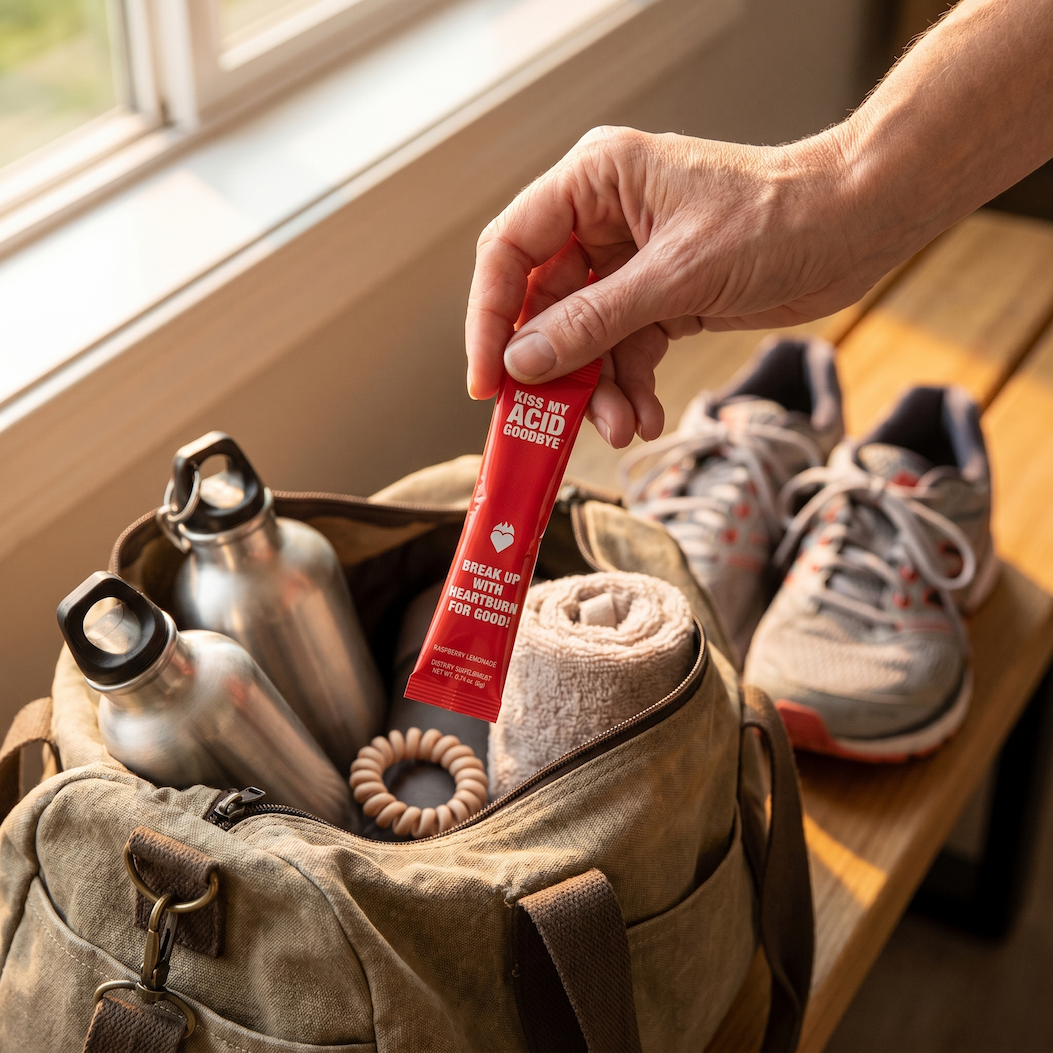
KMAG is taken once daily, mixed in water. The goal is to support the bacterial environment and mucosal barrier over time, so that your gut becomes less reactive to the foods you want to eat.
What to Expect
Addressing bacterial imbalance and mucosal repair takes consistency. Results build over months, not days, because restoring the gut's protective environment is a gradual process. Many people find that as the underlying conditions improve, their tolerance for a wider range of foods improves with it. Individual results may vary.
You might notice:
- Less bloating after meals
- Better sleep quality
- Fewer "emergency" antacids
Why it's happening:
- MUCOSAVE and ACTIValoe start supporting the mucosal lining
- Chamomile begins to ease digestive irritation
You might notice:
- Less burning after meals
- More confidence around food choices
- Fewer middle-of-the-night flare-ups
Why it's happening:
- GUTGARD and ACTIValoe continue supporting tissue repair
- Motility and microbiome support ramp up
You might notice:
- Testing foods you used to avoid
- Feeling less scared of food and mealtimes
- Conversations with your doctor about reducing meds
Why it's happening:
- KMAG's science-backed ingredients have rebuilt your gut barriers, reduced inflammation, and restored your gut for long-term comfort and relief
If you have LPR (silent reflux) or have been on PPIs for 1 or more years, 4 to 6 months is a very normal timeline. Always work with your doctor before making any changes to prescription medications.
What KMAG Customers Are Experiencing
"Kiss My Acid Goodbye has been a lifesaver! It not only cools my 'burn' in minutes, but it also has gotten rid of that post-meal bloating and discomfort that I unfortunately had gotten far too used to."Ann R., Verified Customer
"I have been taking KMAG for a week and a half once a day after breakfast or lunch and I feel so much better! The burning sensation is almost gone and so is my morning nausea and I basically didn't change anything in my diet. I love the taste and the fact that you can dissolve the powder in water pretty fast."Marko B., Verified Customer
"Through maintaining a better diet, and with KMAG's support, the burning mouth is gone and I haven't had any reflux in about five weeks. Other benefits are that my bloating is gone, I look great in my clothes. I am enjoying small amounts of chocolate and a coffee in the morning. When out with friends, I have had some spicy food, by accident, a couple beers, and absolutely NO problems, nothing, not even reflux."Abby K., Verified Customer
"I'm officially 3 months in and WOW!!!! The last couple weeks were definitely a turning point. Almost NO PAIN or BLOATING. I'm so happy to get back to a more normal lifestyle. My mood and energy are better too since I'm not battling chronic stomach pain or what/when to eat."Billy G., Verified Customer
"Almost NO PAIN or BLOATING. I'm so happy to get back to a more normal lifestyle."Billy G., Verified Customer, 3 months on KMAG
A Question Worth Sitting With
Think back to your last bad reflux episode. Was the meal actually acidic? Or was it garlicky, onion-heavy, bean-based, or full of foods that don't appear on any standard "avoid" list?
If the answer is the latter, the fermentation pathway may be a bigger driver of your reflux than the acid pathway. And that changes the conversation entirely. Not just about which foods to watch, but about what your gut actually needs to become less reactive over time.
The dietary approach and the microbiome approach aren't competing strategies. They work on different parts of the same problem. Reducing fermentation load gives your gut immediate relief. Restoring bacterial balance and mucosal integrity gives your gut the foundation to handle a normal diet without constant management.
Try KMAG Risk-Free
Every order includes:
- ✓ 100-Day Satisfaction Guarantee*
- ✓ Lifetime access to the KMAG Symptom Tracker and Recipe Converter App
- ✓ Our 7-Day Reflux Reset Program
- ✓ Priority Support from our Human Support Team
* Valid on 90-day protocol bundle. Commit to AT LEAST 90 days of daily use for best results.
Frequently Asked Questions
Do I need to follow a low-FODMAP diet while taking KMAG?
No. KMAG and dietary adjustments work on different parts of the same problem. KMAG supports bacterial balance and mucosal repair over time, which can reduce the gut's reactivity to fermentable foods. Some people find that as their gut environment improves, their tolerance for previously problematic foods improves too. If you choose to reduce high-FODMAP foods temporarily while starting KMAG, it can be a useful way to reduce symptom load during the early months. But it isn't required.
Can I take KMAG while still on my PPI?
Yes, and if you are currently on a PPI, you should continue taking it when you start KMAG. Do not stop PPIs abruptly. The protocol: take KMAG daily for 2 to 3 months while staying on your medication, then work with your doctor to taper gradually. This gives your gut time to rebuild its protective environment before the acid suppression is reduced.
Why does KMAG work differently from antacids or PPIs?
Antacids neutralize acid. PPIs suppress acid production. Neither addresses bacterial balance, fermentation, or the mucosal barrier. KMAG works on the four root causes of acid reflux: damaged protective barriers, chronic inflammation, bacterial imbalance, and impaired natural healing. It doesn't suppress acid; it supports the body's ability to protect itself from acid and to create a gut environment where fermentation-driven pressure is less of a problem.
How long before KMAG starts working?
Initial improvements typically appear within the first 1 to 2 months: less bloating, fewer antacids needed, better sleep. The most significant improvements come with 3 to 6 months of consistent daily use. The 30-day money-back guarantee gives you a risk-free window to get started.
Will KMAG interact with my medications?
KMAG is made from plant-based ingredients and is generally well-tolerated. ACTIValoe may enhance nutrient absorption, which could theoretically affect how certain medications are absorbed. As a precaution, take KMAG at least 2 hours apart from prescription medications. Always consult your physician before adding any supplement to your routine, especially if you are on prescription medications.
How do I take KMAG?
Mix one packet in approximately 8 ounces of water, once daily. Take it closest to your largest meal or when your reflux tends to be worst. For severe cases or long-term PPI users, twice daily for the first two months may be more effective. A hand frother helps with mixing, and colder water reduces the intensity of the taste. Drink within 5 minutes of mixing.
This is not medical advice. Always consult with your physician before adding new supplements to your routine, especially if you have any diagnosed medical conditions or are currently taking prescription medications. These statements have not been evaluated by the Food and Drug Administration. This product is not intended to diagnose, treat, cure, or prevent any disease. Clinical study data referenced applies to individual ingredients in Kiss My Acid Goodbye and not to the formula as a whole. Individual results may vary.

