

Why Acid Reflux Gets Worse With Age
Your Body Makes Less Acid as You Age. So Why Does Acid Reflux Keep Getting Worse?
The answer has nothing to do with how much acid you produce — and everything to do with what's supposed to be protecting you from it.

The real story of acid reflux has less to do with acid production and more to do with the protective barrier that should be standing between acid and your tissue.
Here's the routine most people with chronic acid reflux know well. Take the medication every morning. Avoid coffee, wine, tomatoes, anything spicy. Sleep with the head of the bed raised. Keep antacids on the nightstand, in the car, in every jacket pocket, just in case.
And still, year after year, the reflux gets worse. The antacids work for less time. The list of safe foods gets shorter. The doses go up.
The logical conclusion is that the problem is getting worse — that somehow, more acid is being produced. So more suppression seems like the logical response.
But the science tells a completely different story. And it starts with a fact that most people with acid reflux have never been told.
The Paradox That Changes Everything
As you age, your stomach produces less acid. Not more. Research suggests that after age 40, acid production naturally begins to decline. Many people over 60 produce significantly less stomach acid than they did in their 30s. Conditions like hypochlorhydria (chronically low stomach acid) become increasingly common with age.
So if acid production is declining with age, why does acid reflux get worse with age?
If "too much acid" were the real problem, older people should have less reflux. Not more. The math should work in the other direction.
The fact that it doesn't is one of the most important clues about what acid reflux is actually about.
Stomach acid production naturally declines with age — yet acid reflux rates increase. If excess acid production were the root cause of reflux, the pattern would be reversed. This paradox points to a different explanation entirely: the problem isn't how much acid you produce. It's what's no longer protecting you from it.
Research on gastric physiology and aging consistently documents this relationship. The mechanism is well understood — but rarely communicated to patients.
What's Actually Under Attack
Your stomach and esophagus are lined with a protective mucosal barrier — a thick gel-like coating produced by specialized cells in the tissue wall. This barrier is your body's built-in shield. Its job is to stand between the acid your stomach needs for digestion and the tissue that would be damaged by exposure to that acid.
Here's something most people don't realize: a small amount of acid splashing back into the esophagus happens to almost everyone after meals. It's a completely normal physiological event. The difference between people who feel it and people who don't isn't how much acid travels upward. It's whether their protective barrier is intact.
Think of it this way. If someone sneezes in your face when you're healthy, it's unpleasant but largely harmless. Your immune system handles it. But if your immune system is compromised, that same sneeze becomes a genuine threat — not because the sneeze changed, but because your protection did.
Acid reflux works the same way. The acid didn't change. What changed is that the protective barrier that used to shield your tissue from that acid is no longer doing its job. And when tissue that has no natural protection gets exposed to acid repeatedly, the resulting pain, burning, and damage is exactly what you'd expect.
Your reflux isn't an acid problem. It's a damaged tissue problem.
"Your reflux isn't an acid problem. It's a damaged tissue problem. And no amount of acid suppression will rebuild what needs to be repaired."

Left: intact mucosal barrier protecting underlying tissue from normal acid exposure. Right: depleted barrier allowing acid to reach and damage vulnerable tissue. The difference explains why the same amount of acid feels catastrophic in one person and barely noticeable in another.
What Actually Damages the Barrier Over Time
The mucosal barrier isn't fragile under normal circumstances. It was built to handle a lifetime of acid exposure. But several factors work against it — and for many chronic reflux sufferers, more than one of them is in play simultaneously.
Bacterial imbalance. Harmful bacteria — including H. pylori and other opportunistic strains — directly damage the mucosal lining. They produce enzymes that break down the protective gel coating and trigger local inflammation. H. pylori infection, when present, can be a meaningful contributor to mucosal damage, though it's not the primary driver of reflux for most people who have it.
Chronic inflammation. Ongoing inflammation throughout the digestive tract doesn't just cause discomfort. It makes tissue hypersensitive to everything — including acid levels that would be completely tolerable to healthy tissue. When the tissue is inflamed, even a modest acid exposure registers as burning.
Impaired natural healing. The mucosal barrier is continuously regenerated. Specialized cells constantly produce new mucus to maintain the protective coating. But the body's healing mechanisms can become less efficient over time, especially when they're working against ongoing inflammation or bacterial disruption. The repair process falls behind the damage.
Medication side effects. Proton pump inhibitors reduce stomach acid significantly — which is exactly what makes them effective at suppressing symptoms. But stomach acid also serves as the primary defense against bacterial overgrowth. When acid production drops, bacteria that would normally be neutralized in the stomach survive and travel further into the gut. Research has linked long-term PPI use to significant shifts in the gut microbiome, including reductions in the beneficial bacteria responsible for producing the short-chain fatty acids that fuel gut cell repair.
The Barrier Breakdown Cycle
Bacterial imbalance damages the mucosal barrier. Damaged barriers allow more acid exposure. More acid exposure increases inflammation. Chronic inflammation slows the barrier's ability to repair itself. And acid suppression — while it reduces the symptom — doesn't interrupt any of these four steps. The underlying problem keeps advancing.
This is why reflux tends to worsen over time despite ongoing medication: the symptom is being masked while the root cause continues unchecked.
Why Acid Suppression Will Never Fix a Barrier Problem
This is the uncomfortable truth at the center of how acid reflux is typically managed.
Antacids neutralize acid in the moment. PPIs suppress acid production for hours. Both approaches address the acid. Neither one touches the barrier. Neither one reduces the bacterial imbalance that's damaging it. Neither one addresses the chronic inflammation that's making tissue hypersensitive. Neither one supports the body's natural healing mechanisms.
So the barrier stays compromised. The underlying conditions that damaged it continue unchecked. And when you try to reduce the medication, the unprotected tissue is exposed to acid again — often with a rebound effect that's worse than the original symptoms, because the body has ramped up acid production to compensate for the suppression.
It's a cycle designed to keep you dependent on the medication. Not because of any conspiracy — but because suppression was never a solution to a barrier problem.
The question worth asking is: what actually rebuilds the barrier?
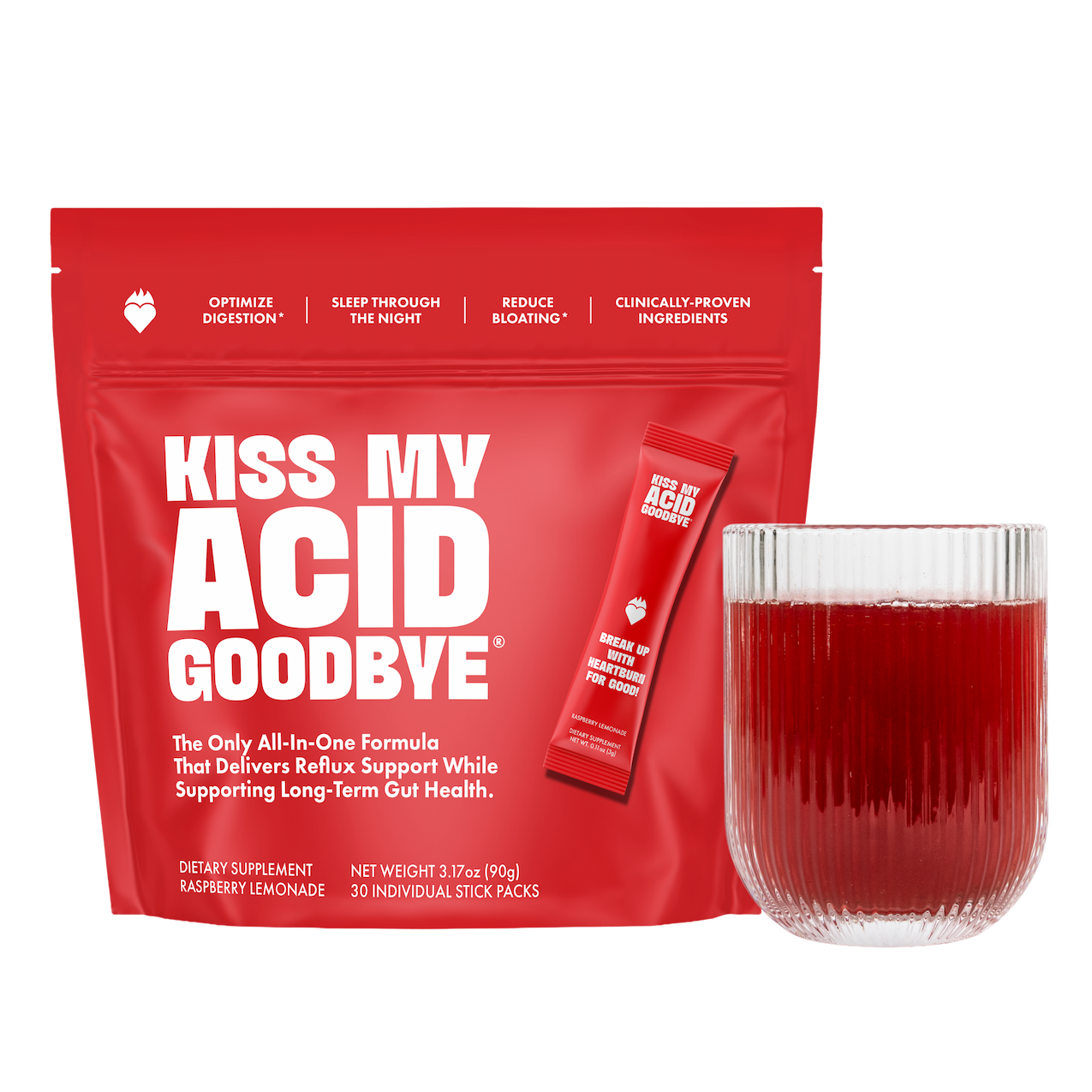
If your reflux has gotten worse year over year despite increasing doses, Kiss My Acid Goodbye (KMAG) addresses the barrier damage and inflammation that acid suppression alone never reaches.
When you try KMAG today, you get:
- ✓ 100-Day Satisfaction Guarantee*
- ✓ Lifetime access to the KMAG Symptom Tracker and Recipe Converter App
- ✓ Our 7-Day Reflux Reset Program
- ✓ Priority Support from our Human Support Team
*Valid on 90-day protocol bundle
Always consult your doctor before changing any medication or starting a new supplement.
The Four Ingredients That Target the Actual Problem
Kiss My Acid Goodbye (KMAG) was formulated specifically around the four root causes of acid reflux: damaged protective barriers, chronic inflammation, bacterial imbalance, and impaired natural healing. Each ingredient addresses one or more of these mechanisms directly.
MUCOSAVE (400mg) — The Barrier Builder
MUCOSAVE is a patented blend of prickly pear polysaccharides and olive leaf biophenols, sourced from family-owned farms in Sicily. When mixed with water, it forms a protective gel that may help bond to the intestinal and esophageal lining, creating a physical shield between acid and compromised tissue.
In a 2-month double-blind placebo-controlled study of 118 adults, MUCOSAVE showed a 74.3% total improvement on the GERD-Health Related Quality of Life Assessment and a 59.1% reduction in symptom severity. KMAG uses 400mg — the exact dose used in the clinical study.
ACTIValoe (150mg) — Esophageal Protection
The esophagus has no natural protective lining against acid. It was never designed to be repeatedly exposed to stomach contents. ACTIValoe is a clinically standardized aloe vera extract — processed to remove the compounds in raw aloe that can cause GI irritation — that may help form a soothing barrier along the esophageal lining, which may in turn help reduce how much acid and pepsin travel up to the throat. It also promotes the production of short-chain fatty acids (SCFAs), which fuel the cells that line the gut, and may help enhance absorption of key vitamins including B12, which long-term PPI use is known to deplete.
GUTGARD (150mg) — Healing Support and Bacterial Balance
GUTGARD is a specialized form of deglycyrrhizinated licorice (DGL) — meaning the compound that can raise blood pressure has been safely removed, while preserving all gut-supporting properties. It works by stimulating the stomach's natural protective mechanisms rather than suppressing acid production. It may help increase mucus production to support the stomach lining, improve blood supply to the mucosa, and reduce certain pathogenic bacteria including H. pylori. In a 30-day clinical study of 50 adults, 56% of the GUTGARD group showed marked improvement vs. 0% in the placebo group.
German Chamomile Extract 10:1 (200mg) — Inflammation Support
This is not chamomile tea. The 10:1 concentration means it is roughly 10 times more potent than standard chamomile — and it won't make you drowsy. Research on chamomile herbal formulations suggests it may help reduce chronic inflammation throughout the digestive tract, addressing the hypersensitivity that makes normal acid levels feel excruciating. This is the root cause that gets the least attention — and one of the primary reasons antacids stop working over time.
What the Research Shows
- MUCOSAVE (400mg): 74.3% total improvement on GERD Quality of Life Assessment — 118 adults, 2-month double-blind RCT (Evidence-Based CAM, 2016)
- MUCOSAVE (400mg): 59.1% reduction in symptom severity — same study, same therapeutic dose used in KMAG
- GUTGARD (150mg): 56% marked improvement vs. 0% in placebo — 50 adults, 30-day double-blind RCT (Evidence-Based CAM, 2012)
- GUTGARD (150mg): 14x more effective than placebo at reducing H. pylori in stool antigen testing — 100-adult, 60-day study
These statements refer to clinical studies on individual ingredients in Kiss My Acid Goodbye. Individual results may vary.
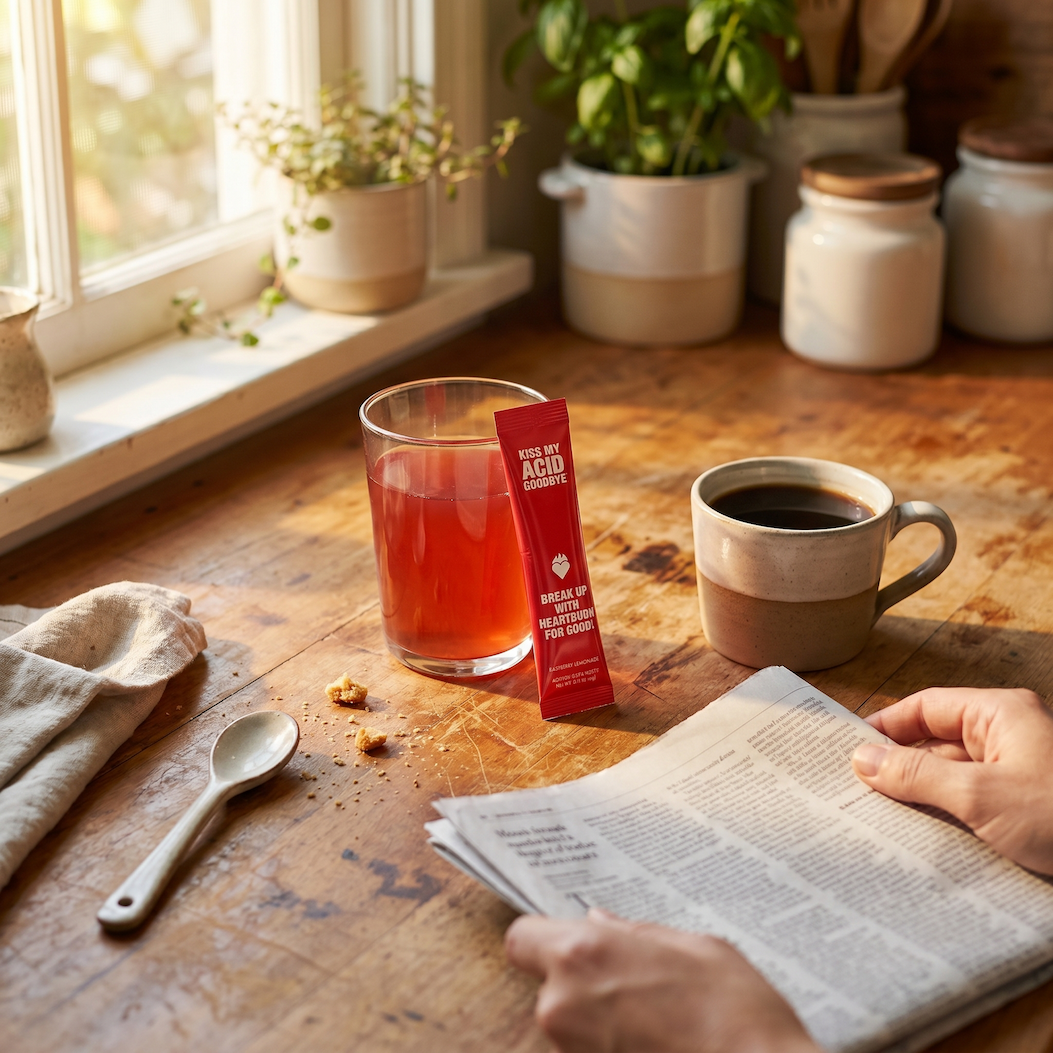
KMAG is taken once daily, mixed in water. For severe or long-term cases, twice daily for the first two months may be recommended.
What to Actually Expect
KMAG addresses root causes, not symptoms. That takes time. Setting realistic expectations up front isn't a disclaimer — it's the honest story of how barrier repair and microbiome restoration actually work.
You might notice:
- Less bloating after meals
- Better sleep quality
- Fewer "emergency" antacids
Why it's happening:
- MUCOSAVE and ACTIValoe start supporting your mucosal lining
- Chamomile begins to ease digestive irritation
You might notice:
- Less burning after meals
- More confidence around food choices
- Fewer middle-of-the-night flare-ups
Why it's happening:
- GUTGARD and ACTIValoe continue supporting tissue repair
- Motility and microbiome support ramp up
You might notice:
- Testing foods you used to avoid
- Feeling less scared of food and bedtime
- Conversations with your doctor about reducing meds
Why it's happening:
- KMAG's science-backed ingredients have rebuilt your gut barriers, reduced inflammation, and restored your gut for long-term comfort and relief
If you have LPR (silent reflux) or have been on PPIs for 1 or more years, 4 to 6 months is a very normal timeline. Always work with your doctor before making any changes to prescription medications.
What KMAG Customers Are Experiencing
"I have had GERD with a hiatal hernia for years. No matter what I did (taking PPIs, even watching what I eat and drink, stop eating by 4pm, etc.) around 2:30am I would wake up with horrible reflux (even with the head of the bed raised). I have only been using KMAG three weeks and it is miraculous! I can sleep through the night with no reflux! I also don't have any reflux during the day and pain from acid sitting where my hernia is is gone. I am starting to feel like my old self again!"Deborah L. — Verified Customer
"After just 6 weeks of KMAG once daily, my bloating decreased almost immediately and my chronic cough has drastically reduced. Even through the holidays with rich food and stress, KMAG continued working. I can sense my gut is genuinely healing. I'm now confident enough to discuss weaning off my PPI with my gastroenterologist. KMAG has given me hope for addressing the root cause rather than just suppressing symptoms."Pamela W. — Verified Customer
"I've been on PPIs for 10+ years, and last week I was having major reflux at night with burning in my throat. I've only been using KMAG for 4 days, and these past 4 nights I've been completely symptom free. I even went out for wings and beers last night — no issues. I don't want to jinx myself, but holy s**t am I surprised and optimistic!"Brian G. — Verified Customer
"I've dealt with acid reflux for years, especially at night. Even when I was careful about what I ate, it would still flare up. I tried antacids and other meds but they never really solved the problem. I've been pleasantly surprised by Kiss My Acid Goodbye. I noticed relief pretty quickly and it's been keeping things calm and under control. It feels like a cleaner, healthier option compared to what I was taking before. I would definitely recommend KMAG."Zach S. — Verified Customer
"I am starting to feel like my old self again!"Deborah L., Verified Customer — GERD with hiatal hernia, 3 weeks on KMAG
A Question Worth Asking Your Doctor
If you have been on a PPI or antacid for more than a year, this question is worth bringing up at your next appointment:
"If the medication is controlling my acid, why does my reflux feel worse whenever I try to reduce the dose or stop?"
The answer, in most cases, is rebound hyperacidity. The body compensates for suppressed acid production by upregulating the cells responsible for producing it. When the medication is removed, those cells fire at once — and the resulting surge is often worse than the original reflux. Most patients interpret this as proof they need the medication permanently. It's actually proof the medication created a dependency.
The more meaningful question is whether anything is being done to address the actual barrier problem. Not the symptom. The underlying condition that makes the symptom unavoidable.
KMAG was built to answer that question.
Try KMAG Risk-Free
Every order includes:
- ✓ 100-Day Satisfaction Guarantee*
- ✓ Lifetime access to the KMAG Symptom Tracker and Recipe Converter App
- ✓ Our 7-Day Reflux Reset Program
- ✓ Priority Support from our Human Support Team
* Valid on 90-day protocol bundle. Commit to AT LEAST 90 days of daily use for best results.
Frequently Asked Questions
Can I take KMAG while still on my PPI?
Yes — and if you are currently on a PPI, you should continue taking it when you start KMAG. Do not stop PPIs abruptly. The protocol: take KMAG daily for 2 to 3 months while staying on your medication. Then, after your gut has had time to rebuild its protective barriers, work with your doctor to taper the PPI dose. This approach gives your body the support it needs to handle the taper without triggering severe rebound symptoms.
Will KMAG interact with my medications?
KMAG is made from plant-based ingredients and is generally well-tolerated. However, ACTIValoe may enhance nutrient absorption, which could theoretically affect how certain medications are absorbed. As a precaution, take KMAG at least 2 hours apart from prescription medications. Always consult your physician before adding any supplement to your routine, especially if you are on prescription medications.
How do I take KMAG?
Mix one packet in approximately 8 ounces of water, once daily. Take it closest to your largest meal or when your reflux tends to be worst. For severe cases or long-term PPI users, twice daily (with lunch and dinner) for the first two months may be more effective. A hand frother helps with mixing, and colder water can reduce the intensity of the taste. Drink within 5 minutes of mixing.
Why does KMAG work differently from antacids or PPIs?
Antacids neutralize acid in the moment. PPIs suppress acid production for several hours. Neither one addresses what's actually damaged. KMAG works on the four root causes of acid reflux: the depleted mucosal barrier, chronic inflammation, bacterial imbalance, and impaired natural healing. It doesn't suppress acid — it supports the body's ability to protect itself from acid. That's a fundamentally different approach, and it's why KMAG takes time while antacids work immediately. One is managing the symptom. The other is working on the cause.
How long before KMAG starts working?
Initial improvements typically appear within the first 1 to 2 months — less bloating, fewer antacids needed, better sleep. The most significant improvements come with 3 to 6 months of consistent daily use. The 30-day money-back guarantee gives you a risk-free window to get started.
Is KMAG FDA approved?
KMAG is a dietary supplement. Dietary supplements are not approved by the FDA in the same way that drugs are — they are regulated under a different framework (DSHEA). The individual ingredients in KMAG have been studied in peer-reviewed, published clinical trials. KMAG is manufactured in an FDA-registered facility following Good Manufacturing Practices (GMP). These statements have not been evaluated by the Food and Drug Administration. This product is not intended to diagnose, treat, cure, or prevent any disease.
This is not medical advice. Always consult with your physician before adding new supplements to your routine, especially if you have any diagnosed medical conditions or are currently taking prescription medications. These statements have not been evaluated by the Food and Drug Administration. This product is not intended to diagnose, treat, cure, or prevent any disease. Clinical study data referenced applies to individual ingredients in Kiss My Acid Goodbye and not to the formula as a whole. Individual results may vary.

