

Why Fiber Matters More Than Your Trigger List
Most Reflux Diets Tell You What to Cut. Almost None of Them Mention This.
The trigger food list gets all the attention. But there's a nutrient most reflux sufferers are chronically short on — and the research suggests it matters more than most people realize.

The right fiber, consumed the right way, is associated with fewer reflux symptoms — yet it rarely comes up in standard reflux management conversations.
Ask someone with acid reflux what they know about managing it, and you'll get a list of things to avoid. Tomatoes. Citrus. Coffee. Spicy food. Chocolate. Late-night eating. The framework is almost entirely subtractive — remove the triggers and hope the symptoms follow.
What this approach misses is the other side of the equation: what you might want to add.
Dietary fiber — specifically the right types, introduced the right way — is one of the more underappreciated pieces of the reflux picture. Studies examining dietary patterns in people with chronic GERD consistently find that higher fiber intake is associated with fewer symptoms, reduced severity, and better overall digestive comfort. Yet fiber almost never shows up in the conversation when a doctor hands someone a reflux management plan.
Here's what the research actually points to — and why it's worth paying attention to.
Why Fiber Matters for Reflux
The connection isn't a single mechanism. It's four of them working together.
It keeps things moving. Healthy digestive transit means food doesn't sit in the stomach longer than it should. When the stomach empties slowly, pressure builds — and that pressure is one of the primary drivers of acid being pushed upward. Adequate fiber supports motility, which supports that pressure staying where it belongs.
It supports a healthy weight. The relationship between excess weight and reflux is well established — abdominal pressure from carrying extra weight around the midsection directly increases the likelihood of acid reflux. Fiber contributes to satiety, helps regulate appetite, and is one of the most consistent dietary factors in long-term weight management.
It supports the gut lining. Certain soluble fibers — particularly those that ferment in the colon — produce short-chain fatty acids including butyrate, the primary energy source for the cells lining your colon. A well-nourished gut lining is a more resilient gut lining.
It feeds beneficial bacteria. Fiber is prebiotic — it selectively feeds the beneficial bacterial communities in your gut. A balanced microbiome supports overall gut health, reduces inflammation, and contributes to symptom stability in ways that go well beyond what any single supplement or dietary change can accomplish alone.
Dietary studies in GERD populations consistently find that higher fiber intake correlates with fewer reflux episodes and lower symptom severity — independent of other dietary variables. The effect is most pronounced with soluble fiber sources like oats, psyllium, chia, and vegetables.
Research across multiple dietary pattern studies in GERD populations. Individual results vary.
"Fiber isn't a cure — but it's a powerful piece of the puzzle most people with reflux have never been given."
The Right Way to Add Fiber (and What to Avoid)
The single most important rule: go slowly. Fiber is one of the few dietary additions where the speed of introduction matters as much as the quantity. Adding too much too fast is the most common reason people give up on it — the bloating, gas, and temporary symptom flare that comes with a rapid increase can feel like the fiber is making things worse. It isn't. The gut just needs time to adapt.
Aim for 25–35g per day from food and supplements combined, increasing gradually over several weeks. Drink more water than you think you need — fiber without adequate fluid intake creates its own problems.
Not all fiber sources are equally well-tolerated for people with reflux. Soluble fiber — found in oats, chia seeds, psyllium, most fruits, and cooked vegetables — is generally better tolerated than insoluble fiber. It forms a gel in the digestive tract, slows gastric emptying in a controlled way, and is less likely to cause gas and bloating during the adaptation period.
Worth watching: high-FODMAP fiber sources — beans, lentils, onions, cabbage, garlic — can trigger symptoms in people with FODMAP sensitivity. If you're noticing that adding legumes or alliums makes symptoms worse, this is why. It's not fiber in general; it's a specific category of fermentable carbohydrates.
Do This
- Increase fiber gradually over weeks
- Prioritize soluble fiber (oats, chia, psyllium, fruit)
- Hydrate consistently throughout the day
- Eat smaller, more frequent meals
- Stay upright for 2–3 hours after eating
- Move your body — even a short walk after meals supports gastric emptying
Avoid This
- Going all-in overnight — slow wins
- High-FODMAP fibers if you're sensitive (beans, onions, garlic)
- Fiber supplements as a substitute for whole food fiber
- Pairing fiber additions with known triggers (caffeine, alcohol, carbonation)
- Eating and lying down — gravity matters
Your Fiber Guide — Save This

Save this guide for reference:
🖥️ Desktop: Right-click the image → Save image as… to download to your computer.
📱 Mobile: Press and hold the image → tap Save to Photos (iPhone) or Download image (Android).
Fiber and KMAG — Better Together
Fiber addresses one important layer of the reflux picture. But the underlying damage that makes the gut reactive in the first place — thinned mucosal lining, chronic inflammation, impaired tissue repair — isn't something fiber alone can fix.
This is where KMAG works in a different direction. Rather than suppressing acid or relying on symptom management, the formula is built around the three things that need to happen for the gut to genuinely recover: mucosal repair, bacterial rebalancing, and anti-inflammatory support.
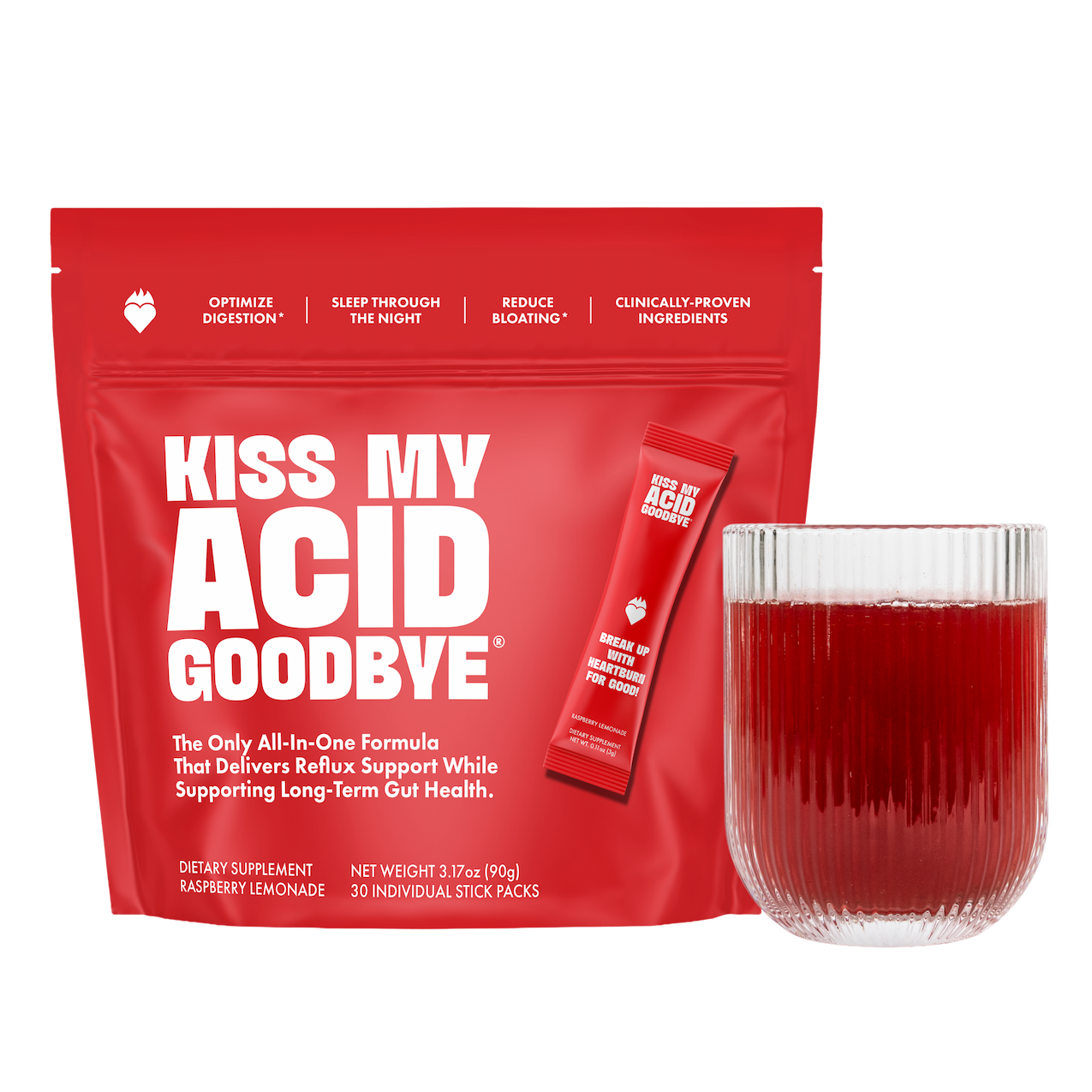
If you're working on adding fiber but still feel the burn some days, Kiss My Acid Goodbye (KMAG) supports the mucosal repair and inflammation reduction that fiber alone can't address.
When you try KMAG today, you get:
- ✓ 100-Day Satisfaction Guarantee*
- ✓ Lifetime access to the KMAG Symptom Tracker and Recipe Converter App
- ✓ Our 7-Day Reflux Reset Program
- ✓ Priority Support from our Human Support Team
*Valid on 90-day protocol bundle
Always consult your doctor before changing any medication or starting a new supplement.
MUCOSAVE™ — KMAG's lead botanical, a clinically studied blend of prickly pear cactus and olive leaf extract — works directly on the mucosal lining. In a two-month double-blind, placebo-controlled trial it showed a 74.3% improvement in GERD quality of life scores, a 56.5% reduction in heartburn frequency, and a 59.1% reduction in acid regurgitation.
GUTGARD™ — a deglycyrrhizinated licorice root extract — showed a 56% improvement in GI symptom scores in clinical research. It supports tissue repair throughout the GI tract and may help with gastric motility, the same mechanism that fiber supports through a different pathway.
KMAG Ingredient Research
- MUCOSAVE™: 74.3% improvement in GERD quality of life in 2 months*
- MUCOSAVE™: 56.5% reduction in heartburn frequency*
- MUCOSAVE™: 59.1% reduction in acid regurgitation*
- GUTGARD™: 56% improvement in GI symptom scores*
*Clinical studies on individual ingredients. Individual results may vary. These statements have not been evaluated by the FDA.

Fiber lays the foundation. KMAG supports the repair. Used consistently together, they address reflux from multiple directions.
What to Actually Expect
What you may notice:
- Less post-meal bloating
- More regular digestion
- Fewer antacids needed day-to-day
What's happening:
- Gut microbiome beginning to adapt to increased fiber
- MUCOSAVE starting to support the mucosal lining
- Motility and transit improving
What you may notice:
- Less burning after meals
- More confidence with food choices
- Better sleep quality
What's happening:
- GUTGARD supporting ongoing tissue repair
- Beneficial bacteria becoming more established
- Gut lining increasingly resilient
What you may notice:
- Eating foods that used to trigger symptoms
- Less anxiety around meals
- A different conversation with your doctor
What's happening:
- Mucosal barriers rebuilt and sustained
- Microbiome diversity improved
- Systemic gut inflammation reduced
Results vary based on how long symptoms have been present and individual gut health. If you have LPR or have been on PPIs for over a year, four to six months is a completely normal timeline.
What Real Customers Say
"I've had lots of digestive issues which kept me feeling uncomfortable throughout the day & affected my mood. Now, 3 weeks in using KMAG and I've been able to forget about my stomach issues and the constant burn of acid reflux. And I didn't have to quit coffee which is such a pleasant surprise! I've had many happy days so it is working for me!"Laura D. — Verified Customer
"Kiss My Acid Goodbye has been a lifesaver! It not only cools my 'burn' in minutes, but it also has gotten rid of that post-meal bloating and discomfort that I unfortunately had gotten far too used to."Ann R. — Verified Customer
"I haven't had any reflux in about five weeks. Other benefits I didn't expect: KMAG settles my stomach after heavier meals, and I've never been this regular in my life. If you've tried everything for silent reflux and nothing's worked, give KMAG a shot."Candice V. — Verified Customer
Start Simple. Stay Consistent.
Fiber works over time, not overnight. So does gut repair. The combination of gradual, consistent dietary changes — more soluble fiber, better hydration, smaller meals, regular movement — alongside targeted mucosal support is what the research points to as the most durable approach to managing reflux long-term.
None of this requires a complete lifestyle overhaul. Start with breakfast: oats or chia, a glass of water, and KMAG. Build from there. Your gut adapts over time — and the results compound.
Try KMAG Risk-Free
Every order includes:
- ✓ 100-Day Satisfaction Guarantee*
- ✓ Lifetime access to the KMAG Symptom Tracker and Recipe Converter App
- ✓ Our 7-Day Reflux Reset Program
- ✓ Priority Support from our Human Support Team
* Valid on 90-day protocol bundle. Commit to AT LEAST 90 days of daily use for best results.
Frequently Asked Questions
Can I take KMAG while I'm increasing my fiber intake?
What if adding fiber makes my symptoms worse at first?
How long before KMAG starts working?
Can I take KMAG while still on a PPI?
This is not medical advice. Always consult with your physician before adding new supplements to your routine, especially if you have any diagnosed medical conditions or are currently taking prescription medications. These statements have not been evaluated by the Food and Drug Administration. This product is not intended to diagnose, treat, cure, or prevent any disease. Clinical study data referenced applies to individual ingredients in Kiss My Acid Goodbye and not to the formula as a whole. Individual results may vary.

