

Ozempic, Wegovy, and Acid Reflux: What the Research Shows
You Started Ozempic. Then the Heartburn Appeared. Here's What's Actually Happening.
A large-scale study found that GLP-1 users face a 27% higher risk of developing GERD and a 55% higher risk of complications. The mechanism is documented. The fix isn't what most people expect.

GLP-1 medications are changing lives. They come with a gut-health blind spot most prescribers don't discuss.
The Side Effect Nobody Warned You About
You did everything right.
You got the prescription. You started the injections. The weight started coming down in ways that years of effort never produced. Your doctor was pleased. You were pleased.
And then, somewhere around week three or month two, something unexpected showed up.
Heartburn. Or a burning sensation after meals that wasn't there before. Or waking up at 2 a.m. with acid in your throat. Or a new chronic cough your primary care doctor couldn't explain.
You mentioned it at your next appointment. Maybe you were told it was unrelated. Maybe you were prescribed a PPI and sent on your way. Maybe you just accepted it as one of those things.
Here's what you probably weren't told: what you're experiencing has a documented mechanism. It isn't random. It isn't unrelated to your GLP-1. And the way most doctors respond to it, while well-intentioned, addresses the symptom without touching the underlying problem your GLP-1 created.
The Research Nobody Is Talking About
In July 2025, the Annals of Internal Medicine published findings from a population-based study of more than 24,000 GLP-1 users.
The numbers were striking.
GLP-1 users showed a 27% higher risk of developing GERD compared to the control group. More concerning: they showed a 55% higher risk of GERD-related complications, the kind that develop when acid exposure to tissue goes unaddressed for long enough.
This wasn't a small study. It wasn't an outlier. It was one of the largest real-world analyses of GLP-1 side effects published to date.
And yet most people starting Ozempic, Wegovy, Mounjaro, or Zepbound never hear about it.
Higher risk of developing GERD in GLP-1 users
Higher risk of GERD-related complications
Annals of Internal Medicine, July 2025 — population-based study of 24,000+ GLP-1 users
Why GLP-1s Create This Problem
To understand what's happening, you need to understand how GLP-1 medications work, specifically the mechanism that makes them so effective for weight loss.
GLP-1 receptor agonists work in part by slowing gastric emptying. Food leaves your stomach more slowly. This is intentional. It's part of how you feel full on smaller portions for longer. It's one of the key drivers of the weight loss effect.
But here's the problem that doesn't come with a warning label.
When food sits in your stomach longer, acid sits with it. That acid is in prolonged contact with the tissue of your stomach lining, your lower esophageal sphincter (the valve between your stomach and esophagus), and increasingly, your esophagus itself. Over time, that extended acid exposure damages tissue.
Meanwhile, GLP-1s have no mechanism for repairing that damage.
They were designed to solve a metabolic problem. They solve it exceptionally well. But the gut tissue damage that can develop as a side effect, the compromised mucosal lining, the inflammation, the disrupted bacterial balance, none of that is something a GLP-1 was designed to address.
This is the blind spot.
"GLP-1s fix the metabolic side. They have zero mechanism for repairing damaged gut tissue. That is a completely separate biological problem, and it requires a completely separate approach."

Delayed gastric emptying is how GLP-1s help you feel full. It's also what extends acid contact with gut tissue.
The Cycle This Creates
Here's where it gets compounding.
A GLP-1 user develops new reflux. Their doctor prescribes a PPI, a proton pump inhibitor, to manage the symptoms. The heartburn eases. The situation feels handled.
But there's a problem hidden inside that solution.
GLP-1 medications reduce food intake by 20 to 40%. That's expected. It's part of what makes them work. But now add a PPI into the picture. Acid is also responsible for breaking down and extracting nutrients from food, particularly B12, magnesium, calcium, and iron. PPIs suppress 80 to 90% of acid production.
So you're eating less. And now absorbing less efficiently from what you do eat.
Two independent factors, hitting the same nutritional outcome at the same time. Most prescribers don't connect these dots because the weight loss medication and the reflux medication are often handled by different conversations, sometimes different doctors.
The tissue damage from prolonged acid exposure continues in the background. The PPI quiets the alarm bell. But the underlying problem, the compromised gut barrier, the inflammation, the impaired healing, isn't being addressed by either medication.
Two Mechanisms, One Outcome
GLP-1s reduce food intake by 20-40% by design. If a PPI is then added for the reflux a GLP-1 can trigger, acid suppression simultaneously reduces how efficiently the body extracts nutrients from the food that remains. Two separate mechanisms hitting the same nutritional outcome at the same time.
What Real Recovery Actually Requires
Managing reflux symptoms and repairing the gut tissue that causes them are two different things.
PPIs and antacids address the first. Acid suppression, symptom relief, quieting the burn. They were designed for that, and they do it.
But the four root causes of why acid exposure damages tissue in the first place are not addressed by either:
1. A compromised mucosal lining. The protective barrier between acid and tissue becomes thinner and less effective over time with repeated exposure.
2. Chronic inflammation. Inflamed tissue is hypersensitive. Even acid levels that wouldn't bother a healthy gut become excruciating when tissue is already irritated.
3. Bacterial imbalance. Certain bacteria contribute to gas pressure and gut lining damage, compounding the reflux cycle.
4. Impaired natural healing. The body's repair mechanisms need specific nutritional support to do their job, support that's harder to come by when both food intake and absorption efficiency are reduced.
None of these four things are solved by a medication designed to manage blood sugar and appetite. And none are solved by a medication designed to suppress acid production.
Addressing them requires a different approach entirely.
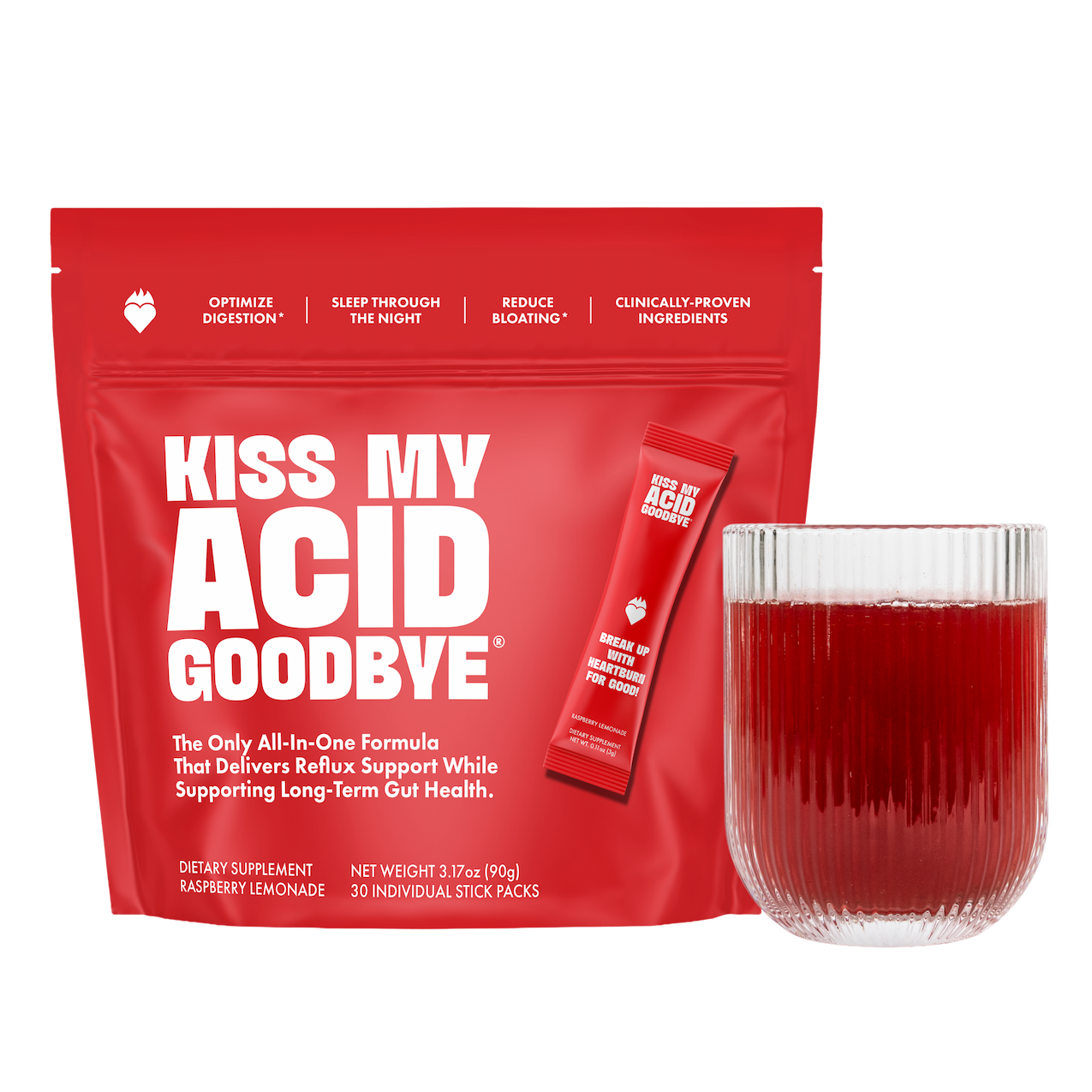
If you're on a GLP-1 and your reflux has gotten noticeably worse, Kiss My Acid Goodbye (KMAG) addresses the tissue side of that problem, the four root causes that GLP-1s and PPIs were never designed to fix.
When you try KMAG today, you get:
- ✓ 100-Day Satisfaction Guarantee*
- ✓ Lifetime access to the KMAG Symptom Tracker and Recipe Converter App
- ✓ Our 7-Day Reflux Reset Program
- ✓ Priority Support from our Human Support Team
*Valid on 90-day protocol bundle
Always consult your prescribing physician before adding any supplement to your routine.
The Research Behind Kiss My Acid Goodbye
Kiss My Acid Goodbye (KMAG) is a daily drink mix built around four clinically-studied ingredients, each targeting one of the four root causes described above.
MUCOSAVE: The Protective Shield
A patented blend of prickly pear polysaccharides and olive leaf biophenols, sourced from family farms in Sicily. MUCOSAVE works by forming a protective gel layer that bonds to the intestinal lining, creating a physical barrier between stomach acid and damaged tissue, while also providing anti-inflammatory support through its olive leaf biophenols.
In a 2-month double-blind placebo-controlled trial of 118 adults published in Evidence-Based Complementary and Alternative Medicine, MUCOSAVE showed a 74.3% total improvement from baseline on the GERD-Health Related Quality of Life Assessment and a 59.1% reduction in symptom severity. KMAG uses 400mg, the exact therapeutic dose studied.
GUTGARD: The Healing Reinforcement
A specialized form of deglycyrrhizinated licorice (DGL) backed by 30 years of research. Unlike regular licorice root, GUTGARD has had the blood-pressure-affecting compound safely removed, making it appropriate for people managing cardiovascular health alongside metabolic concerns.
GUTGARD stimulates the stomach's natural protective mechanisms: increasing mucus production, supporting blood supply to the mucosa, and supporting tissue repair. In a 30-day double-blind trial of 50 adults, GUTGARD at 150mg daily showed 56% of participants had marked improvement versus 0% in the placebo group.
ACTIValoe: The Esophageal Bodyguard
A premium, highly bioavailable form of aloe vera that has been processed to remove compounds that can cause GI irritation, making it significantly safer and more potent than standard aloe. ACTIValoe may help form a soothing barrier along the esophageal lining — the tissue actually studied — which may in turn help reduce how much acid and pepsin travel up to the throat, an area with no natural protective lining of its own.
Critically for GLP-1 users: ACTIValoe supports the absorption of B12, C, and E. Unlike a PPI, which suppresses the acid needed to extract nutrients from food, ACTIValoe works alongside the body's natural processes, helping preserve absorption efficiency rather than undermining it.
German Chamomile Extract (10:1): The Inflammation Response
A 10x-concentrated chamomile extract. Not chamomile tea. Not the same thing. This concentration provides targeted anti-inflammatory support for the digestive tract, addressing the chronic inflammation that makes even normal acid levels feel unbearable. And no, it does not cause drowsiness.
What the Ingredient Studies Show
MUCOSAVE: 74.3% improvement on the GERD Quality of Life Assessment in a 2-month double-blind placebo-controlled trial (118 adults)
GUTGARD: 56% marked improvement vs. 0% placebo in a 30-day double-blind trial (50 adults)
Clinical data refers to individual ingredients in Kiss My Acid Goodbye, not to the formula as a whole. Individual results may vary.
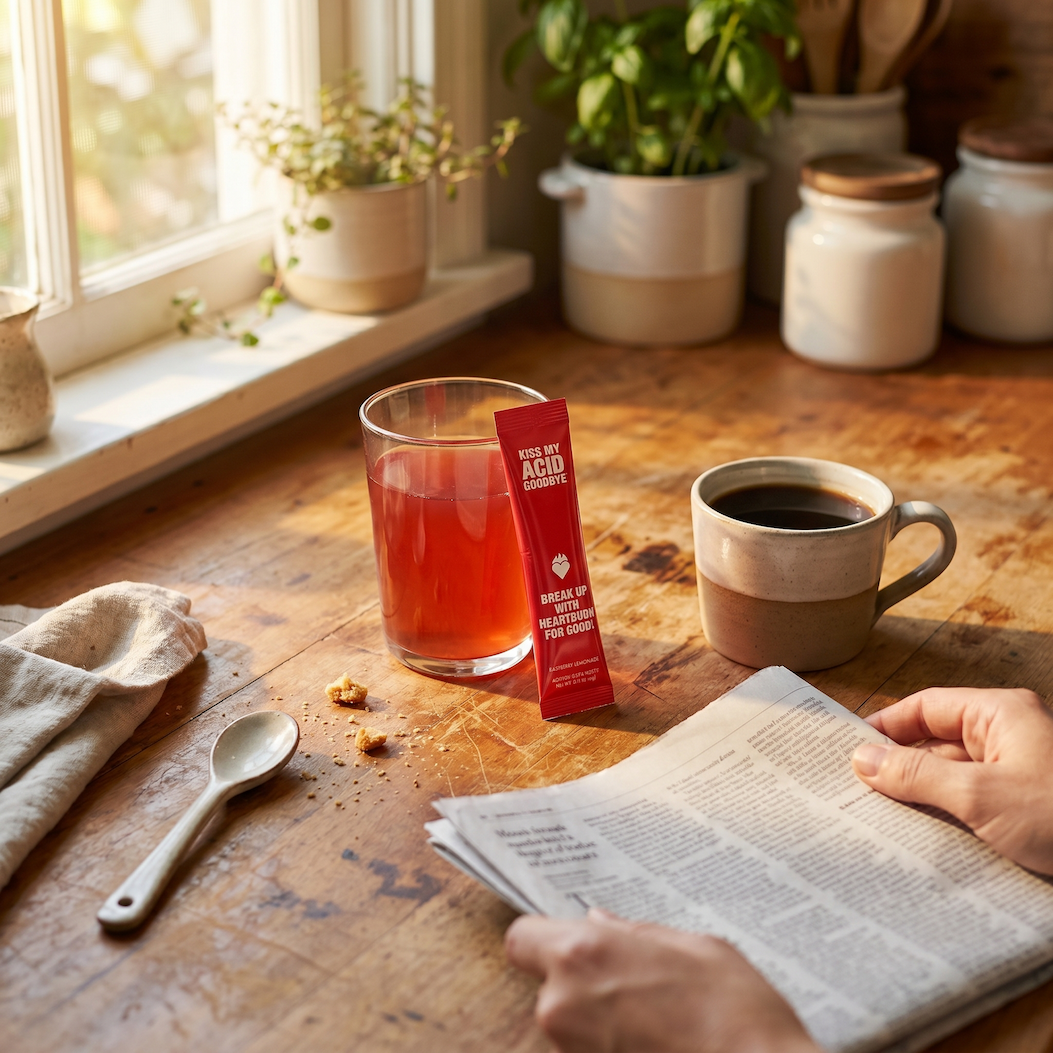
KMAG mixes into water in under 30 seconds. One packet daily, taken closest to your largest meal.
What to Actually Expect
KMAG addresses root causes, not symptoms. Root cause repair takes time. For GLP-1 users navigating a changed digestive environment, the timeline deserves an honest explanation.
Month 1
Foundation
You might noticeLess bloating after meals, fewer emergency antacids, better sleep.
WhyMUCOSAVE and ACTIValoe start supporting your mucosal lining. Concentrated Chamomile begins easing digestive tract irritation.
Month 2
Turning Point
You might noticeLess burning after meals, more confidence around food, fewer middle-of-the-night flare-ups.
WhyGUTGARD and ACTIValoe continue supporting tissue repair.
Months 3-6
Transformation
You might noticeTesting foods you had given up, feeling less anxious about meals, talking to your doctor about reducing or eliminating medication.
WhyKMAG's ingredients have been supporting the conditions that standard acid blockers never addressed: a stronger gut barrier, reduced inflammation, and a restored digestive environment.
If you have been on a GLP-1 for more than six months, or if you have also been on a PPI during that time, a 4-6 month commitment to KMAG is a realistic expectation for meaningful change. Always work with your prescribing physician before changing any medications.
What People Are Saying
These aren't GLP-1 users specifically. They're people who came to KMAG from the same place many GLP-1 users find themselves: dealing with reflux that wasn't responding to standard approaches, looking for something that addressed the underlying problem rather than just quieting the symptoms.
"I've been taking KMAG for five days. I was using 10-12 antacids per day; now it's down to one or two per day. I've had no reflux while sleeping. Having tried many different methods to get rid of my heartburn and I like your approach to the problem."Joe R. — Verified Customer
"After just 6 weeks of KMAG once daily, my bloating decreased almost immediately and my chronic cough has drastically reduced. Even through the holidays with rich food and stress, KMAG continued working. I can sense my gut is genuinely healing. I'm now confident enough to discuss weaning off my PPI with my gastroenterologist. KMAG has given me hope for addressing the root cause rather than just suppressing symptoms."Pamela W. — Verified Customer
"I've been on PPIs for 10+ years, and last week I was having major reflux at night with burning in my throat. I've only been using KMAG for 4 days, and these past 4 nights I've been completely symptom free. I even went out for wings and beers last night — no issues. I don't want to jinx myself, but holy s**t am I surprised and optimistic!"Brian G. — Verified Customer
"I'm officially 3 months in and WOW!!!! The last couple weeks were definitely a turning point. Almost NO PAIN or BLOATING. I'm so happy to get back to a more normal lifestyle. My mood and energy are better too since I'm not battling chronic stomach pain or what/when to eat. PS. I'll post a comment on Facebook soon and tell others to STICK WITH IT."Billy G. — Verified Customer
"I can sense my gut is genuinely healing. I'm now confident enough to discuss weaning off my PPI with my gastroenterologist. KMAG has given me hope for addressing the root cause rather than just suppressing symptoms."
Pamela W. — Verified CustomerThe Question Worth Asking Your Doctor
If you're on a GLP-1 and you've developed new or worsened reflux, it's worth having a specific conversation with your prescribing physician, not just about managing the symptom, but about what's happening in the gut tissue underneath it.
The questions worth raising:
Is my reflux related to delayed gastric emptying from my GLP-1? Am I addressing the tissue environment, or just suppressing symptoms? If I'm also on a PPI, what's the plan for the nutritional impact of suppressing acid while eating less?
GLP-1 medications are remarkable. For the right patients, they're genuinely life-changing. What they can't do is everything. The gut tissue side of this equation is a separate problem, and it has a separate solution.
30-Day Money-Back Guarantee
Use KMAG daily for a full 30 days. If you don't feel a meaningful difference, contact the team and we will make it right.
Two Separate Problems. Two Separate Solutions.
Every order includes:
- ✓ 100-Day Satisfaction Guarantee*
- ✓ Lifetime access to the KMAG Symptom Tracker and Recipe Converter App
- ✓ Our 7-Day Reflux Reset Program
- ✓ Priority Support from our Human Support Team
* Valid on 90-day protocol bundle. Commit to AT LEAST 90 days of daily use for best results.
Frequently Asked Questions
Can I take KMAG while still on my PPI?
Yes. KMAG is designed to be used alongside your current medications, not as a replacement. Most people continue their PPI while starting KMAG and work with their doctor to reassess after 2–3 months of consistent use. Do not stop your PPI abruptly.
Can I take KMAG if I’m on a GLP-1?
KMAG and GLP-1 medications address completely different biological problems. KMAG works on gut tissue repair — mucosal lining, inflammation, bacterial balance — while GLP-1s work on metabolic and appetite pathways. That said, always consult your prescribing physician before adding any supplement to your routine.
How do I take it?
Mix one stick pack in approximately 8 ounces of water, once daily. Take it closest to your largest meal or when reflux tends to be worst. A hand frother helps with mixing. For GLP-1 users experiencing significant reflux, two servings daily is appropriate for the first 2 months.
What if I don’t feel anything in the first week?
That’s normal. KMAG addresses root causes, not symptoms — it works on the tissue environment, not the acid level. Initial improvements typically appear in the first 1–2 months. For GLP-1 users or long-term PPI users, a 4–6 month commitment gives the most meaningful results.
How long before KMAG starts working?
Initial improvements typically appear within the first 1–2 months: less bloating, fewer antacids, better sleep. The most significant improvements come with 3–6 months of consistent daily use. The 30-day money-back guarantee gives you a risk-free window to get started.
Is this FDA approved?
KMAG is a dietary supplement. Like all dietary supplements, it has not been evaluated or approved by the FDA to treat, cure, or diagnose any disease. The clinical data referenced in this article applies to individual ingredients studied by their manufacturers. Individual results may vary.
This is not medical advice. Always consult with your physician before adding new supplements to your routine, especially if you have any diagnosed medical conditions or are currently taking prescription medications. These statements have not been evaluated by the Food and Drug Administration. This product is not intended to diagnose, treat, cure, or prevent any disease. Clinical study data referenced applies to individual ingredients in Kiss My Acid Goodbye and not to the formula as a whole. Individual results may vary.

