

Why Low Stomach Acid Causes Reflux — and Why Most Treatments Make It Worse
Your Doctor Prescribed an Acid Blocker. What If Your Reflux Is Actually Caused by Too Little Stomach Acid?
The counterintuitive mechanism behind millions of mismanaged reflux cases — and why suppressing acid can make the underlying problem worse over time.

The medicine cabinet is full. The reflux keeps coming. What if the treatment was aimed at the wrong problem?
The Assumption Built Into the Treatment
Every mainstream reflux treatment starts from the same premise: too much acid.
Antacids neutralize it. H2 blockers reduce it. PPIs suppress the enzymes that produce it. The entire treatment model assumes that the root problem is an overproduction of gastric acid, and that the solution is to have less of it.
It is a reasonable assumption. The symptom — a burning sensation moving upward from the stomach — sounds like too much acid. And for some people, it is.
But a significant body of research suggests that for a substantial portion of reflux sufferers, stomach acid production is not elevated. It is normal, or below normal. The reflux is real. The burn is real. The cause is different.
And treating a low-acid problem with acid-blocking medication does not solve the underlying issue. Over time, it can make it meaningfully worse.
What Stomach Acid Is Actually For
Stomach acid is not a design flaw. It is one of the body's most important digestive tools.
Hydrochloric acid (HCl) activates pepsin, the enzyme responsible for breaking down dietary protein. It triggers the release of digestive enzymes from the pancreas. It signals the pyloric valve — the gate between the stomach and the small intestine — to open and move digested food through. It also kills pathogenic bacteria that enter the digestive system through food and water.
When stomach acid levels are adequate, food moves through the stomach efficiently. The pyloric valve opens. Gastric emptying proceeds normally. Pressure inside the stomach stays low.
When stomach acid levels decline, this process slows. The signal to the pyloric valve weakens. Food sits in the stomach longer than it should. And that is where the problem starts.
Stomach acid production naturally declines with age — yet most reflux patients are never tested for it.
Studies suggest that by age 60, a meaningful proportion of people have reduced gastric acid output — a condition called hypochlorhydria. Yet PPIs remain among the most prescribed drugs in the United States, with tens of millions of long-term users, most of whom were never tested to confirm whether excess acid production was actually the problem.
When There Is Not Enough: How Reflux Develops Anyway
Here is the mechanism most people never hear.
When gastric acid is too low, food — particularly carbohydrates and proteins — stays in the stomach longer than it should. Carbohydrates that are not efficiently digested begin to ferment. Fermentation produces gas. That gas creates upward pressure inside the stomach.
The lower esophageal sphincter (LES) — the valve between the stomach and esophagus — is designed to stay closed under normal conditions. But it is not a one-way valve. Sufficient upward pressure from below can force it open.
When the LES opens from this gas pressure, whatever acid is present in the stomach — even a small amount — travels upward into the esophagus. It burns. It feels exactly like excess-acid reflux, because the symptom is the same: acid where it does not belong.
The cause, however, is not too much acid. It is too little acid, leading to impaired gastric emptying, fermentation, and gas pressure that defeats the valve meant to prevent reflux.
"The symptom of acid reflux can be identical whether the root cause is too much acid or too little. The difference is that treating low-acid reflux with acid blockers addresses the wrong end of the problem."

Low acid production slows gastric emptying. Food ferments, gas builds pressure, and the LES opens — causing reflux despite low acid levels.
Why Standard Treatment Can Make This Worse
Proton pump inhibitors work by blocking the proton pumps in the stomach lining that produce acid. For high-acid reflux, this is useful — it reduces the amount of acid available to cause damage.
For low-acid reflux, it compounds the problem.
Suppressing acid further slows gastric emptying further. Food sits even longer. Fermentation increases. Gas pressure builds higher. The underlying mechanism that is causing reflux gets worse, even as the acid that would have helped digest the food is being blocked.
There is also a downstream problem. PPIs suppress stomach acid's role in killing ingested pathogens. Over time, this can disrupt the balance of gut bacteria in ways that create additional digestive dysfunction. And when people eventually try to stop PPIs, the body responds with rebound hyperacidity — a temporary overcorrection in acid production that makes symptoms dramatically worse — which most people interpret as proof they needed the drug. It is not. It is a withdrawal effect.
Long-term PPI use is associated with B12 deficiency, magnesium deficiency, increased fracture risk, and altered gut microbiome composition. For a problem that may not require acid suppression in the first place, these are significant costs.
Signs Your Reflux May Be Low-Acid Driven
No two cases of reflux are identical, but certain patterns are more consistent with impaired gastric acid production than with acid overproduction.
Reflux that occurs well after meals rather than immediately — especially 1 to 3 hours post-meal — often reflects slow gastric emptying rather than an acute acid surge. High-acid reflux tends to manifest quickly, during or shortly after eating.
Bloating and gas as prominent symptoms alongside the burn, particularly a sense of pressure or fullness in the upper abdomen. The fermentation process produces both.
Feeling full unusually quickly during meals is a common feature of impaired gastric motility.
Symptoms that do not respond to antacids or PPIs, or that respond initially and then plateau or worsen with continued use.
None of these patterns are diagnostic on their own. If you suspect hypochlorhydria, a gastroenterologist can test for it. What matters here is the broader point: the standard treatment for reflux was not designed with this mechanism in mind.
What Actually Supports Recovery
If the underlying problem is impaired gastric emptying, fermentation, and upward pressure — rather than excess acid production — then effective support requires a different approach.
Supporting gastric motility, so food moves through the stomach efficiently and pressure does not build.
Protecting the mucosal lining of the esophagus and stomach from whatever damage has already occurred and from ongoing exposure.
Reducing the chronic inflammation that has developed in the tissues repeatedly exposed to acid.
Kiss My Acid Goodbye (KMAG) was formulated to address these mechanisms.
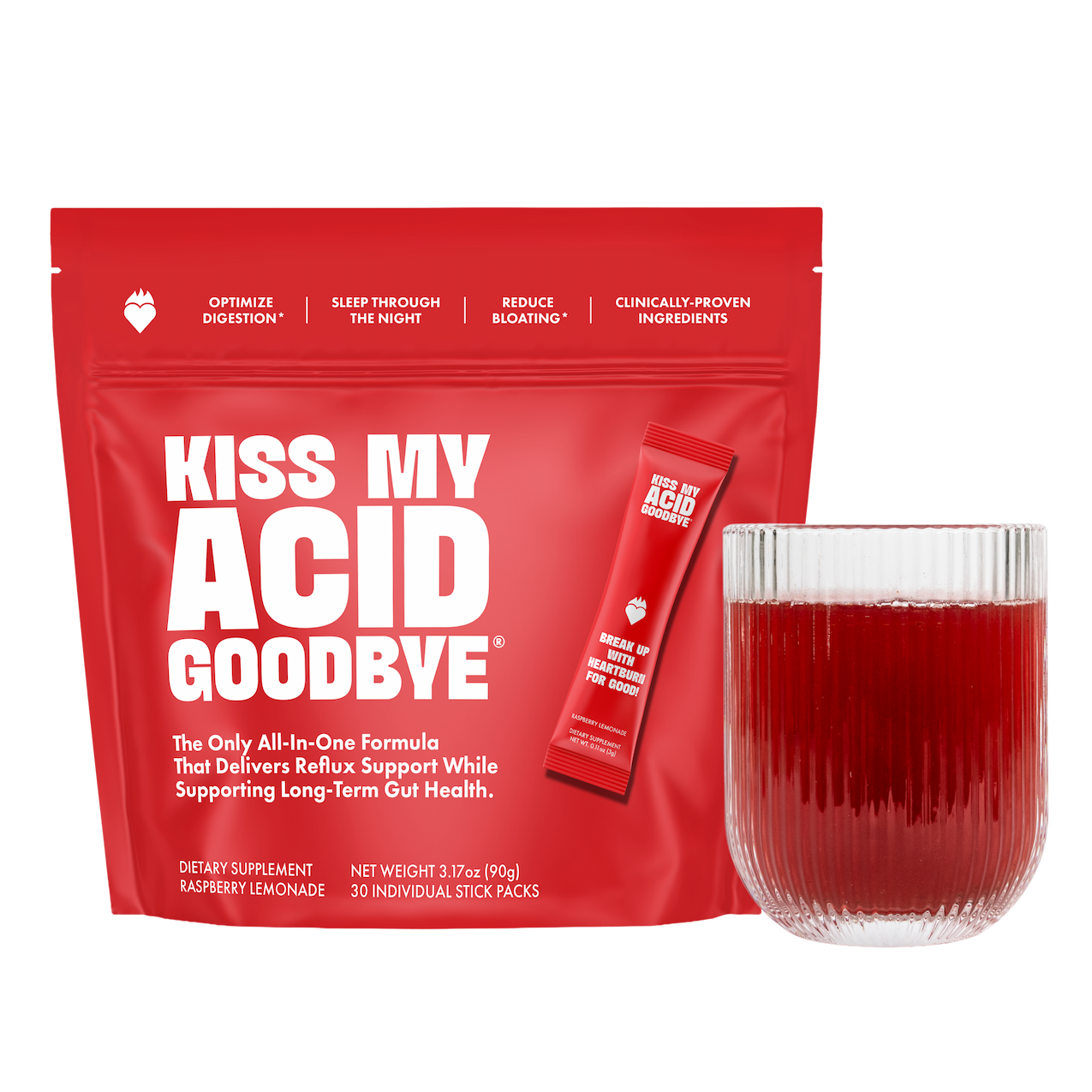
If you suspect your reflux may be a low-acid problem rather than a high-acid one, Kiss My Acid Goodbye (KMAG) supports gastric motility and mucosal protection regardless of which direction your acid levels run.
When you try KMAG today, you get:
- ✓ 100-Day Satisfaction Guarantee*
- ✓ Lifetime access to the KMAG Symptom Tracker and Recipe Converter App
- ✓ Our 7-Day Reflux Reset Program
- ✓ Priority Support from our Human Support Team
*Valid on 90-day protocol bundle
Always consult your doctor before changing any medication or starting a new supplement.
The Research Behind the Formula
KMAG combines four clinically studied ingredients, each targeting a specific part of the reflux cycle.
GUTGARD (150mg) is a specialized deglycyrrhizinated licorice extract, with glycyrrhizin removed to make it safe for people with high blood pressure. GUTGARD works differently from every other reflux ingredient: rather than suppressing acid, it stimulates the stomach's natural protective mechanisms and may support gastric motility — helping food move out of the stomach faster and reducing the pressure buildup that forces the LES open. In a 60-day double-blind placebo-controlled study, GUTGARD showed 73.2% greater effectiveness compared to placebo in managing H. pylori — a bacteria that can impair gastric function and worsen symptoms when present. GUTGARD also supports the bitter taste receptor activation that triggers genuine digestive responses — enzyme release, bile production, and motility support — that have been engineered out of the modern food supply.
MUCOSAVE (400mg) is a patented blend of prickly pear polysaccharides and olive leaf biophenols from farms in Sicily, Italy. It forms a gel-like, mucoadhesive coating that bonds to the mucosal lining, creating a physical protective barrier between whatever acid does reach the esophagus and the vulnerable tissue underneath. Research shows MUCOSAVE has mucoadhesive activity stronger than hyaluronic acid and alginate, meaning it maintains contact with mucosal surfaces longer than comparable compounds. In a 2-month double-blind placebo-controlled study of 118 adults, MUCOSAVE showed 74.3% total improvement on the GERD Quality of Life Assessment and 59.1% reduction in symptom severity.
ACTIValoe (150mg) is a clinically standardized aloe vera leaf extract, processed to remove anthraquinones — the compounds in raw aloe that can cause kidney damage and GI irritation. What remains is a highly bioavailable extract that may help create a soothing protective coating through the esophagus, support the growth of beneficial gut bacteria, and promote short-chain fatty acid production that contributes to a healthier gut environment overall.
German Chamomile Extract 10:1 (200mg) provides concentrated anti-inflammatory support throughout the digestive tract. At a 10:1 concentration, it is ten times more potent than standard chamomile, targeting the chronic tissue irritation that makes damaged digestive structures hyper-responsive to further exposure.
Clinical Study Results
MUCOSAVE — 2-Month Double-Blind RCT
- 74.3% total improvement on the GERD Quality of Life Assessment
- 59.1% reduction in symptom severity
GUTGARD — 60-Day Double-Blind RCT
- 73.2% greater effectiveness vs. placebo for managing H. pylori

KMAG supports the digestive conditions that standard acid blockers were never designed to address.
What to Actually Expect
KMAG supports the underlying digestive conditions that drive reflux — not just the symptom. Real improvement takes time.
Foundation
You might noticeLess post-meal bloating, fewer antacids, better sleep
WhyGUTGARD begins supporting gastric motility and protective mechanisms. MUCOSAVE and ACTIValoe start building the mucosal barrier. Chamomile begins reducing tissue inflammation.
Turning Point
You might noticeLess burning after meals, food sitting more comfortably, fewer reflux episodes overall
WhyGastric emptying improves, reducing the fermentation and pressure cycle. Mucosal barrier strengthens.
Transformation
You might noticeEating foods you avoided, feeling less anxious about meals, talking to your doctor about reducing or eliminating medication
WhyKMAG's ingredients have supported the conditions — motility, mucosal integrity, inflammation — that standard acid blockers never addressed.
*If you have been on PPIs for 1+ years, 3–6 months is a normal timeline. **Always work with your doctor before changing medications.
Real Experiences From KMAG Customers
"I can't say enough about how excited I am to use this product, after 20+ years of fighting off GERD and severe stomach problems I finally feel like I have an answer to my prayers. I have used every PPI they make, and they don't work anymore, nor do I want to even try them anymore... But already within 2 weeks I feel like a brand new me, no stomach pain, more energy, better sleeping, I can't say thank you enough!"Tonya C. — Verified Customer
"I've been dealing with acid reflux and indigestion for about 15 years. I tried changing my diet, but it never helped. The only thing that worked before KMAG was prescription drugs, but I didn't want to deal with the long-term side effects. Since taking Kiss My Acid Goodbye, the acid reflux and indigestion have pretty much disappeared. I started noticing the biggest difference after three weeks. Now I only use it at night and I'm still doing great."Daniel M. — Verified Customer
"I've had reflux for 10 years. Been to so many doctors. Tried everything. Nothing worked. I'm in my second month of taking KMAG twice a day, and I'm doing so much better. This isn't an overnight thing — you have to stick with it — but I can already tell it's working."Shirley W. — Verified Customer
"When I weaned myself off of my PPIs I was on the hunt for a natural alternative and I wasted a lot of money on things that slightly helped, but wasn't quite 'it'. After a few days of taking KMAG there was no burning in my throat when I laid down doing certain exercises. This has eliminated the need to take Tums. I think I have found 'the one'."Patricia B. — Verified Customer
"I have used every PPI they make, and they don't work anymore, nor do I want to even try them anymore."
Tonya C., Verified CustomerThe Conversation Worth Having With Your Doctor
If your reflux has not responded to standard acid-blocking medication the way you expected — or if symptoms have plateaued, returned after initial improvement, or worsened when you tried to stop — it is worth asking your doctor whether your acid production has actually been tested.
Hypochlorhydria can be assessed through a Heidelberg pH test, a Betaine HCl challenge, or other clinical methods. These tests are not commonly ordered in standard reflux workups, but they exist.
If impaired gastric motility rather than excess acid is driving your reflux, a different approach — one that supports digestion rather than suppressing it — is worth exploring. Your doctor can help determine what is appropriate for your specific situation.
30-Day Money-Back Guarantee
Use KMAG daily for a full 30 days. If you don't feel a meaningful difference, contact the team and we will make it right.
Try KMAG Risk-Free
Every order includes:
- ✓ 100-Day Satisfaction Guarantee*
- ✓ Lifetime access to the KMAG Symptom Tracker and Recipe Converter App
- ✓ Our 7-Day Reflux Reset Program
- ✓ Priority Support from our Human Support Team
* Valid on 90-day protocol bundle. Commit to AT LEAST 90 days of daily use for best results.
Frequently Asked Questions
Does KMAG increase stomach acid?
KMAG is not designed to increase or decrease stomach acid production. GUTGARD works by stimulating the stomach's natural protective mechanisms and supporting gastric motility — the movement of food through the digestive system. This addresses the pressure and fermentation cycle without directly targeting acid levels. If you suspect you have hypochlorhydria, discuss it with your doctor before making any changes.
Can I take KMAG while still on a PPI?
Yes. Do not stop your PPI when you start KMAG. Take KMAG alongside your current medication for at least 2 to 3 months. After your gut has had time to build its defenses, work with your doctor to taper. Stopping PPIs abruptly triggers rebound hyperacidity — a temporary overcorrection in acid production that is often misinterpreted as proof you need the drug. Always taper with your doctor's guidance.
How do I take KMAG?
Mix one stick pack in approximately 8 ounces of water. Take it closest to your largest meal or when symptoms are typically worst. For people on long-term PPIs, taking a second serving earlier in the day can support the digestive process during waking hours. Two servings daily is appropriate for more severe cases during the first 2 months.
What if I don't notice anything in the first month?
Most people on PPIs for 1+ years find that meaningful improvement takes 3 to 6 months. The underlying conditions — mucosal damage, impaired motility, chronic inflammation — took years to develop and take time to address. Consistency matters more than speed. The 30-day guarantee gives you a risk-free window to begin.
Will KMAG interact with my medications?
The ACTIValoe in KMAG can enhance nutrient absorption, so timing matters. Take KMAG at least 2 hours apart from prescription medications to avoid any absorption interference. If you have specific concerns, consult your prescribing physician before starting.
How is KMAG different from probiotics or digestive enzymes?
Probiotics introduce specific bacteria strains. Digestive enzymes supplement the body's enzyme output. KMAG works at the barrier level and motility level — supporting the structural and functional conditions that allow proper digestion to happen in the first place. Many customers find it works well alongside probiotics and enzymes, but it addresses a different part of the digestive system.
This is not medical advice. Always consult with your physician before adding new supplements to your routine, especially if you have any diagnosed medical conditions or are currently taking prescription medications. These statements have not been evaluated by the Food and Drug Administration. This product is not intended to diagnose, treat, cure, or prevent any disease. Clinical study data referenced applies to individual ingredients in Kiss My Acid Goodbye and not to the formula as a whole. Individual results may vary.

