

Why Stress Makes Acid Reflux Worse
The Real Reason Stress Causes Acid Reflux Has Nothing to Do With What You Ate.
Most people with acid reflux know that stress makes it worse. What they don't know is the specific nerve responsible, and why calming down alone is not enough to fix the damage it leaves behind.

The flares that follow a stressful day often have nothing to do with what was eaten. There is a nerve that runs your entire digestive system, and stress suppresses it in ways that trigger reflux regardless of diet.
The Flare-Up That Has Nothing to Do With Food
It happens at the worst possible time.
The job presentation. The difficult phone call. The Thanksgiving table where three family members are reliably difficult. The Tuesday where everything broke at once.
You didn't eat anything different. You didn't rush through a meal. You did everything right, and somehow, by 9 PM, the burn is back. Radiating up. Sitting in your throat. Keeping you awake.
This is one of the most frustrating patterns for people with acid reflux: the flares that seem to happen regardless of diet. They follow stress the way thunder follows lightning, reliably, predictably, and without any obvious food explanation.
Most people file this under "stress makes everything worse" and move on. But the mechanism is far more specific than that. There is a single nerve responsible for regulating your digestive system. And research has documented that stress has a direct, measurable effect on how it functions.
The Nerve Most Doctors Never Mention
The vagus nerve is the 10th cranial nerve and the longest in the human body. It runs from the brainstem through the neck, branches into the chest, and extends deep into the abdomen. "Vagus" is Latin for "wandering," which describes exactly how it travels.
Its role is to run the parasympathetic nervous system, what physiologists call "rest and digest." This is the operating mode the body uses when it is not under threat.
When vagal activity is strong, several things happen simultaneously:
- The Lower Esophageal Sphincter (LES), the valve between the esophagus and stomach, maintains appropriate tension
- Food moves through the stomach and intestines at a healthy pace
- Digestive enzyme and acid secretion functions normally
- Blood flow to the gut supports mucosal repair and protection
The vagus nerve is not a single on/off switch. It is closer to the entire electrical grid that powers your digestion. And stress, at the physiological level, cuts the power.
What Happens When Stress Takes Over
The autonomic nervous system operates in two competing modes: sympathetic (fight-or-flight) and parasympathetic (rest and digest). These are antagonists. When one rises, the other falls.
Stress activates the sympathetic system. Cortisol and adrenaline are released. Heart rate increases, blood is redirected to the muscles, and the body enters a state of mobilization. It is preparing to deal with a threat.
Digestion is, from the body's evolutionary perspective, optional during an emergency.
Research has documented that acute psychological stress is associated with reduced vagal tone, the baseline activity level of the vagus nerve. When vagal tone drops, the entire digestive system it governs becomes impaired.
For people with acid reflux, three consequences are particularly significant.
Research examining the gut-brain axis has established that psychological stress is independently associated with GERD symptoms, separate from diet and acid exposure levels. The vagus nerve, as the primary conduit of the gut-brain axis, is now recognized as a central factor in reflux frequency and severity. This connection is well-documented across multiple fields: gastroenterology, neurogastroenterology, and psychosomatic medicine.
Three Ways Reduced Vagal Tone Triggers Reflux
1. The LES Loses Its Signal
The Lower Esophageal Sphincter is a ring of muscle that acts as the valve between the esophagus and the stomach. When it is working correctly, it opens briefly to let food pass, then closes firmly to prevent acid from moving upward.
Maintaining that firm closure requires continuous muscular engagement and intact neural signaling. The vagus nerve is a key part of that signaling system. Research indicates that psychological stress is associated with changes in LES pressure and an increase in transient LES relaxations: brief, inappropriate openings of the valve.
The result is that the valve meant to keep acid in the stomach becomes less reliable exactly when stress is highest.
2. Food Sits Longer, and Pressure Builds
Under stress, gastric emptying slows. Food remains in the stomach longer than it should. A stomach that is slower to empty is fuller for longer, which means more internal pressure pushing upward against an already-weakened valve.
The combination is self-compounding: impaired valve function plus elevated intragastric pressure. This is not a metaphor. It is measurable physiology with a well-understood mechanism.
3. Mucosal Defenses Are Reduced
Sustained sympathetic activation reduces blood flow to the GI tract and impairs the mucus layer that normally protects the esophageal and stomach lining. This means that even when acid does escape upward, it encounters tissue that is less protected than it should be.
For people with acid reflux, this distinction matters. The discomfort is not only about the presence of acid. It is about the condition of the tissue the acid contacts.
Why "Just Relax" Doesn't Fix It
Stress does not just trigger reflux once. Under chronic stress, the body maintains a background level of sympathetic activation, keeping vagal tone persistently suppressed. This means the digestive dysfunction is not a temporary episode. It is a sustained physiological state.
Diet changes help at the margin. They cannot override a nervous system that is running in emergency mode. And the tissue damage from months or years of stress-triggered reflux does not repair itself through stress management alone.
The Loop That Feeds Itself
Here is what makes the stress-reflux connection particularly hard to break: reflux causes anxiety, and anxiety causes reflux.
The experience of unpredictable flares creates anticipatory anxiety around food. Which restaurants are safe? Which foods are too risky? What if the burning starts during a meeting, or at dinner with friends, or in the middle of the night?
That anxiety does not stay cognitive. The body processes it as stress, which activates the sympathetic nervous system, which suppresses vagal tone, which reduces LES function and slows gastric emptying, which makes reflux more likely.
The loop tightens. People begin avoiding more foods, canceling social plans, and organizing their lives around the disorder. The restriction becomes its own source of chronic low-level stress.
Clinical research has documented this bidirectional relationship: psychological distress is both a risk factor for developing reflux and a consequence of living with it. Each side reinforces the other.
"Acid reflux is not just a stomach problem. The nervous system is running the show, and stress is the trigger most people never get to address."

Under stress, all three of the digestive mechanisms that keep reflux in check, the valve, the motility, and the mucosal barrier, are impaired simultaneously. The combination is what makes stress-triggered flares so predictable and so hard to avoid through diet alone.
What the Standard Treatment Misses
Antacids and PPIs suppress acid. They do not address the vagus nerve. They do not improve gastric motility. They do not restore mucosal integrity.
For people whose reflux is driven primarily by stress-induced changes in the autonomic nervous system, acid suppression treats one downstream effect of a much larger problem. When the nervous system remains in a chronically dysregulated state, reflux continues, because the mechanism that triggers it was never addressed.
Stress management practices, including deep diaphragmatic breathing, adequate sleep, and reducing sustained sympathetic activation, can produce real improvements in reflux severity by directly supporting vagal tone. These approaches are worth pursuing.
But there is a separate and equally important problem: the cumulative tissue damage from months or years of stress-triggered reflux episodes. The mucosal lining has been repeatedly exposed. The esophageal tissue has experienced chronic irritation. Gut motility has been chronically impaired. That physiological damage does not repair itself through stress management alone.
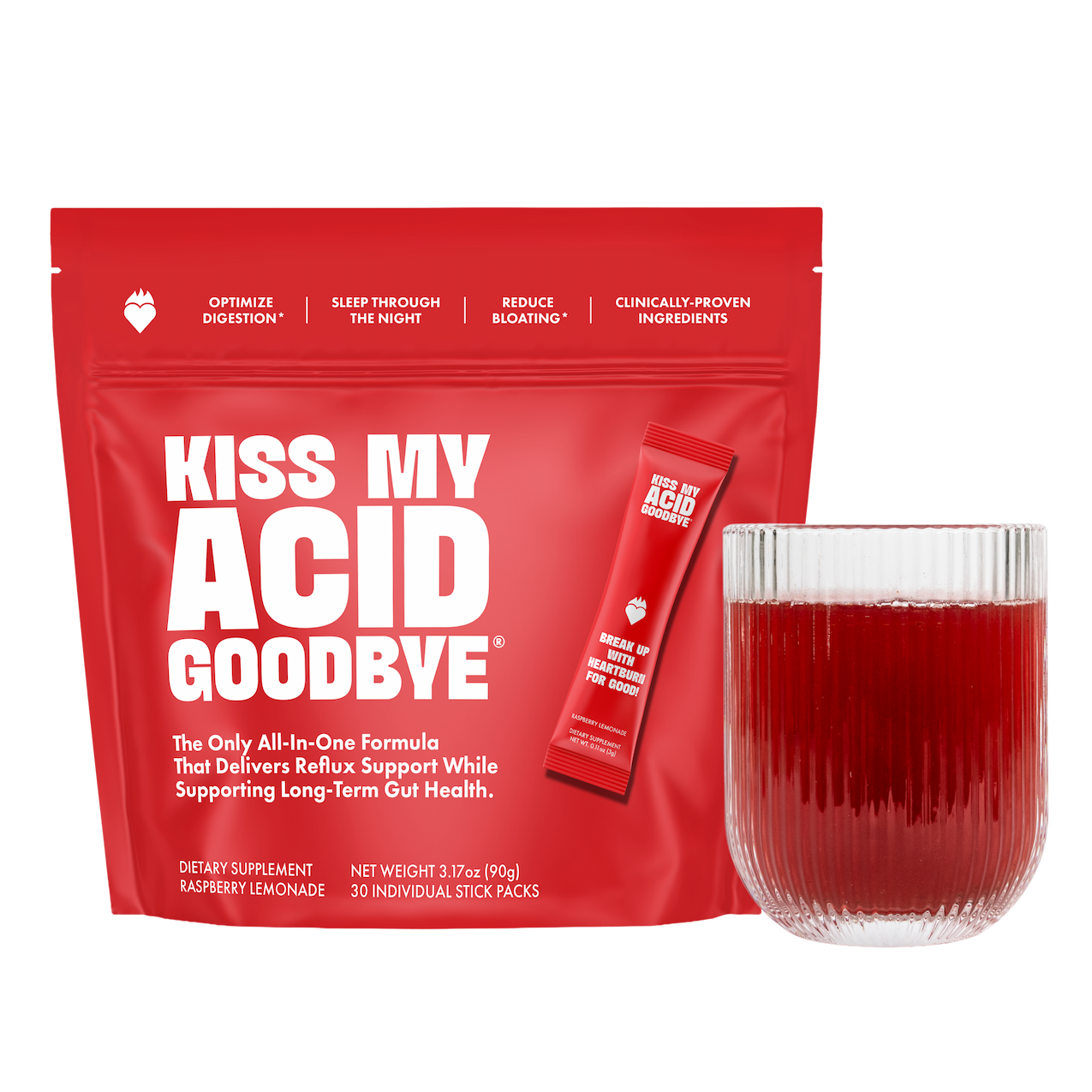
If your reflux flares predictably follow your most stressful days, Kiss My Acid Goodbye (KMAG) supports the same tissue and motility mechanisms that chronic stress wears down, the repair work that calming down alone can't do.
When you try KMAG today, you get:
- ✓ 100-Day Satisfaction Guarantee*
- ✓ Lifetime access to the KMAG Symptom Tracker and Recipe Converter App
- ✓ Our 7-Day Reflux Reset Program
- ✓ Priority Support from our Human Support Team
*Valid on 90-day protocol bundle
Always consult your doctor before changing any medication or starting a new supplement.
The Research Behind Kiss My Acid Goodbye
Kiss My Acid Goodbye (KMAG) is a daily supplement drink mix formulated around four clinically studied ingredients, each targeting a specific consequence of the stress-reflux cycle.
MUCOSAVE (400mg): Barrier Support for Repeatedly Exposed Tissue
A patented blend of prickly pear polysaccharides and olive leaf biophenols, sourced from family farms in Sicily, Italy. MUCOSAVE creates a protective gel coating that may help shield mucosal tissue from acid exposure and support the integrity of the gut lining. In a 2-month double-blind, placebo-controlled study of 118 adults, MUCOSAVE showed a 74.3% total improvement on the GERD-Health Related Quality of Life Assessment and a 59.1% reduction in symptom severity. KMAG uses 400mg, matching the therapeutic dose used in the clinical study.
GUTGARD (150mg): Motility Support
A proprietary, deglycyrrhizinated licorice extract, meaning the compounds that can raise blood pressure have been safely removed, preserving all gut-supporting benefits. Research has shown that GUTGARD may support gastric motility, the very mechanism that stress suppresses. In a 30-day double-blind, placebo-controlled study, 56% of participants in the GUTGARD group showed marked improvement versus 0% in the placebo group.
ACTIValoe (150mg): Esophageal Tissue Support
A safety-processed aloe vera extract, with compounds that can cause GI irritation removed, that may help soothe and support the esophageal lining: the tissue that lacks the acid-resistant mucous layer the stomach has and that takes the most direct damage from reflux. ACTIValoe also supports beneficial gut bacteria and promotes short-chain fatty acid production to fuel the cells lining the gut.
German Chamomile Extract 10:1 (200mg): Anti-Inflammatory Support
A concentrated extract 10 times more potent than standard chamomile tea. Provides anti-inflammatory support for a digestive tract that has been chronically irritated by stress-triggered acid exposure. This is not the same as chamomile tea and does not cause drowsiness.
What the Research Shows
- MUCOSAVE (400mg): 74.3% total improvement on GERD Quality of Life Assessment. 118 adults, 2-month double-blind RCT (Evidence-Based CAM, 2016)
- MUCOSAVE (400mg): 59.1% reduction in symptom severity. Same study. Therapeutic dose matched exactly in KMAG.
- GUTGARD (150mg): 56% showed marked improvement vs. 0% in placebo. 50 adults, 30-day double-blind RCT (Evidence-Based CAM, 2012)
- GUTGARD (150mg): Supports gastric motility, a mechanism directly impaired by stress-induced sympathetic activation
Studies referenced apply to individual ingredients in Kiss My Acid Goodbye. Individual results may vary.
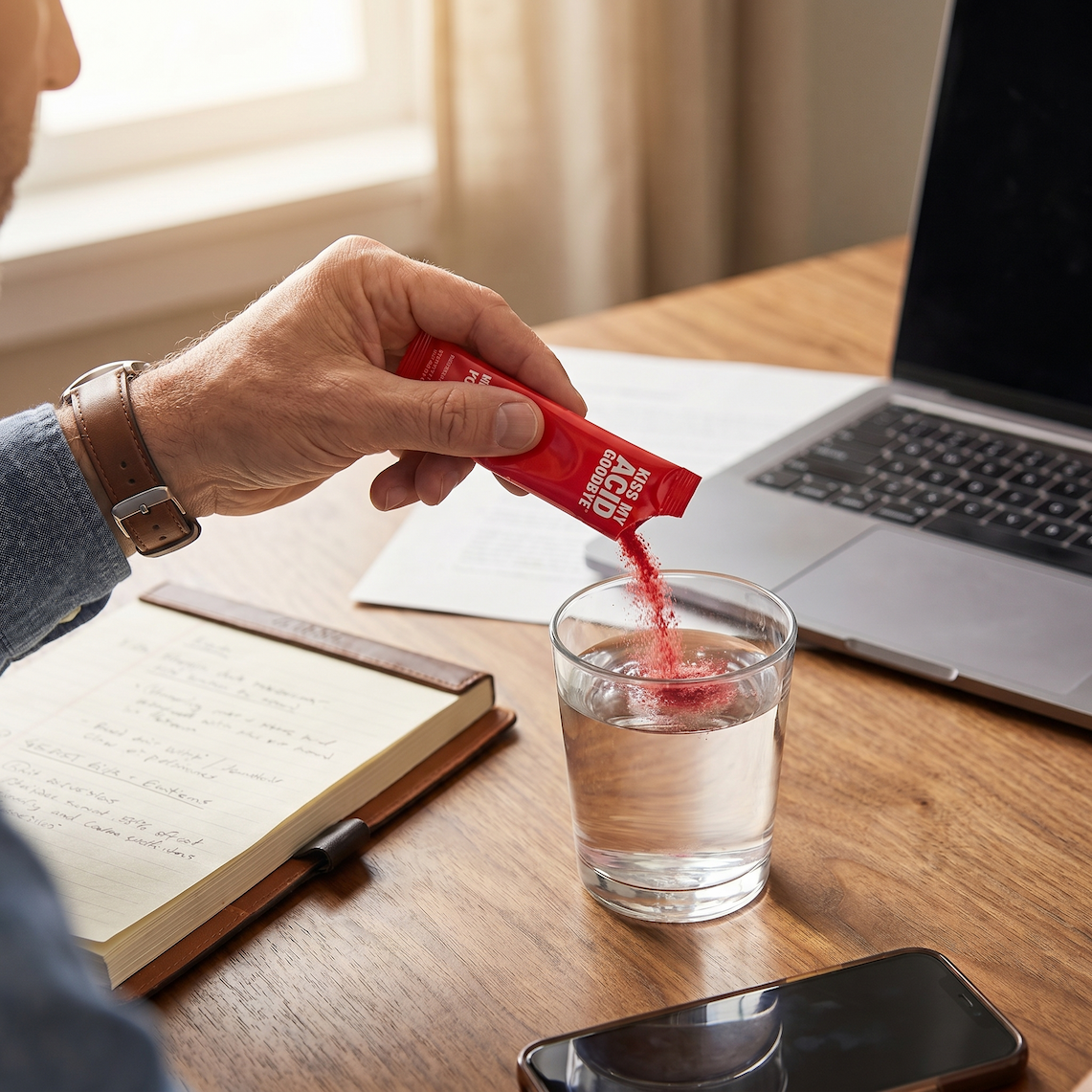
KMAG is taken once daily before your largest meal, or at the time of day when reflux tends to be most frequent. For people who experience reflux primarily in the evenings after stressful days, taking it before dinner provides the most targeted support.
What to Actually Expect
KMAG works on the underlying tissue and gut environment rather than neutralizing acid in the moment. This means the timeline looks different from an antacid.
You might notice:
- Less bloating
- Better sleep
- Fewer "emergency" antacids
Why it's happening:
- MUCOSAVE and ACTIValoe start supporting your mucosal lining
- Concentrated Chamomile begins to ease irritation
You might notice:
- Less burning after meals
- More confidence around food
- Fewer middle-of-the-night flare-ups
Why it's happening:
- GUTGARD and ACTIValoe continue supporting tissue repair
- Motility and microbiome support ramp up
You might notice:
- Testing foods you used to avoid
- Feeling less scared of food and bedtime
- Talking to your doctor about slowly reducing meds
Why it's happening:
- KMAG's ingredients have rebuilt gut barriers and reduced inflammation
- Your gut is restored for long-term comfort and relief
If you have LPR or have been on PPIs for 1 or more years, 4 to 6 months is a very normal timeline. Always work with your doctor before changing medications.
What KMAG Customers Are Experiencing
"I've been able to reduce my medication from two PPI pills, multiple Rolaids, and an H2 blocker daily to just one H2 blocker at night... I can eat almost anything that used to be a trigger, and I hardly ever need Rolaids. The fear of eating has reduced severely, and I've gained some weight back. Thank you so much for this product!"Christian G., Verified Customer
"I have had GERD with a hiatal hernia for years. No matter what I did (taking PPIs, even watching what I eat and drink, stop eating by 4pm, etc.) around 2:30am I would wake up with horrible reflux (even with the head of the bed raised). I have only been using KMAG three weeks and it is miraculous! I can sleep through the night with no reflux! I am starting to feel like my old self again!"Deborah L., Verified Customer
"I've had lots of digestive issues which kept me feeling uncomfortable throughout the day and affected my mood. Now, 3 weeks in using KMAG and I've been able to forget about my stomach issues and the constant burn of acid reflux. And I didn't have to quit coffee which is such a pleasant surprise! I've had many happy days so it is working for me!"Laura D., Verified Customer
"I've had reflux for 10 years. Been to so many doctors. Tried everything. Nothing worked. I'm in my second month of taking KMAG twice a day, and I'm doing so much better. This isn't an overnight thing, you have to stick with it, but I can already tell it's working. Reflux is not fun, but this product and the support behind it have been life-changing."Shirley W., Verified Customer
"My mood and energy are better too since I'm not battling chronic stomach pain or what/when to eat."Billy G., Verified Customer
The Question Worth Raising With Your Doctor
Most gastroenterologists are familiar with the gut-brain axis, the well-documented bidirectional communication pathway between the digestive tract and the central nervous system. But clinic visits are short, and this connection rarely surfaces unless you raise it directly.
Consider asking: "Is there a connection between my stress levels and the frequency of my reflux flares?"
If your worst episodes cluster around stressful periods, that pattern is data. It is worth documenting and bringing to a clinician who can help you address both the physiological and neurological sides of the cycle.
Try KMAG Risk-Free
Every order includes:
- ✓ 100-Day Satisfaction Guarantee*
- ✓ Lifetime access to the KMAG Symptom Tracker and Recipe Converter App
- ✓ Our 7-Day Reflux Reset Program
- ✓ Priority Support from our Human Support Team
* Valid on 90-day protocol bundle. Commit to AT LEAST 90 days of daily use for best results.
Frequently Asked Questions
Can I take KMAG while still on my PPI?
Yes. If you are currently on a PPI, do not stop when you start KMAG. The recommended approach is to take KMAG daily for the first 2 to 3 months while staying on your current medication, then work with your doctor to taper down. This gives your gut time to rebuild its defenses without triggering rebound hyperacidity.
Will KMAG interact with my medications?
KMAG's ingredients are botanically derived and have been studied for safety. That said, always consult your physician or pharmacist if you are managing serious conditions or taking multiple medications. One practical note: take KMAG at least 2 hours apart from prescription medications, as ACTIValoe may temporarily affect absorption timing.
How do I take it?
Mix one packet in 8 oz of water, ideally before your largest meal or at the time of day when reflux is most frequent. For severe symptoms or long-term PPI users, two servings daily (one before lunch, one before dinner) is recommended for the first two months. A hand frother helps with mixing. You can also take it as a concentrated shot with less water if you prefer.
What if I don't feel anything in the first few weeks?
KMAG works on the underlying tissue, not by neutralizing acid in the moment the way an antacid does. Initial improvements typically appear within the first one to two months. Significant improvements develop over three to six months of consistent daily use. The 30-day money-back guarantee gives you a full month to start the process before deciding to continue.
Why does KMAG work differently from antacids or PPIs?
Antacids neutralize acid temporarily and trigger rebound overproduction: your body compensates by making more acid. PPIs suppress acid production and create physiological dependency; stopping them typically causes symptoms worse than when you started. KMAG does not suppress acid. It supports the mucosal lining, gut motility, and tissue repair: the conditions that allow your digestive system to function with normal acid levels without excessive discomfort.
How long before KMAG starts working?
Initial improvements typically appear within the first one to two months: less bloating, fewer antacids, better sleep. The most significant improvements come with three to six months of consistent daily use. The 30-day money-back guarantee gives you a risk-free window to get started.
This is not medical advice. Always consult with your physician before adding new supplements to your routine, especially if you have any diagnosed medical conditions or are currently taking prescription medications. These statements have not been evaluated by the Food and Drug Administration. This product is not intended to diagnose, treat, cure, or prevent any disease. Clinical study data referenced applies to individual ingredients in Kiss My Acid Goodbye and not to the formula as a whole. Individual results may vary.

